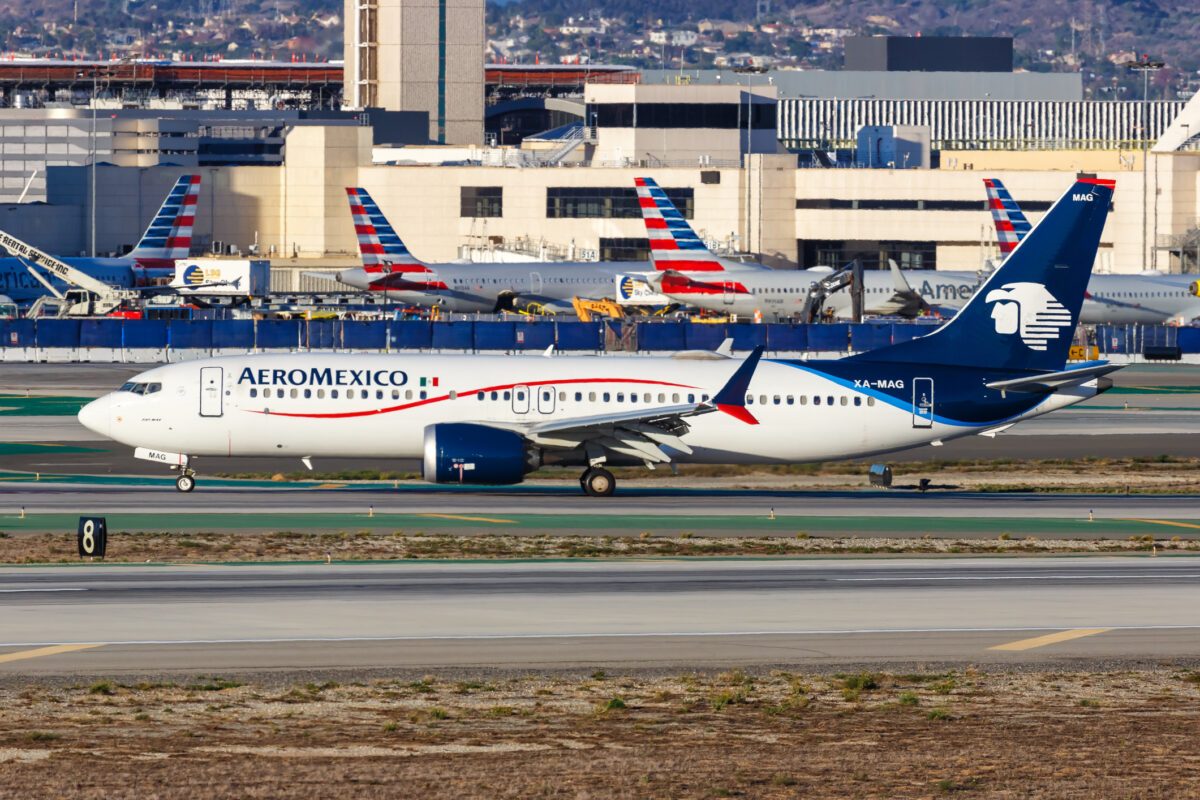
Aeromexico will open three daily, year-round routes from Mexico City in January 2027, adding nonstop flights to Orange County, Fort Lauderdale and Portland as it resumes expansion in the United States.


The airline will operate all three services with 166-seat Boeing 737 MAX 8 aircraft. Delta Air Lines will market the flights through the carriers’ immunized joint venture, which remains in effect after surviving a U.S. Department of Transportation effort to end it.
According to the airlines’ joint route announcement, Aeromexico will be the only operator flying nonstop between Mexico City (MEX) and each of the three U.S. airports when the services begin. The additions will take the Aeromexico-Delta network from MEX to 27 U.S. destinations.
Read our stories in your inbox
Two aviation newsletters. Zero fluff.
Three Daily Routes Starting in January
Orange County (SNA) will be the first of the three routes to launch, beginning January 11. The northbound flight will leave MEX at 9:15 a.m. and arrive at 11:30 a.m. The return is scheduled to depart SNA at 1 p.m. and reach Mexico City at 7 p.m.

Fort Lauderdale (FLL) follows on January 14. Aeromexico will depart MEX at 9:35 a.m., arriving in South Florida at 2:05 p.m. The aircraft will leave FLL at 3:35 p.m. and land in Mexico City at 6:20 p.m.
The Portland (PDX) service begins from Mexico City on January 21, with the first southbound departure from Oregon the following morning. Flights will leave MEX at 4:15 p.m. and arrive at PDX at 8 p.m. The return will depart Portland at 9:30 a.m. and reach Mexico City at 5 p.m. All times are local.
The Orange County and Fort Lauderdale schedules allow Aeromexico to turn the aircraft and return it to MEX the same day. Portland uses a different pattern, with the aircraft remaining overnight at PDX before the morning flight south.
PDX is a restoration rather than Aeromexico’s first attempt at the market. Port of Portland records show the airline announced nonstop Mexico City service in 2017, while a subsequent airport report listed the route as ending in January 2019. The new operation returns with a daily, year-round schedule.
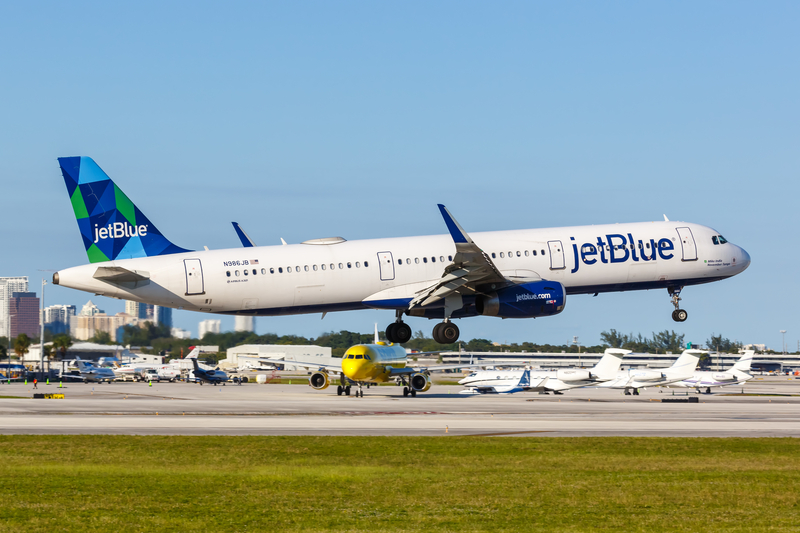
Boeing 737 MAX 8 Assigned to All Three Markets
Aeromexico’s Boeing 737 MAX 8s assigned to the routes will carry 166 passengers: 16 in Premier Class, 18 in the extra-legroom AM Plus section and 132 in Economy. Personal seatback entertainment will be available throughout the aircraft.
The three routes will provide 3,486 seats in each direction during a full week of operation, or 6,972 two-way seats. If flown at the announced frequency for a full year, they represent more than 362,000 seats across the three markets.
The MAX 8 offers sufficient performance for all three missions, including the longer Portland sector, without requiring widebody capacity or a specialized narrowbody subfleet. Boeing lists the 737-8 with a range of up to 3,500 nautical miles and a typical two-class capacity of 160 to 180 passengers.
The type is already a major part of Aeromexico’s short- and medium-haul operation. The carrier reported 47 MAX 8s in service at September 30, alongside 30 MAX 9s and 34 737-800s, in its third-quarter fleet disclosure. That scale gives Aeromexico flexibility to support three daily launches without introducing another aircraft type into the markets.
Expansion Follows Removal of U.S. Schedule Restrictions
The timing is significant. On October 16, the DOT revoked restrictions that had prevented Mexican airlines from adding frequencies or introducing new U.S. services from MEX and Felipe Ángeles International Airport.
Aeromexico confirmed the regulatory change in an October 19 securities filing, saying the previous order no longer blocked new scheduled services, subject to the usual regulatory approvals. The Orange County, Fort Lauderdale and Portland announcement followed one week later.
The schedule restrictions were separate from the dispute over Aeromexico and Delta’s antitrust immunity. The DOT had ordered the carriers to dissolve their joint venture, but the U.S. Court of Appeals for the 11th Circuit vacated that decision in August 2026.
As a result, the partnership remains able to coordinate pricing, schedules and revenue across the transborder market. Aeromexico described the ruling in an August 20 filing, while Delta said the court’s decision allowed the joint venture to continue.
The three additions therefore serve two purposes. They put Aeromexico’s newly restored schedule freedom to immediate use while expanding the range of U.S. traffic that can be fed through MEX under the Delta partnership.
A Broader Mexico-U.S. Network Buildout
Aeromexico is selecting airports where nonstop competition from Mexico City will initially be absent, rather than adding another frequency to an established gateway. SNA provides a distinct Orange County catchment, FLL broadens the partnership’s reach in South Florida, and PDX restores direct access from the Pacific Northwest to Aeromexico’s principal hub.
The announcement also extends a wider period of transborder route development. Mexican carriers have been pursuing more U.S. points, including the rapid expansion represented by Volaris launching 10 U.S. routes, while U.S. airlines continue to add secondary Mexican markets such as United’s return to Chiapas.
Tickets for all three Aeromexico services are on sale through both airlines. The staggered openings mean the full capacity increase will be in place after the first Portland departure on January 22.
Bottom Line
Aeromexico gains three monopoly nonstop markets without making an outsized capacity bet in any one of them. Daily service is enough to support local business demand and connecting traffic at MEX, while the 166-seat MAX 8 keeps the break-even requirement below that of a larger narrowbody or widebody. The same fleet and cabin product across all three routes should also simplify recovery when aircraft substitutions are needed.
For Delta, the additions widen its Mexico proposition at airports where its own metal would not necessarily be the first choice. The joint venture can sell Orange County, Fort Lauderdale and Portland alongside Delta’s domestic network while relying on Aeromexico’s hub to distribute passengers beyond the capital. That is precisely the sort of schedule development the partnership’s antitrust immunity permits.
The speed of the announcement after the schedule restrictions were removed suggests Aeromexico had viable U.S. routes ready to move. The next question is whether these are the first of a larger group of MEX additions for 2027. Aeromexico has the narrowbody fleet to continue, but future choices will reveal whether it favors more unserved city pairs or additional depth in existing Delta markets.