American Airlines will install Starlink connectivity across more than 1,000 mainline aircraft, expanding a program that initially covered only its Airbus narrowbody fleet.

Installations are due to begin in early 2027. The fleetwide agreement includes Airbus narrowbodies, Boeing narrowbodies and Boeing widebodies, taking the project from a large single-fleet retrofit to an airline-wide mainline connectivity program.
American plans to use Starlink’s Performance Aero Terminal, which the airline says can provide capacity of up to 1 Gbps per terminal. That figure describes the terminal’s total capability rather than the speed delivered to each connected device, but it represents a substantial platform upgrade intended to support streaming, gaming, video calls and real-time collaboration.
Read our stories in your inbox
Two aviation newsletters. Zero fluff.
Program Expands Beyond 500 Airbus Jets
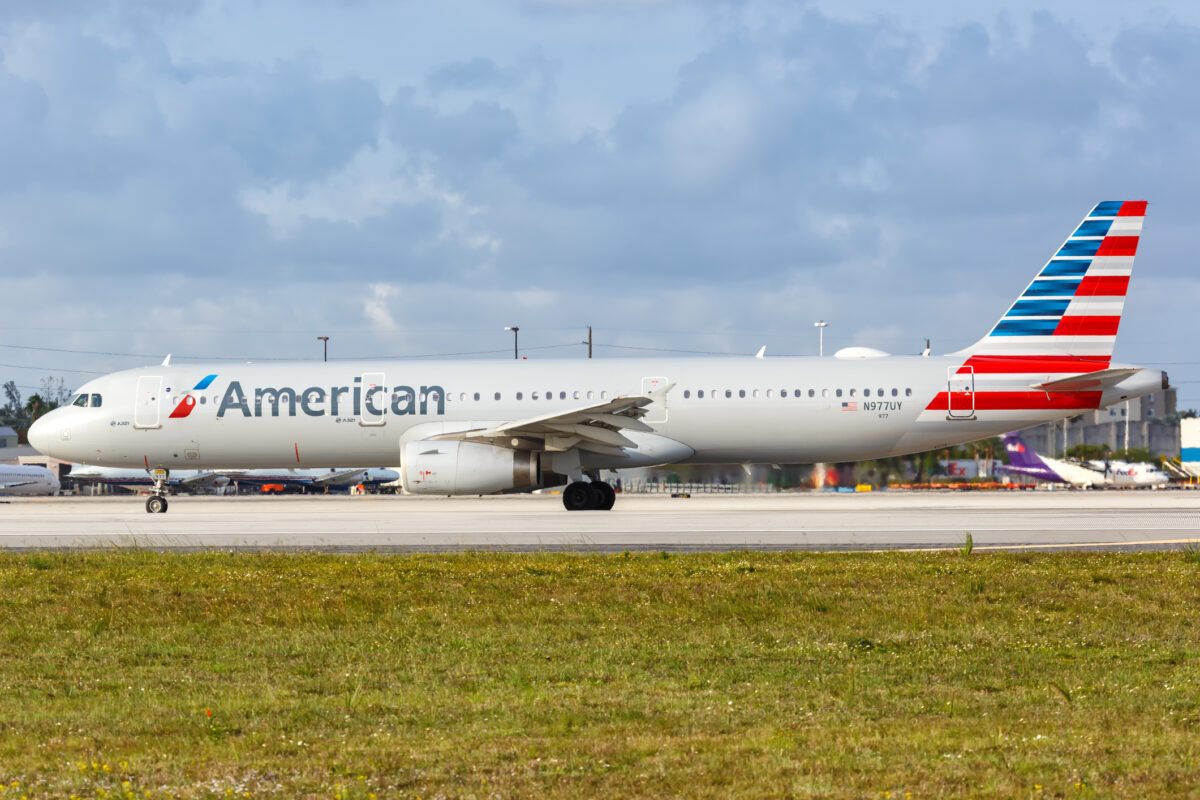
American’s original Starlink announcement in May covered more than 500 Airbus aircraft, with work scheduled to start in the first quarter of 2027. That phase included the Airbus A319, Airbus A320 and Airbus A321 families, as well as incoming Airbus A321neo and Airbus A321XLR deliveries.
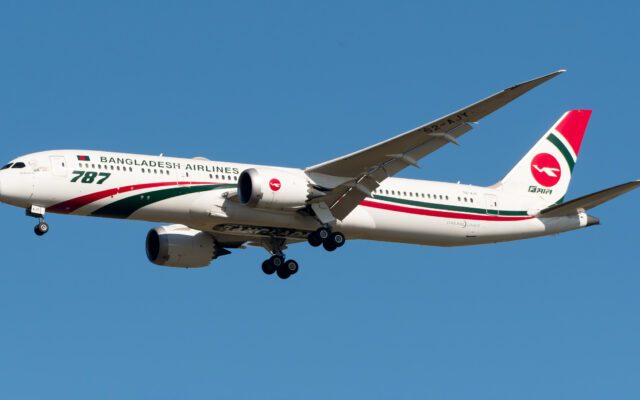
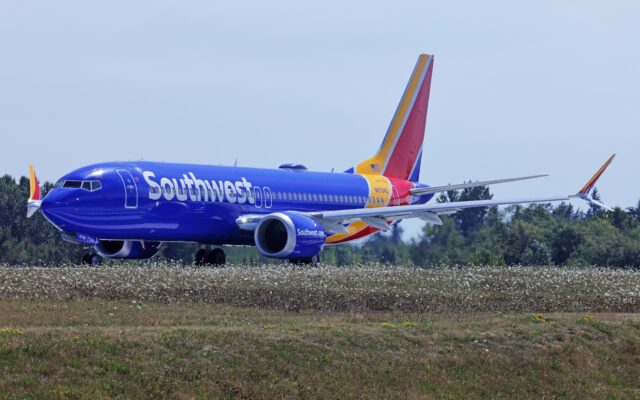
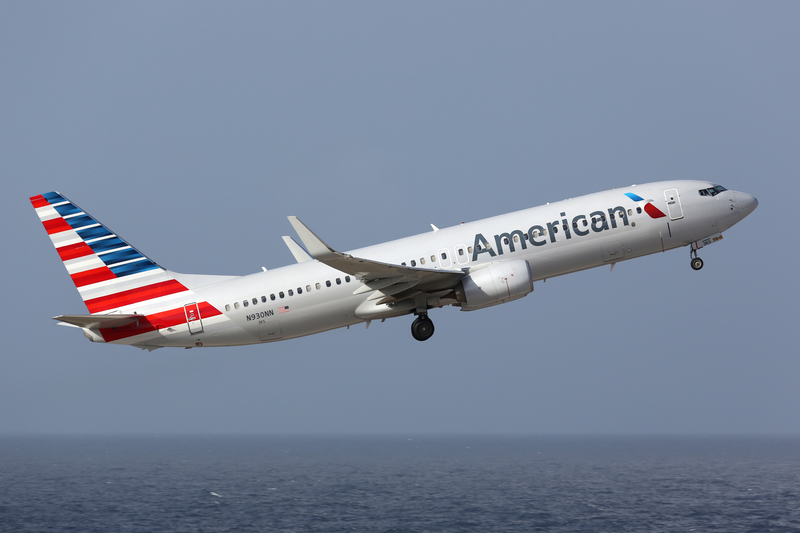
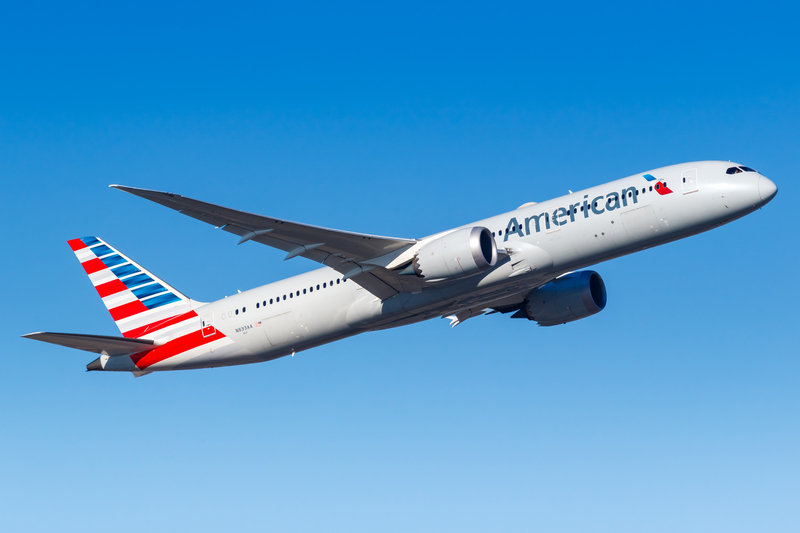
The expanded agreement adds American’s Boeing 737 fleet and its Boeing 777 and Boeing 787 long-haul aircraft. Starlink will therefore become the common connectivity platform across all four of American’s principal mainline fleet families rather than a product encountered only on selected domestic and short-haul international flights.
American’s fleet data as of June 30, 2026 listed 1,030 mainline aircraft: 487 Airbus A320-family jets, 406 Boeing 737-family aircraft, 67 Boeing 777s and 70 Boeing 787s. The carrier also had 301 mainline aircraft on order, comprising 167 Airbus A320-family aircraft, 115 Boeing 737-family jets and 19 Boeing 787s.
The Boeing categories span the 737-800, Boeing 737 MAX 8 and forthcoming Boeing 737 MAX 10; the Boeing 777-200ER and Boeing 777-300ER; and the Boeing 787-8 and Boeing 787-9. American says more than 165 million passengers travel on its mainline aircraft annually.
Widebody Inclusion Changes the Program’s Reach
Adding the Boeing widebody fleet is particularly significant. The first Starlink order concentrated on narrowbodies, where American operates large numbers of relatively standardized aircraft. The revised scope carries the same platform onto aircraft assigned to intercontinental missions, where reliable connectivity has greater value during flights lasting eight hours or more.
The 20-aircraft Boeing 777-300ER fleet is American’s highest-capacity and most premium widebody subfleet. Those aircraft are also entering a cabin retrofit program that increases the size of the business-class and Premium Economy cabins. The Boeing 777-200ER and 787 fleets cover a broader range of Atlantic, Pacific and South American flying.

The Airbus A321XLR adds another dimension. Its range of roughly 4,700 nautical miles allows American to use a narrowbody on thinner transatlantic markets and premium transcontinental services. A common connectivity product across the A321XLR and twin-aisle fleet should reduce one source of inconsistency as American uses different aircraft types to serve long-haul markets.
Starlink Will Replace an Established Connectivity Mix
American is not starting from an unconnected fleet. It entered 2026 with more than 900 mainline aircraft using high-speed satellite systems supplied by Viasat or Intelsat. In January, the airline began offering complimentary connectivity for AAdvantage members, sponsored by AT&T.
The Starlink program is consequently a change of platform rather than an initial Wi-Fi installation. Its low-Earth-orbit satellite architecture is designed to reduce latency, an important distinction for applications that require rapid exchanges of data rather than simply high download speeds. American is promoting gate-to-gate access, subject to the approvals and operating requirements that apply to each installation.
The airline has not included American Eagle aircraft in the announced Starlink program. Its dual-class regional fleet already uses high-speed satellite connectivity, and American previously completed a broad regional Wi-Fi upgrade ahead of the free-service launch. For now, Starlink standardization applies specifically to mainline operations.

United Has a Head Start on Starlink
American’s decision places it on the same technology path as United Airlines, although United began installations earlier. United reported that Starlink had reached 450 mainline and United Express aircraft by the end of the second quarter of 2026, including its first widebody installation. United is targeting its entire fleet for completion by the end of 2027.
Delta Air Lines has chosen a different low-Earth-orbit provider. Delta plans to begin installing Amazon Leo on an initial 500 aircraft in 2028, integrating the service with its Delta Sync Wi-Fi and seatback entertainment platform.
Those projects are turning satellite architecture, installation pace and fleet coverage into competitive product decisions. American’s move beyond Airbus aircraft prevents its Boeing fleet—particularly the long-haul 777s and 787s—from being left on an earlier generation of connectivity while rival carriers deploy new systems.
Connectivity Joins a Wider Cabin Overhaul
Starlink is one element of a larger investment cycle across American’s fleet. The airline is increasing the proportion of premium and extra-legroom seats on narrowbody departures from about 25% to approximately 40%, while retrofitting Airbus A319 and Airbus A320 aircraft and preparing higher-premium configurations for the Airbus A321neo and Boeing 737 MAX 10.
American also plans to install seatback entertainment screens on new narrowbody deliveries beginning in 2028 and on aircraft covered by its retrofit program. That reverses its previous emphasis on entertainment streamed to passengers’ own devices.
Bringing together seatback screens, free connectivity and higher-premium cabin layouts gives American a more unified onboard product to market. The Starlink expansion is the part of that strategy with the broadest reach: it is intended to touch every mainline aircraft, regardless of cabin or mission.
Bottom Line
American’s expanded order turns Starlink from an Airbus project into a core fleet standard. The biggest gain is consistency. A passenger moving between a Boeing 737 domestic sector, an Airbus A321XLR transatlantic flight and a Boeing 787 long-haul service should eventually encounter the same underlying connectivity platform rather than a supplier determined by aircraft assignment.
The program also creates a substantial retrofit and certification workload across fleets with different ages, fuselage structures and mission profiles. Installation speed will determine how quickly American can turn the announcement into a dependable network-wide product, particularly while aircraft are also cycling through cabin, premium-seat and entertainment upgrades.
United’s existing deployment means American will not be first among the large U.S. network carriers, but the scale of the commitment is the more important signal. Low-latency broadband is shifting from a differentiating amenity to expected cabin infrastructure, and American has decided that maintaining several mainline connectivity platforms is not the long-term answer.
Keep reading FlyMag
Get the Daily Brief in the morning or the Route Watch weekly recap on Fridays. Or both.