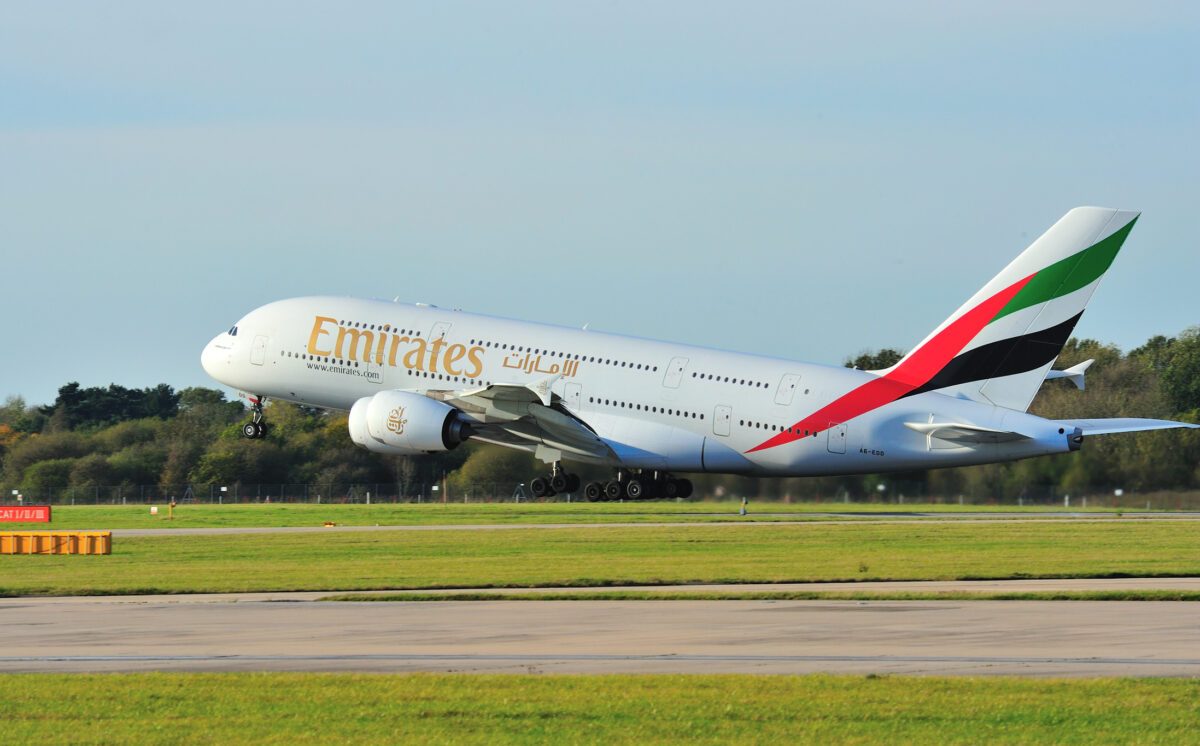
Emirates President Tim Clark has renewed his case for Airbus to develop a substantially redesigned A380, saying the Dubai carrier would commit to a minimum of 100 aircraft if the manufacturer produced a version with new engines, aerodynamics and systems.

In an October 29 interview with Aviation Week, Clark said Airbus had told him that 100 orders would not cover the program’s break-even point. According to Clark, the manufacturer would require commitments for about 250 aircraft.
That figure has not been presented by Airbus as a current sales target or formal launch condition. The manufacturer continues to describe the A380 as an out-of-production aircraft that it will support for decades.
Read our stories in your inbox
Two aviation newsletters. Zero fluff.
Clark Wants More Than an A380neo
Clark’s proposal goes well beyond fitting new engines to the existing A380-800. He outlined an aircraft with a new wing, a smaller vertical tail, greater use of composite materials and modernized onboard systems derived from technology developed for aircraft including the Airbus A350.
He also envisages a new-generation engine incorporating technology from the Rolls-Royce UltraFan program and Trent XWB family. Combined with the aerodynamic and structural changes, Clark estimated that the redesigned aircraft could reduce operating costs by 25% compared with the current A380.
Clark illustrated the target by suggesting hourly fuel consumption could fall from about 12 metric tons to nine. That is his estimate rather than a manufacturer-backed performance target, but it shows the scale of improvement Emirates believes would be needed. A re-engined A380 offering only an incremental reduction would still struggle to close the efficiency gap with current twin-engine widebodies.
The systems overhaul is central to Clark’s argument. The original A380 was conceived during the 1990s, while the A350 uses extensive composite construction, adaptive wing technology and a newer integrated systems architecture. Transferring those advances into an A380-sized airframe would effectively create a new generation of the aircraft rather than a conventional derivative.
A 250-Aircraft Threshold Tells the Story
The reported threshold of 250 orders is significant because Airbus delivered only 251 A380s during the entire original production program. Securing that volume again would require several large operators, not simply an anchor order from Emirates.
Airbus ended the program after Emirates reduced its planned A380 fleet from 162 to 123 aircraft. In its February 2019 production decision, the manufacturer said the resulting lack of a substantial backlog left no basis to sustain deliveries beyond 2021.
Restarting production would be a larger undertaking than reopening a dormant final assembly line. Clark’s preferred aircraft would need a new propulsion package, extensive design work, certification and a rebuilt supplier network. A new wing would make the project particularly expensive and complex, while the engine requirement would depend on a propulsion manufacturer accepting the cost and risk of a relatively specialized application.
Emirates received its 123rd and final new A380 in December 2021. The delivery also closed the original production program, making Emirates the customer for almost half of all A380s built.
The A380 Still Has a Defined Role at Emirates
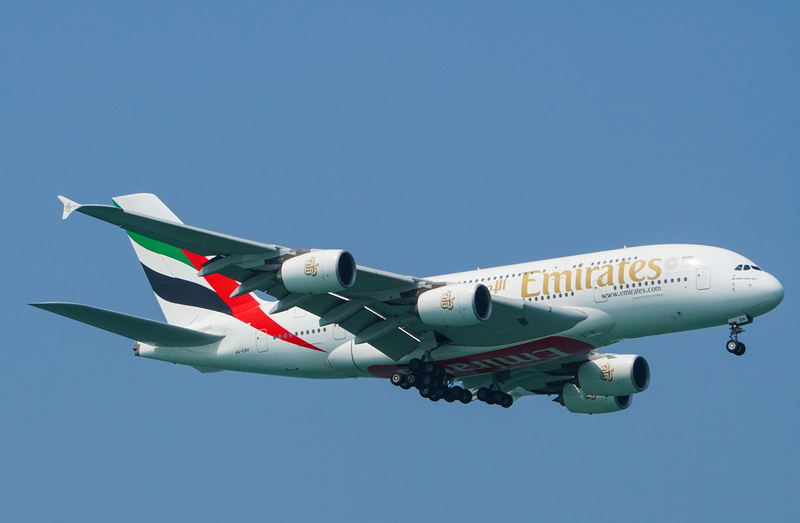
Emirates continues to make a stronger operational case for the A380 than any other airline. Its published configurations range from 484 seats in a four-class layout to 615 seats in a two-class aircraft, according to the carrier’s A380 fleet specifications. That capacity allows Emirates to concentrate large connecting flows through Dubai International (DXB) while retaining unusually large premium cabins.
Clark said the A380 was Emirates’ most profitable fleet asset during the airline’s previous financial year. He expects the type to remain in service until 2041, although individual retirements will depend on aircraft age, approved life limits and the economics of major maintenance work.
The carrier is backing that plan with cabin investment. By July 2026, Emirates Engineering had completed nose-to-tail work on 47 A380s as part of a retrofit program covering 219 A380s and Boeing 777s. The work adds Premium Economy and updates seats, entertainment systems and cabin finishes.
Emirates subsequently placed the total planned investment in its fleet retrofit program at more than $7 billion. During the six months ending September 30, it completed cabin refurbishment on nine A380s and three Boeing 777s.
Emirates Faces a Capacity Gap
The proposal also reflects Emirates’ concern about replacing the A380’s capacity and cabin volume. The Boeing 777-9 will become the airline’s largest new-production aircraft, but Clark said it cannot reproduce the A380’s floor area, particularly in Economy Class.
For Emirates, that difference affects more than headline seat count. The A380 accommodates First Class suites, showers, an onboard lounge and four cabin classes while still carrying 484 passengers in its lowest-density configuration. Replacing that capacity with smaller aircraft would require more frequencies, more slots and additional crews.
Clark’s business case therefore depends on sustained growth at DXB and on routes where additional frequencies are constrained or commercially inferior to deploying one very large aircraft. Airbus faces a different calculation: whether that requirement exists across enough airlines to support an industrial program on the scale Clark is proposing.
Bottom Line
Emirates is the clear potential winner from a new A380 because its network, hub structure and premium-heavy configuration can exploit an aircraft that proved difficult for smaller operators to absorb. A minimum commitment of 100 jets would be substantial, but it would still leave Airbus exposed to one customer’s strategy unless other major airlines joined the program.
The more consequential point is that Clark is not asking Airbus to revive the old A380-800. His specification amounts to a new very-large-aircraft program using the A380’s double-deck concept, with the development cost and certification burden that entails. The reported 250-aircraft requirement underlines the distance between an airline’s operational need and a manufacturer’s investment case.
What matters next is whether Emirates turns its advocacy into a defined technical requirement backed by a formal commitment, and whether any other airlines support it. Without that broader market, Airbus has little incentive to divert engineering and industrial resources from the A350 and its high-volume narrowbody programs, however compelling the A380 remains inside Emirates’ operation.