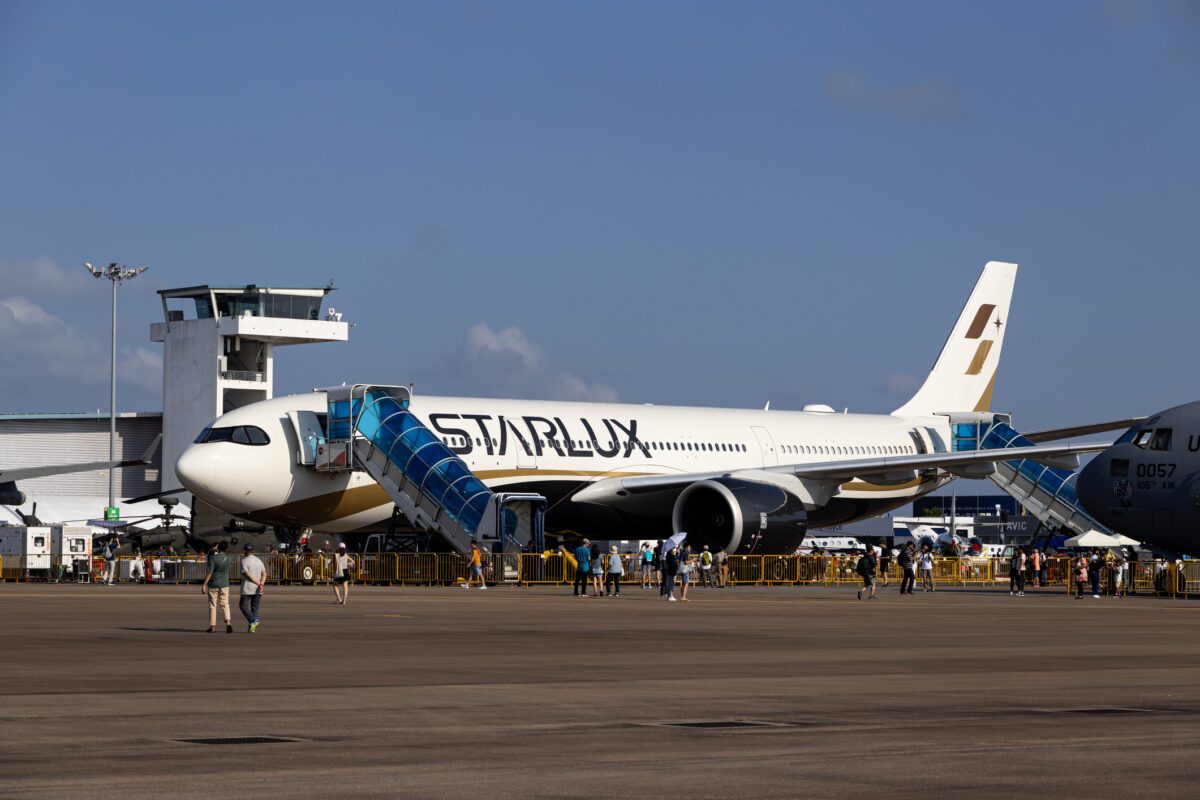
Starlux Airlines will open its first route to Oceania in March 2027, linking Taipei with Sydney and Auckland using an Airbus A330-900neo.


The first JX183 departure will leave Taipei Taoyuan (TPE) on March 23, arriving at Sydney (SYD) and Auckland (AKL) on March 24. The airline will initially operate four weekly round trips before increasing the service to daily from May 1.
Starlux has opened bookings for travel between each of the three cities. That includes local Sydney-Auckland traffic, giving the Taiwanese carrier fifth-freedom access to the heavily contested trans-Tasman market as well as the ability to carry passengers between Taiwan and Australia or New Zealand.
Read our stories in your inbox
Two aviation newsletters. Zero fluff.
Overnight Flights From Taipei Feed the Trans-Tasman Sector
Under the published launch schedule, JX183 will leave TPE at 7:40 p.m. on Tuesdays, Thursdays, Fridays and Sundays. It is scheduled to arrive in Sydney at 8:10 a.m. the following day.
After a two-hour, 55-minute stop, the same flight number will depart SYD at 11:05 a.m. on Mondays, Wednesdays, Fridays and Saturdays, reaching Auckland at 4:10 p.m. local time.
The return service, JX184, will leave AKL at 6:35 p.m. on the same four days and arrive in Sydney at 8:05 p.m. It will continue to Taipei at 9:35 p.m., arriving at 4:05 a.m. the following morning. The schedule gives the aircraft a 90-minute Sydney turnaround on the northbound journey.
The airline’s announcement describes May 1 as the start of daily service. Bookings are already displayed on Starlux’s Taipei-Auckland sales page, while a COSMILE promotion specifically covers Taipei-Sydney, Taipei-Auckland and Sydney-Auckland travel. The latter confirms that Starlux is marketing the trans-Tasman sector independently rather than restricting it to through passengers.
Qantas Interline Adds Regional Feed
Starlux is pairing the route with a new interline arrangement with Qantas. The agreement is intended to provide bookable connections beyond Sydney and Auckland, including Australian domestic cities, other New Zealand points and Fiji.
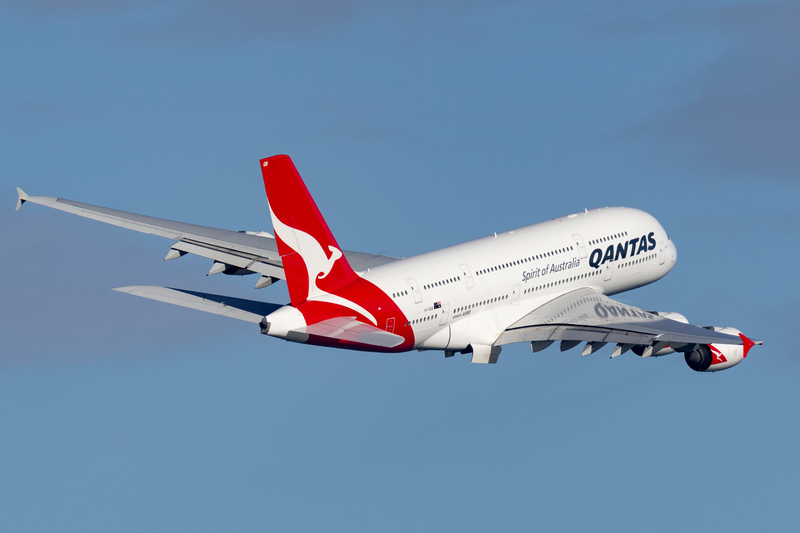
The arrangement is an interline partnership rather than a codeshare. It nevertheless broadens the route’s addressable market at launch, allowing Starlux to draw traffic from cities where it will not operate its own aircraft. That is particularly important in Australia, where the airline’s initial network will consist of one gateway.
Starlux first confirmed its Australian plans in June 2026, when Sydney Airport announced that it would become the carrier’s first Australian destination. At that stage, the airline had identified Auckland as the onward point but had not published operating days or timings.
Sydney Airport said nearly 194,000 passengers traveled between Sydney and Taiwan during 2025, an 18% increase from the previous year. The overnight southbound timing also gives Starlux the opportunity to feed the service at TPE from its Asian network, rather than relying solely on local Taiwan-Australia demand.
A330-900neo Brings 297 Seats
Starlux will assign its two-class Airbus A330-900neo to the route. The airline’s published cabin plan has 297 seats: 28 in business class and 269 in economy.
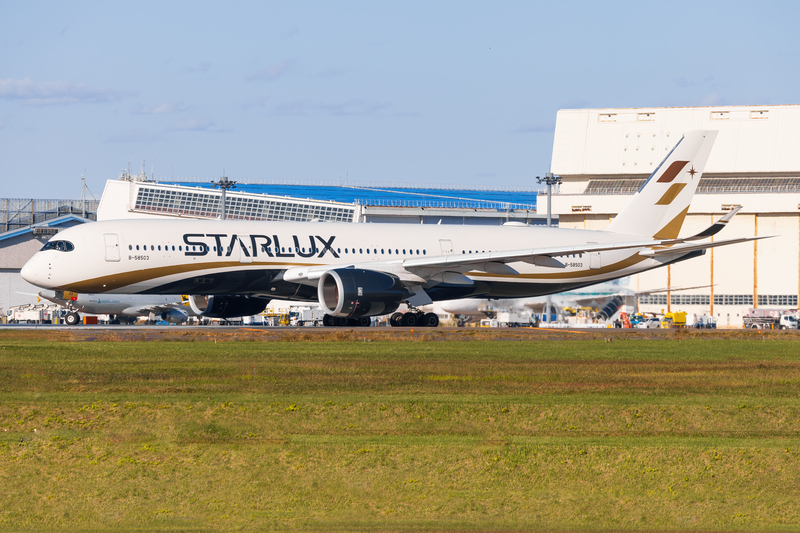
Business-class seats have a stated pitch of 44 inches, while economy uses a 2-4-2 layout with 31- or 32-inch pitch. The configuration gives Starlux a substantial economy cabin for leisure and connecting traffic without surrendering the premium capacity needed for the longer Taipei-Sydney sectors.
Powered by Rolls-Royce Trent 7000 engines, the A330-900neo combines long-haul range with the ability to operate shorter regional sectors. That makes it a practical fit for this pattern: an overnight flight of more than nine hours between Taiwan and Australia followed by a trans-Tasman leg of roughly three hours.
The aircraft also provides belly capacity across all three markets. Auckland Airport has previously identified Taiwan as an important destination for New Zealand air exports, including time-sensitive produce, while Starlux has been expanding cargo activity alongside its passenger network.
Auckland Adds Another One-Stop Taiwan Option
The through service will not be nonstop between Taiwan and New Zealand, but it adds a new operator and a new Australian intermediate point. The ability to sell Sydney-Auckland independently should help Starlux spread the economics of the aircraft across three distinct traffic flows: Taipei-Sydney, Taipei-Auckland and the trans-Tasman sector.
Auckland’s Taiwan market has continued to recover. Auckland Airport’s financial-year 2025 figures recorded 42,829 arrivals by Taiwan residents, up 9% from 2024. Australia, meanwhile, accounted for more than 4 million international passenger movements at AKL and 42% of the airport’s international origin-and-destination traffic.
Those figures underline the two roles Starlux expects the Auckland extension to perform. It opens New Zealand to the airline’s Taipei-based network while placing additional widebody capacity into Auckland’s largest international market.
Bottom Line
Starlux is entering Oceania with a structure that limits the risk of opening two separate long-haul routes. Sydney supplies the larger local Taiwan market and regional connections through Qantas, while Auckland adds another revenue-producing sector to the same aircraft rotation. Fifth-freedom sales are central to that model rather than an incidental feature of the schedule.
The move also demonstrates how Starlux is using the A330-900neo differently from its larger A350s. The 297-seat A330 offers enough premium and cargo capacity for Taipei-Sydney, but its size remains manageable for a new market and a four-weekly launch. The planned move to daily flying little more than five weeks later is aggressive; the key measure will be whether Sydney-Auckland demand and Qantas feed can support that increase outside peak travel periods.
For Auckland, the arrival adds another Asian network carrier without requiring a nonstop Taipei service from day one. If the route matures, the next question will be whether Starlux retains the combined operation or eventually separates Sydney and Auckland as its Oceania presence grows.