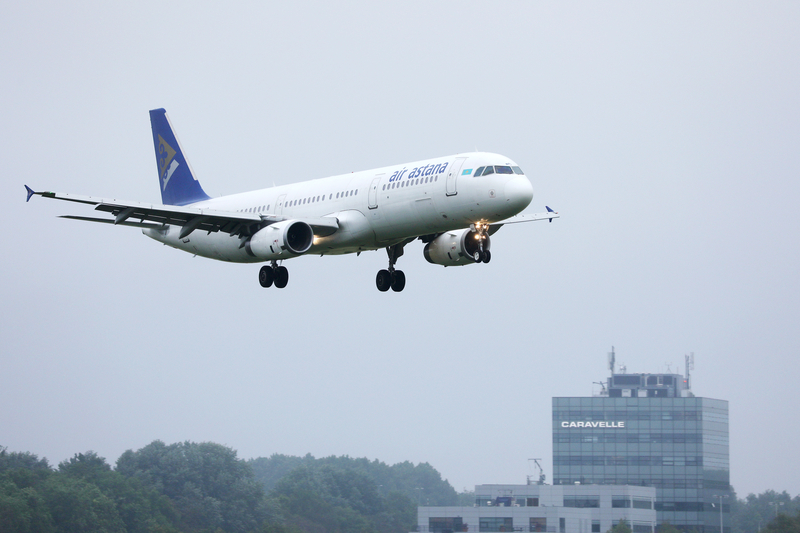
Air Astana will begin scheduled flights to Sharm El Sheikh (SSH) from both of its principal Kazakhstan gateways in December, giving the carrier its first regularly scheduled passenger routes to Africa.

Service from Almaty (ALA) starts December 10, 2026, followed by the first departure from Astana (NQZ) on December 11. Each route will operate twice weekly with Airbus A321 aircraft.
The airline’s booking system shows Almaty departures on Mondays and Thursdays. The initial December inventory includes outbound dates on Thursday, December 10, and Monday, December 14.
Read our stories in your inbox
Two aviation newsletters. Zero fluff.
From the capital, Astana flights are offered on Tuesdays and Fridays, beginning Friday, December 11. Together, the two routes provide four weekly Air Astana departures from Kazakhstan to the Egyptian resort.

Charter Market Moves Into the Scheduled Network
Sharm El Sheikh is not a new destination for Air Astana. The airline has flown the Red Sea resort through seasonal charter programs, supplying capacity to Kazakhstan’s outbound package-tour market. What changes in December is the commercial structure: seats are being placed in the scheduled network and sold through the carrier’s regular distribution channels.
That distinction matters in a leisure market traditionally built around tour-operator allocations. Scheduled status allows Air Astana to sell seats independently of hotel packages and gives passengers more control over trip length, fare conditions and connecting itineraries. Tour operators can continue packaging the flights, but they no longer represent the only practical route to the airline’s inventory.
Air Astana’s own reporting confirms the destination’s charter history. Its 2024 integrated annual report included Sharm El Sheikh among a group of seasonal charter destinations alongside Antalya, Bodrum, Colombo, Doha, Malé, Phuket and Sanya.
The change therefore represents a network conversion rather than the opening of an entirely unfamiliar station. Air Astana already has operational experience in the market, while the scheduled model broadens the addressable customer base beyond travelers buying inclusive vacations.

Separate Flying Patterns From Almaty and Astana
Air Astana has divided the weekly program so that the two Kazakhstan origins operate on different days. Almaty receives Monday and Thursday flights, while Astana operates Tuesday and Friday. The pattern gives the airline four departure days across the week without duplicating service from both cities on the same day.
The timetable also supports conventional seven-night stays, a central feature of Red Sea leisure demand, while the two weekly frequencies from each origin permit shorter or longer combinations. That flexibility is one of the clearest commercial differences between a scheduled operation and tightly controlled charter rotations.
Almaty is Air Astana’s largest international connecting point and gives the Sharm El Sheikh service access to feeder traffic from domestic and regional markets. NQZ adds a nonstop option for the capital and northern Kazakhstan, avoiding the need to connect through Almaty for a journey primarily driven by leisure demand.
The services also diversify Air Astana’s winter flying. Sharm El Sheikh offers a warm-weather market during a period when demand on some European and seasonal regional routes is lower, while complementing the airline’s established winter leisure operations toward South and Southeast Asia.

A321 Capacity Fits the Leisure Assignment
Air Astana plans to use the Airbus A321, a type that forms a substantial part of its narrowbody operation. The airline’s fleet includes A321ceo, A321neo and A321LR aircraft, allowing it to match cabin capacity and range with individual international missions.
The carrier’s A321ceo configuration accommodates 179 passengers in two classes, while its standard A321LR layout has 16 business-class and 150 economy-class seats. Air Astana has previously identified Sharm El Sheikh as one of the destinations served by the longer-range variant, whose two-class cabin includes individual entertainment screens.
The A321 provides enough capacity for tour-operator blocks while retaining inventory for direct retail sales. It also avoids committing one of Air Astana’s Boeing 767 widebodies to a route whose demand is likely to vary significantly by departure date and vacation period.
As of June 30, 2026, Air Astana operated 35 aircraft, including 29 A320neo-family and A321neo-family jets, according to the company’s latest published fleet breakdown. The airline expects continued narrowbody growth alongside the introduction of Boeing 787s, with a 2026 fleet plan calling for two additional A321s.
A First Scheduled Step Into Africa
Moving Sharm El Sheikh into the regular timetable creates Air Astana’s first scheduled African operation. Its international network has historically been oriented toward Europe, the Caucasus, the Gulf, South Asia, China and Southeast Asia, with African flying confined to leisure charters.
The route remains firmly centered on outbound Kazakhstan demand rather than connecting Africa with Air Astana’s broader network. Even so, scheduled status gives the airline more freedom to manage pricing and inventory, build direct customer relationships and adjust the balance between independent passengers and tour-operator traffic.
It also gives Air Astana a relatively low-risk way to test scheduled African demand. The airline is entering with a destination it already knows, using an aircraft type already established in the operation and limiting exposure to two weekly flights from each origin.
Bottom Line
Independent travelers are the clearest beneficiaries of the change. A scheduled ticket makes it easier to choose hotels separately, vary the length of a stay or connect to the flight from another Air Astana destination. Tour operators retain access to the same capacity, but scheduled distribution reduces their control over how the Kazakhstan–Sharm El Sheikh market is sold.
For Air Astana, the decision shows how charter flying can serve as a development stage for scheduled routes. The airline has already established demand and operating experience; it can now use its own revenue-management system to determine whether direct sales support a more durable program. Performance through the 2026-27 winter will indicate whether Sharm El Sheikh remains a seasonal scheduled route, gains additional frequencies or provides a model for converting other charter destinations.
The African milestone is strategically modest but commercially relevant. Air Astana is not building an African connecting network, yet it is extending scheduled distribution into a new continent with limited fleet and market risk. The next measure will be whether four weekly departures generate enough independent demand to support a broader schedule beyond peak winter travel periods.