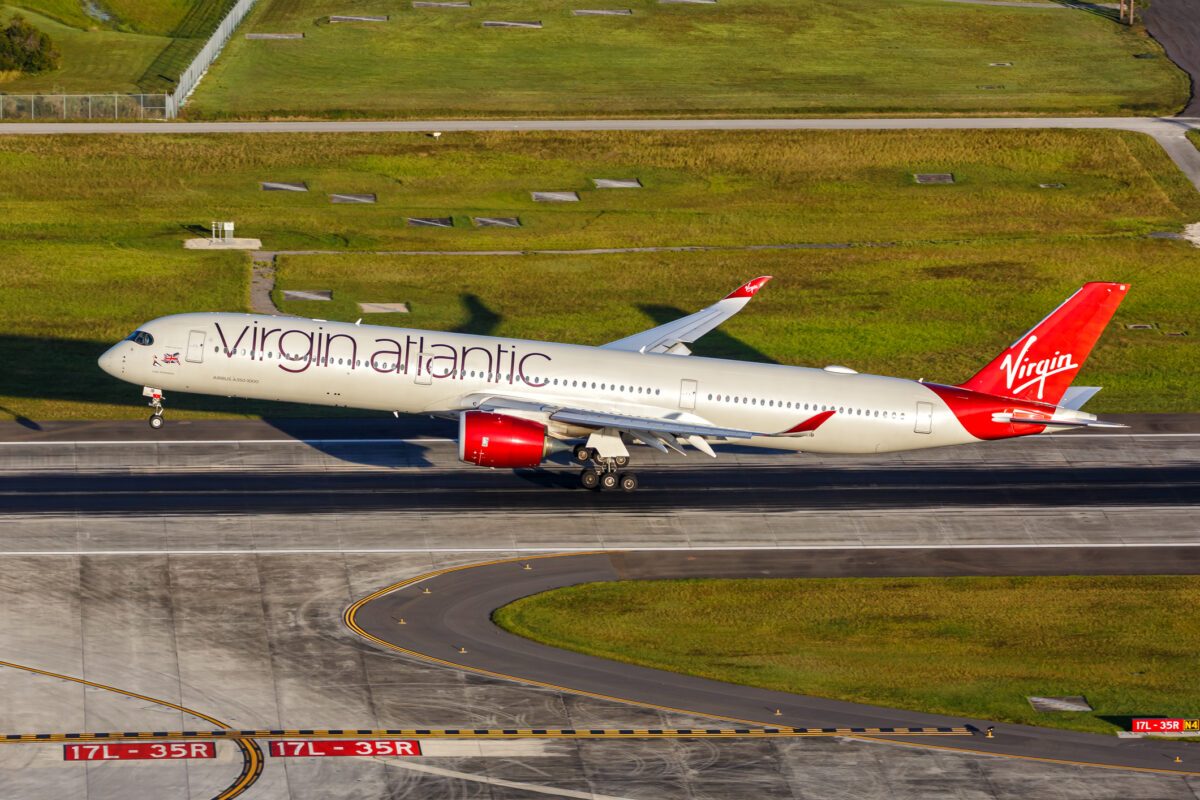
Virgin Atlantic will suspend its seasonal nonstop service between Manchester (MAN) and Las Vegas (LAS), removing the Nevada destination from its Manchester schedule for summer 2027.
The airline confirmed the withdrawal in a November 12 network update, attributing its summer schedule changes to evolving customer demand. The announcement stops short of describing the closure as permanent, but states that the Las Vegas route will not return during the 2027 summer season.
Virgin Atlantic’s 2026 service operated three times weekly as flights VS85 and VS86. The carrier’s Manchester-Las Vegas route page listed Tuesday, Friday and Sunday departures through October 23, 2026.
Read our stories in your inbox
Two aviation newsletters. Zero fluff.
Customers holding bookings for 2027 can choose a refund or alternative travel arrangements. Virgin Atlantic said the affected reservations and its schedules would be updated in global distribution systems on Saturday, November 14.
Manchester’s Only West Coast Nonstop Is Removed
The withdrawal ends Manchester’s only nonstop link with the western United States. Virgin Atlantic introduced the latest iteration of the route on June 2, 2024, initially planning three weekly Airbus A350-1000 flights.
At the time, Manchester Airport described the service as the only direct connection between the U.S. West Coast and a UK airport outside London. Its role was principally leisure-oriented, serving Las Vegas itself as well as road trips through Nevada, Arizona, Utah and California.
The route generated meaningful traffic during its first year. Manchester Airport said that more than 36,000 passengers traveled on over 130 flights in the 12 months following the launch. Aircraft also carried nearly 110 metric tons of commercial cargo.
Virgin continued operating the route in summer 2026. Its cargo division’s seasonal network announcement listed three weekly flights beginning April 21, alongside daily Manchester-New York service and additional flying to Atlanta and Orlando.
The Airbus A350-1000 gave the Las Vegas operation considerable capacity. Virgin Atlantic uses two layouts on the type: a 335-seat configuration with 44 Upper Class seats and a 397-seat leisure configuration with 16 Upper Class seats. Both have 56 Premium seats, making the aircraft well suited to long-haul leisure markets with demand across multiple cabins.
The A350-1000 has more than enough performance for the roughly 10-hour westbound sector. The strategic question was therefore not aircraft capability, but whether three weekly point-to-point flights represented the best use of a large widebody within Virgin Atlantic’s Manchester program.
New York and Atlanta Gain Extra Flights
Virgin Atlantic is not reducing its overall commitment to Manchester. Instead, it is concentrating the operation on three U.S. destinations with either greater frequency requirements or stronger connecting utility through its partnership with Delta Air Lines.
New York John F. Kennedy (JFK) will increase from daily service to 10 flights per week between April and October 2027. The three additional rotations will operate as VS217 and VS218 on Tuesdays, Fridays and Sundays from April 20 through October 22.
The extra departures create a more useful schedule for both local traffic and passengers transferring between Virgin Atlantic and Delta. JFK offers a larger pool of connecting markets than Las Vegas, while multiple departures on selected days give the airline more flexibility in matching transatlantic flights with connection banks.
Atlanta (ATL) will rise from daily to 11 weekly flights during the early summer peak. Additional services VS283 and VS284 are scheduled on Mondays, Tuesdays, Thursdays and Saturdays from June 5 through July 15.
Virgin will also deploy the Airbus A350-1000 on Atlanta throughout the summer. The combination of a larger aircraft and four extra weekly frequencies for part of the season represents a substantial capacity increase on a route feeding Delta’s principal hub.
That connecting role distinguishes Atlanta from Las Vegas. Delta’s network at ATL gives Manchester passengers access to destinations across the United States, while also supporting inbound traffic from numerous regional markets that cannot sustain their own nonstop service to northern England.
Orlando Remains the Largest Manchester Market
Virgin Atlantic will operate up to 19 weekly flights between Manchester and Orlando (MCO) in July and August 2027, approaching three departures a day on the busiest dates.
Orlando has been the foundation of the carrier’s Manchester operation since service began in May 1996. Virgin marked 30 years at the airport in 2026, noting in an anniversary announcement that Orlando was its original route from the city.
Its scale reflects the large leisure and visiting-friends-and-relatives market between northern Britain and central Florida. High frequencies also offer operational advantages for Virgin Atlantic Holidays, where air capacity can be aligned with hotel, villa and cruise packages during school vacation periods.
For Las Vegas passengers wishing to retain a Manchester departure, Virgin Atlantic is proposing connections through JFK or ATL, with Delta operating the onward sector. The airline will also continue its daily nonstop between London Heathrow (LHR) and Las Vegas.
Those alternatives preserve Las Vegas within the wider Virgin-Delta network, but they do not replicate the convenience of the Manchester nonstop. A U.S. connection requires passengers to complete immigration and customs formalities at their first port of entry before continuing to Nevada.
Bottom Line
Virgin Atlantic’s decision is a reallocation rather than a retreat from Manchester. The airline is replacing a three-weekly, heavily leisure-led endpoint with additional frequency to two major Delta gateways while sustaining a very dense Orlando schedule. That gives each Manchester aircraft rotation a broader role in the joint-venture network and reduces reliance on demand for a single destination.
Las Vegas nevertheless represents a visible loss for Manchester Airport. The service gave northern England a rare nonstop option beyond the eastern and central United States, and its removal leaves the airport’s U.S. network more concentrated around Florida and East Coast or connecting hubs. The first-year passenger figures showed that the route had an audience, but not necessarily one producing the returns Virgin requires from an A350-sized aircraft across a full summer.
The next indication of Virgin Atlantic’s Manchester strategy will be whether the higher JFK and ATL frequencies become structural rather than peak-season additions. If those services deliver stronger connecting flows and aircraft utilization, Manchester’s future growth is likely to favor frequency and alliance connectivity over isolated long-haul leisure routes.