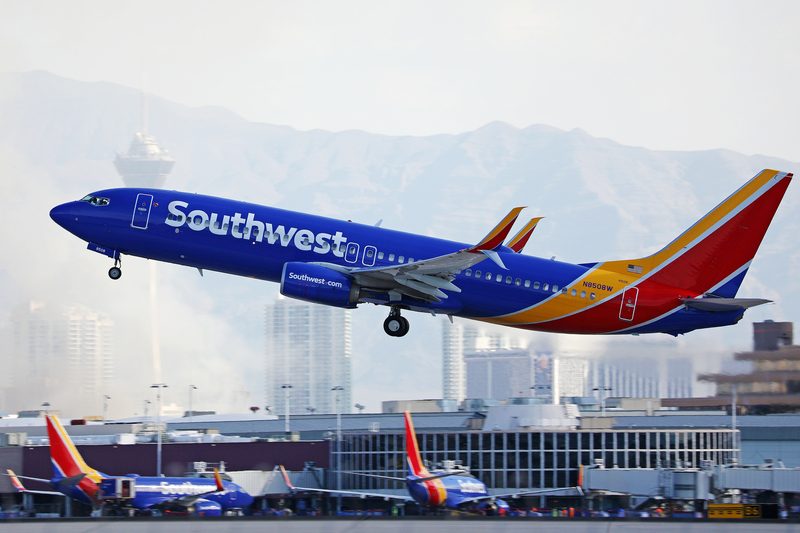
Southwest Airlines is adding more than a dozen new routes centered on two of its most important airports, with Las Vegas Harry Reid International Airport (LAS) and Orlando International Airport (MCO) getting the bulk of the growth.

At first glance, this looks like a standard schedule expansion. In reality, it says something larger about where Southwest wants to lean next. The carrier is concentrating growth in airports where it already has scale, strong local demand, and room to deepen its relevance rather than scattering new flying across the network.
That is a very specific strategy, and it is not accidental.
Read our stories in your inbox
Two aviation newsletters. Zero fluff.
Las Vegas Is Getting The Bigger Share Of The Growth
Las Vegas is clearly the main event.
Southwest says it plans to launch 10 new routes from LAS by spring 2027, adding a mix of domestic, international, and leisure-oriented destinations. The still-to-launch routes are:
- Anchorage, Alaska
- Boston, Massachusetts
- Cancún, Mexico
- Hilo, Hawaii
- Knoxville, Tennessee
- Miami, Florida
- Philadelphia, Pennsylvania
- Puerto Vallarta, Mexico
- San José del Cabo, Mexico
- San José, Costa Rica
That is a notable spread. It is not just more flying to obvious short-haul Southwest strongholds. It includes new long-leisure plays, international expansion, a Hawaii add, and even a route to Anchorage that shows the airline is willing to stretch the Las Vegas platform into less typical territory.
Orlando Is Growing Too, But In A More Measured Way
Orlando is also getting meaningful expansion, though on a smaller scale.
Southwest is adding three new routes from MCO:
- Little Rock, Arkansas
- San José, California
- Wichita, Kansas
Compared with Las Vegas, the Orlando additions are more domestically focused and less flashy. But they still fit the same strategic logic: add flying where the airline already has a strong operation and where new nonstop service can deepen network utility.
That is important because Orlando is not just a leisure airport for Southwest. It is one of the carrier’s core high-volume markets, and reinforcing it helps protect a position the airline already values.
This Is A Hub-Strengthening Move, Not A Random Expansion
The common thread between Las Vegas and Orlando is that Southwest already matters there.
These are not airports where the airline is trying to establish a small foothold. These are places where Southwest already has deep local visibility, broad customer familiarity, and substantial daily flying. Adding more routes in that environment makes commercial sense because the airline can use existing scale to support new destinations more effectively than it could from weaker stations.
In other words, Southwest is not really “discovering” these airports. It is doubling down on them.
Las Vegas Is Becoming More Internationally Important For Southwest
One of the more interesting parts of the announcement is how much it reinforces Las Vegas as an international growth point.
Cancún, Puerto Vallarta, Los Cabos, and San José, Costa Rica all matter because they push Southwest further into the kind of leisure international flying that has become more important to its growth story. Las Vegas has long been one of the strongest local O&D markets in the United States, but it has not always been central to Southwest’s international identity.
That is starting to change.
For aviation readers, this is one of the most revealing parts of the plan. Southwest is using LAS not only as a domestic superstation, but increasingly as a launching point for higher-value leisure traffic into Mexico, Central America, and beyond.
Anchorage And Hilo Show The Airline Is Testing Its Range Of Appeal
Two routes stand out immediately from a branding and network perspective: Anchorage and Hilo.
Anchorage is not the sort of destination most travelers automatically associate with Southwest, and that is precisely why it is notable. It shows the airline is willing to use Las Vegas to support a broader range of seasonal and leisure demand than just the conventional sun-and-beach playbook.
Hilo is equally interesting because it strengthens Southwest’s Hawaii story from a market where the airline already has huge domestic traffic relevance. That route is less about novelty and more about using existing customer strength in Las Vegas to support longer-haul leisure demand in a way that still feels brand-consistent.
Frequency Growth On Existing Routes Matters Too
The new routes are the headline, but they are not the whole story.
Southwest is also adding flights on a long list of existing services from both Las Vegas and Orlando. That matters because it shows the airline is not just chasing publicity with new city pairs. It is also deepening frequency where it already knows demand exists.
From Las Vegas, added flying will touch markets such as Austin, Burbank, Denver, Indianapolis, Kansas City, Los Angeles, Nashville, New Orleans, Oakland, Orange County, Orlando, Phoenix, Reno, San Francisco, and Tampa.
From Orlando, the airline is boosting routes including Albuquerque, Austin, Baltimore, Buffalo, Kansas City, Las Vegas, Louisville, Memphis, Milwaukee, Nashville, New Orleans, Oklahoma City, Philadelphia, Pittsburgh, Rochester, San Antonio, and San Juan.
That is a substantial amount of incremental network investment even before you count the new routes.
The Strategy Is About Defending Strongholds
The broader pattern is clear.
Southwest is making sure two of its most important stations remain even more useful, more relevant, and more difficult for rivals to challenge. That matters in a U.S. domestic market where low-cost competition has become more fluid, customer loyalty is less stable, and product changes at Southwest itself have made the airline more dependent on network strength than simple legacy goodwill.
Las Vegas and Orlando are ideal places to do that because both have huge local demand, major leisure appeal, and strong connecting value inside Southwest’s network.
Bottom Line
Southwest’s latest route push is not just about adding more dots to the map. It is about reinforcing two airports where the airline already has major scale and strong brand relevance.
Las Vegas gets the biggest share of the growth, including a meaningful international push and some surprisingly ambitious domestic adds. Orlando gets a smaller but still important set of new routes, plus more frequency on existing flying. Together, the moves show Southwest is choosing to build where it is already strongest rather than stretching into weaker new territory.
That is usually the clearest sign of deliberate expansion rather than opportunistic experimentation.
Keep reading FlyMag
Get the Daily Brief in the morning or the Route Watch weekly recap on Fridays. Or both.