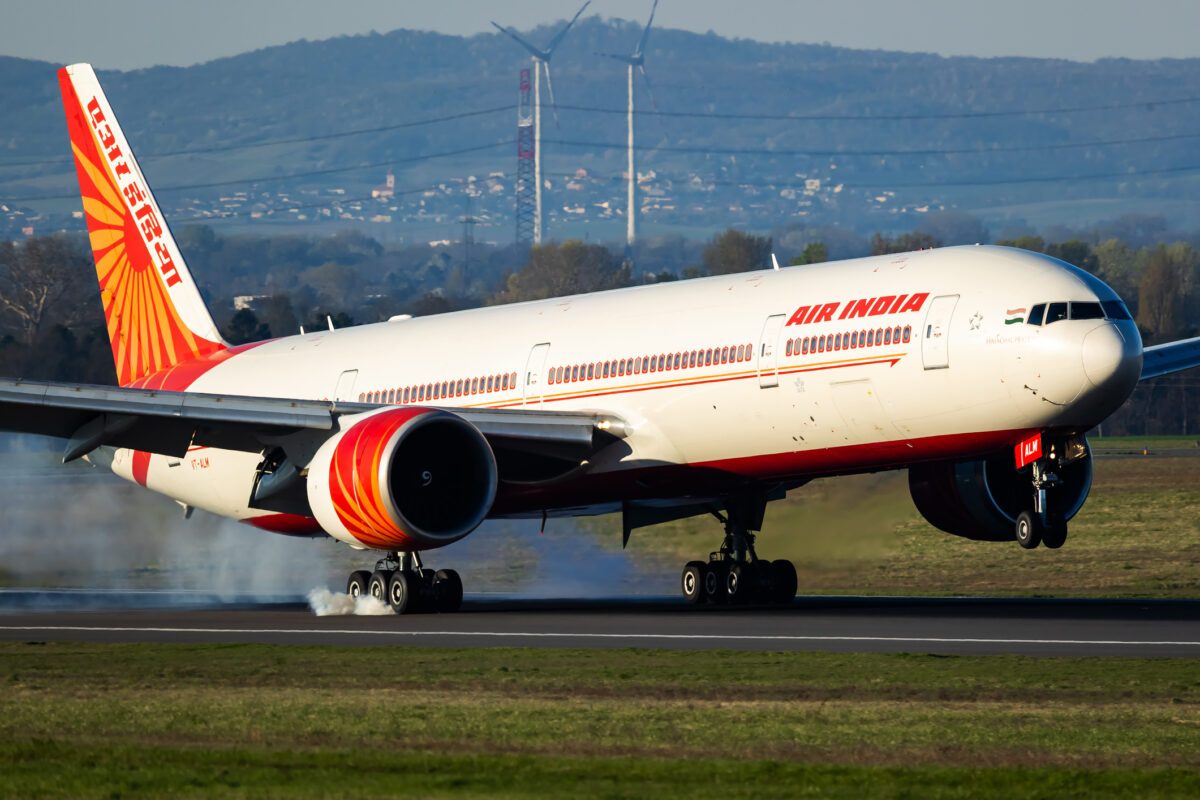
Air India will launch a new nonstop service between Mumbai Chhatrapati Shivaji Maharaj International Airport (BOM) and Toronto Pearson International Airport (YYZ) on October 25, 2026, giving the airline a second Indian gateway to Canada’s largest city.

The seasonal route will operate three times weekly through March 26, 2027, using an upgraded Boeing 777-300ER. Air India says it will be the only airline offering nonstop flights between Mumbai Airport (BOM) and Toronto Pearson Airport (YYZ) during the Northern Winter 2026/27 season.
The expansion forms part of a broader Canadian schedule that will include 20 weekly departures from India: 10 from Delhi to Toronto, three from Mumbai to Toronto, and seven from Delhi to Vancouver. Air India expects the changes to add approximately 4,400 monthly seats between India and Canada while increasing premium-seat capacity to Toronto by 71%.
Read our stories in your inbox
Two aviation newsletters. Zero fluff.
Mumbai–Toronto Flight Schedule
Air India has scheduled the following flights, with all times local:
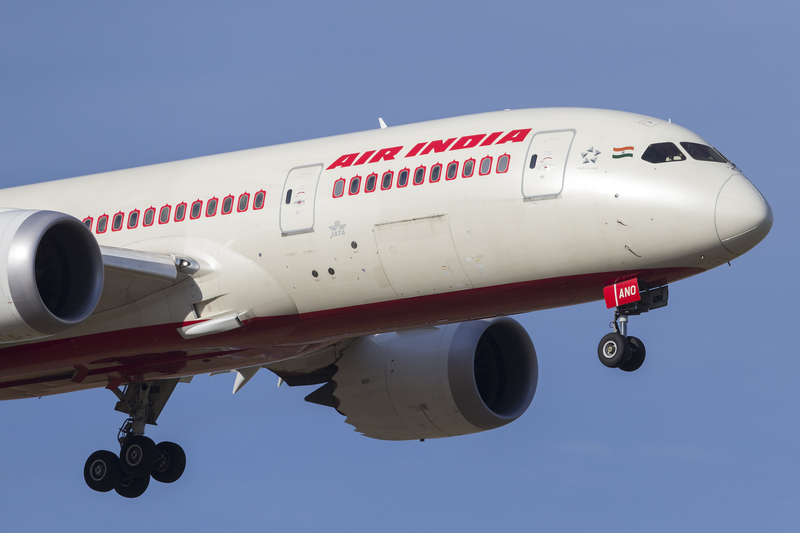
AI193: Mumbai Chhatrapati Shivaji Maharaj International Airport (BOM) 4:00 a.m. – Toronto Pearson International Airport (YYZ) 10:00 a.m.
AI192: Toronto Pearson International Airport (YYZ) 12:30 p.m. – Mumbai Chhatrapati Shivaji Maharaj International Airport (BOM) 2:10 p.m. the following day.
Flights will operate every Wednesday, Friday, and Sunday. The schedule provides a two-hour-and-30-minute turnaround at Toronto Pearson Airport (YYZ) before the Boeing 777 begins its return to Mumbai.
The local-time difference between Mumbai and Toronto changes when Canada enters or leaves daylight saving time, so the calculated block time varies across the winter schedule. The route covers approximately 7,775 miles, placing it among Air India’s longest nonstop services.
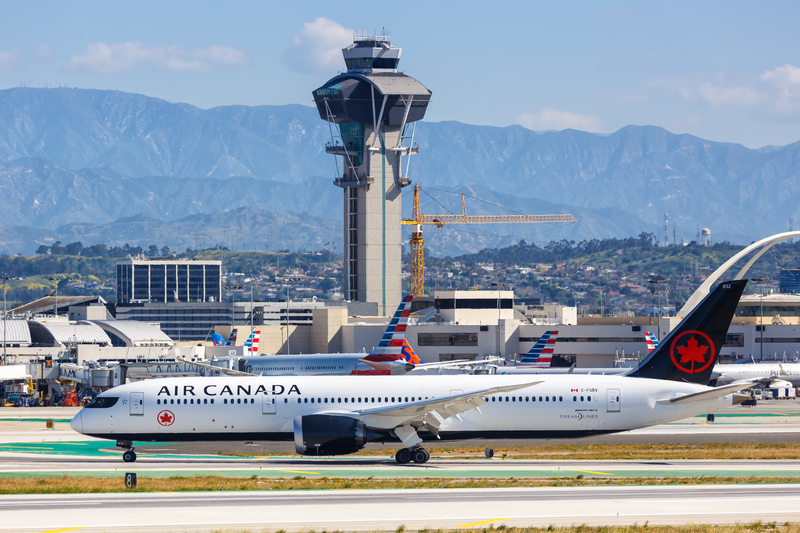
Upgraded Boeing 777 Brings First Class and Wi-Fi
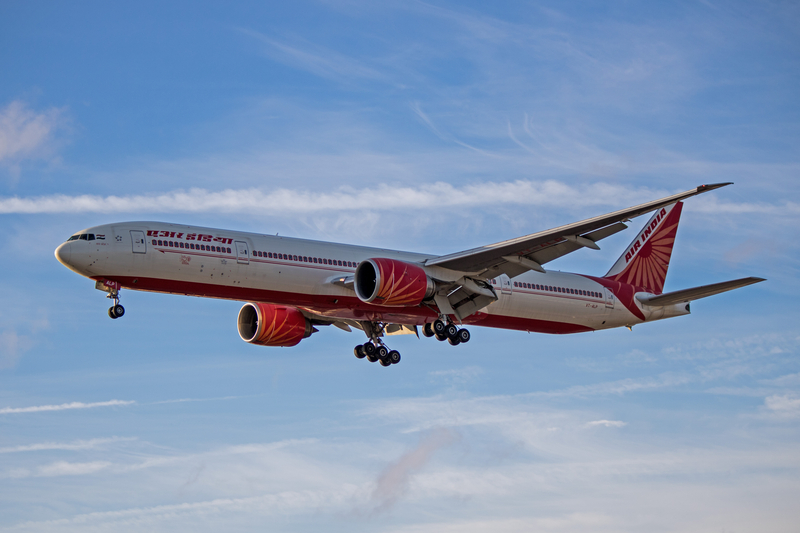
Air India will use a specific upgraded Boeing 777-300ER configuration on the new service rather than its older legacy 777 cabin.
The aircraft accommodates 328 passengers across three cabins:
- Eight First Class suites
- 40 Business Class seats
- 280 Economy Class seats
First Class is arranged in a 1-2-1 configuration and features enclosed suites with sliding privacy doors. Business Class also uses a 1-2-1 layout, giving every passenger direct aisle access and a seat that converts into a fully flat bed.
Economy is primarily arranged 3-4-3, with a narrower 2-4-2 layout toward the rear of the aircraft. Air India lists 32 inches of pitch and an 18-inch seat width in the main economy cabin.

The upgraded aircraft also provides seatback entertainment, power outlets, USB charging, and onboard Wi-Fi. That will give the Mumbai–Toronto route one of Air India’s strongest products, although the aircraft does not include a Premium Economy cabin. Air India’s Boeing 777-300ER specifications confirm the 8-seat First Class, 40-seat Business Class, and 280-seat Economy layout.
The Boeing 777-300ER is powered by two General Electric GE90 engines and remains one of the most capable long-range passenger aircraft in Air India’s fleet. Its passenger capacity and lower-deck cargo volume make it particularly valuable on routes supported by substantial baggage, freight, and visiting-friends-and-relatives demand.
Nearly 2,000 New Weekly Seats
Three weekly flights with 328 seats will provide 984 seats in each direction between Mumbai Airport (BOM) and Toronto Pearson Airport (YYZ).
Across outbound and return flights, Air India will add 1,968 one-way seats to the India–Canada market each week, consistent with the airline’s description of nearly 2,000 additional weekly seats.
The route will also introduce 144 First Class and Business Class seats in each direction every week. Air India should therefore gain a meaningful amount of premium capacity without relying entirely on its Delhi operation.
Mumbai Airport (BOM) provides connecting opportunities from cities across western and southern India. Air India has specifically identified Ahmedabad, Bengaluru, Chennai, Hyderabad, Kochi, and Vadodara among the destinations that can feed its Canadian services through Mumbai or Delhi.
For passengers beginning in those markets, the new route could eliminate the need to connect through Delhi Airport (DEL), London Heathrow Airport (LHR), Dubai International Airport (DXB), or another foreign gateway before continuing to Toronto.
Toronto Gains a Second Air India Gateway
Air India’s Toronto operation has historically centered on Indira Gandhi International Airport (DEL) in Delhi.
Adding Mumbai Airport (BOM) broadens the airline’s Canadian network and gives passengers access to India’s largest commercial and financial center. Mumbai also serves as a useful connecting hub for travelers from Gujarat, Maharashtra, Goa, and southern India.
The Toronto market is supported heavily by passengers visiting friends and relatives, but the route also has potential for business traffic, tourism, student travel, and cargo.
Launching on October 25 positions the service ahead of India’s major winter travel period, including Diwali, Christmas, New Year, and the early-2027 wedding season. Air India described the Canada market as one of its most important international regions, supported by strong personal and family connections between the two countries.
Delhi–Toronto Will Reach 10 Weekly Flights
Air India will separately operate 10 weekly flights between Delhi Airport (DEL) and Toronto Pearson Airport (YYZ) during the winter season.
Daily Flights AI187 and AI188 are already scheduled with Air India’s brand-new Boeing 787-9. The additional three-times-weekly AI189 and AI190 rotation is scheduled to return on September 2, 2026.
Current schedule filings show AI189 operating from Delhi Airport (DEL) to Toronto Pearson Airport (YYZ) with an intermediate fuel stop at Vienna International Airport (VIE). The return Flight AI190 operates nonstop from Toronto to Delhi.
The additional rotation will initially use the Boeing 777-300ER:
AI189: Delhi Airport (DEL) 10:25 a.m. – Toronto Pearson Airport (YYZ) 9:35 p.m. on Wednesdays, Fridays, and Sundays.
AI190: Toronto Pearson Airport (YYZ) 12:35 a.m. – Delhi Airport (DEL) 1:50 a.m. the following day on Mondays, Thursdays, and Saturdays.
The official Air India timetable lists the complete Delhi–Toronto times but does not separately display the Vienna stop. The latest detailed schedule filing identifies the westbound routing as Delhi–Vienna–Toronto, with the eastbound service remaining nonstop.
New 787-9 Takes Over All Delhi Flights in January
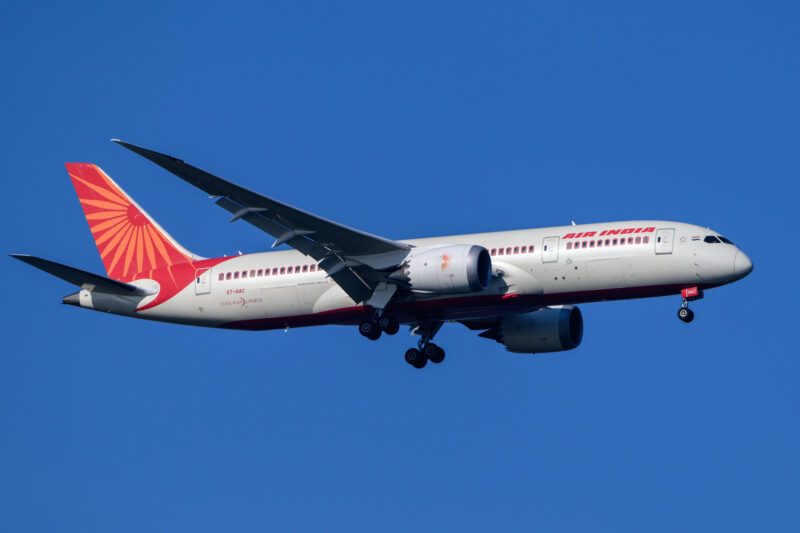
From January 1, 2027, Air India plans to replace the Boeing 777-300ER on Flights AI189 and AI190 with its brand-new Boeing 787-9.
That will place Air India’s latest Dreamliner product on all 10 weekly Delhi–Toronto flights. The Mumbai service will continue using the upgraded Boeing 777-300ER.
Air India’s factory-delivered Boeing 787-9 accommodates 296 passengers:
- 30 Business Class seats
- 28 Premium Economy seats
- 238 Economy Class seats
Business Class uses a 1-2-1 layout with enclosed suites, fully flat beds, direct aisle access, wireless charging, and 17-inch 4K entertainment screens.
Premium Economy is arranged 2-3-2 with 38 inches of pitch, while Economy uses a 3-3-3 layout. The aircraft is equipped with Air India’s latest Thales AVANT Up entertainment system, Bluetooth audio connectivity, power outlets, and Wi-Fi. Air India’s new Boeing 787-9 cabin represents a substantial upgrade from the airline’s older Dreamliner and legacy 777 interiors.
The 787-9 has 32 fewer seats than the upgraded 777-300ER assigned to Mumbai, but it introduces Premium Economy and provides a more consistent modern product across the Delhi schedule.
Air India Is Prioritizing Toronto for Its Best Aircraft
From January 2027, every Air India flight serving Toronto Pearson Airport (YYZ) will use either a factory-new Boeing 787-9 or a significantly upgraded Boeing 777-300ER.
That is an important change for an airline whose long-haul passenger experience has historically varied considerably by aircraft registration and cabin configuration.
Air India will operate 13 weekly Toronto flights across Mumbai and Delhi. Ten will use the new 787-9, while three will use the upgraded 777-300ER.
The airline says the aircraft changes will increase premium-seat capacity to Toronto by 71%. The figure includes First Class and Business Class on the Mumbai 777 flights, along with Business Class and Premium Economy on the Delhi 787-9 operation.
The strategy also reflects the commercial importance of Canada. Toronto’s large South Asian population gives Air India access to substantial year-round demand, while the airline’s Indian hubs provide connections extending beyond the two nonstop gateways.
Bottom Line
Air India will launch three weekly nonstop flights between Mumbai Chhatrapati Shivaji Maharaj International Airport (BOM) and Toronto Pearson International Airport (YYZ) on October 25, 2026.
The seasonal route will continue through March 26, 2027, operating every Wednesday, Friday, and Sunday with an upgraded 328-seat Boeing 777-300ER.
The aircraft will offer eight enclosed First Class suites, 40 fully flat Business Class seats, 280 Economy seats, and onboard Wi-Fi. Three weekly round trips will add 1,968 one-way seats between India and Canada.
Air India will also operate 10 weekly Delhi Airport (DEL)–Toronto Airport (YYZ) flights. Seven are already scheduled with the airline’s brand-new Boeing 787-9, while the additional three weekly AI189 and AI190 services will transition from the 777-300ER to the new Dreamliner on January 1, 2027.
The expansion gives Toronto a second Air India gateway, substantially increases premium capacity, and places the airline’s newest or most heavily upgraded cabins on every Toronto flight from the beginning of 2027.