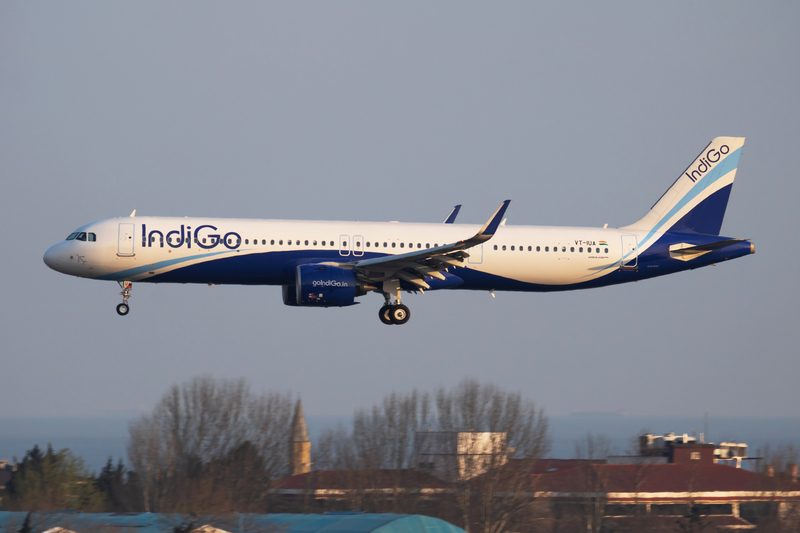
IndiGo (6E) is making two big, very different moves at once: reworking its flagship India–Istanbul (IST) operation to keep it flying without widebodies, and launching a major pilot recruitment drive after last winter’s crew crunch exposed how tight its staffing margins had become.
The headline network change is a new technical stop at Ras Al Khaimah (RKT) on flights from Delhi (DEL) and Mumbai (BOM) to Istanbul (IST), approved to begin in late February 2026. The staffing headline is equally direct: IndiGo plans to hire 1,000+ pilots to stabilize operations after severe disruptions in December 2025.
Why IndiGo is adding a stop to IST now
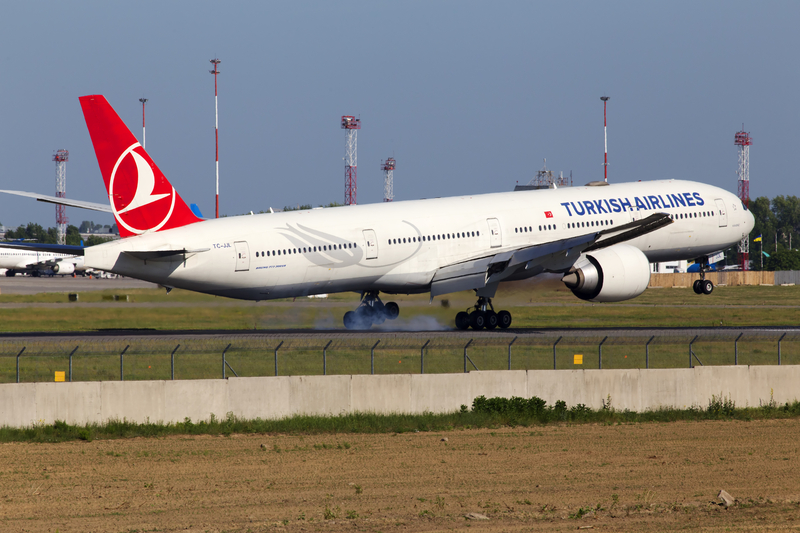
IndiGo’s current nonstop India–Turkey long-haul flying has leaned on two wet-leased Turkish Airlines Boeing 777-300ERs, an unusual widebody solution for a carrier whose in-house fleet is overwhelmingly Airbus narrowbodies.
Read our stories in your inbox
Two aviation newsletters. Zero fluff.
Those wet-leases are now nearing the end of their regulatory runway, and IndiGo needs a bridge to maintain IST flying until more Airbus A321XLR (A321-200NY[XLR]) capacity arrives.
The fix: shift IST service to an A320-family platform with a technical stop at Ras Al Khaimah (RKT), allowing the airline to manage range, payload, and duty-time constraints without relying on the 777s.
IndiGo has secured approval to operate DEL–IST and BOM–IST with the RKT stop effective February 28, 2026 (with schedule filings indicating the change settling in from early March). The stop is operational—fuel and crew logistics—rather than a commercial “new destination” push.
The aircraft reality: why the stop exists
For airline professionals, this is fundamentally a performance and economics decision.
-
The Airbus A320 family can technically cover long stage lengths, but India–IST becomes tight in the real world once you account for winds, alternates, reserves, payload, and the reliability buffer IndiGo needs.
-
A quick stop at RKT turns a long, marginal sector into two more comfortable legs, keeping dispatch predictable and avoiding constant weight restrictions.
This is also why IndiGo’s A321XLR matters. The XLR is designed specifically to make these “long-thin” markets viable nonstop with narrowbody economics. IndiGo has already inducted its first A321XLR, and the airline expects its second example by late March 2026—a key milestone that could reduce or eliminate the need for an en-route stop on certain missions, depending on route performance and payload requirements.
What happens to the 777 operation
The wet-leased Boeing 777-300ER solution was always a transitional tool—high capacity, premium-friendly, and ideal for nonstop stage lengths, but structurally out of step with IndiGo’s single-aisle DNA. With the wet-leases ending soon, the A320-family stopover plan is the least disruptive way to keep the IST market alive until the XLR fleet reaches critical mass.
In other words: IndiGo is choosing continuity over capacity, preserving market presence while it transitions to the aircraft type it ultimately wants to run long-term.
The second move: a 1,000-pilot recruitment drive after December’s operational shock
Separately, IndiGo is moving to recruit over 1,000 pilots—an unusually large hiring push even for a carrier of its size. The drive follows the December 2025 disruption event in which IndiGo canceled more than 5,000 flights in a single week, a crisis attributed largely to crew shortages and brittle rostering practices.
Regulatory review found IndiGo’s staffing had not kept pace with its growth trajectory. One of the most telling datapoints: the airline’s internal requirement was 2,422 captains to sustain the published operation, but it had 2,357 available—a gap that becomes operationally painful fast when sick rates spike or weather events cascade.
IndiGo has since adjusted the system’s “shock absorbers”:
-
Increased its network planning buffer from near-zero to about 3%
-
Raised standby crew availability to a minimum of 15%
-
Accelerated upgrades of 20–25 first officers to captain each month
-
Continued aircraft induction at roughly four deliveries per month
For a high-utilization LCC, those tweaks are not cosmetic. They directly affect cancellation rates, recovery capacity, and the airline’s ability to protect the schedule when irregular operations hit.
Fleet context: narrowbody scale, plus wet-lease complexity
IndiGo’s in-house fleet is enormous and heavily standardized, anchored by the Airbus A320neo and A321neo families, with a growing long-range narrowbody pathway via the A321XLR. It also operates ATR 72-600s for thinner regional flying. In parallel, the airline has been using wet-leased aircraft (including widebodies) to cover capacity gaps and accelerate international growth while it waits for new deliveries.
That mix helps explain why both stories—IST stopovers and pilot hiring—are happening at the same time. IndiGo is trying to do two difficult things simultaneously: expand internationally while maintaining the high-frequency reliability that supports its dominant domestic position.
Bottom Line
IndiGo is reshaping its Delhi (DEL) and Mumbai (BOM) flying to Istanbul (IST) by adding a technical stop at Ras Al Khaimah (RKT) from late February 2026, a bridge strategy driven by the impending end of its wet-leased Boeing 777-300ER operation and the still-ramping A321XLR fleet (with a second XLR expected by late March). At the same time, the airline is launching a 1,000+ pilot hiring drive after December 2025’s disruption exposed tight captain staffing and minimal operational buffer. Together, the moves read as a single message: keep the network growing—but rebuild the resilience needed to actually operate it.
Keep reading FlyMag
Get the Daily Brief in the morning or the Route Watch weekly recap on Fridays. Or both.
Share this story
Composed for each network — click to share, or copy the composed text for your own timing.