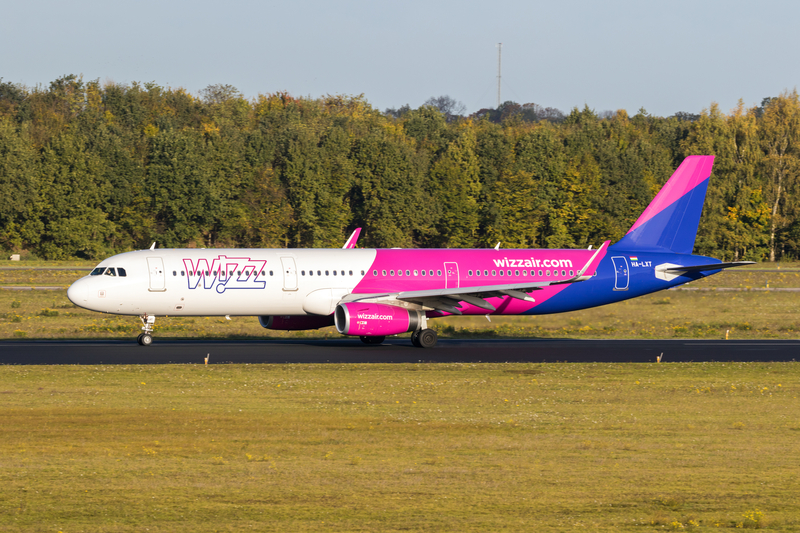
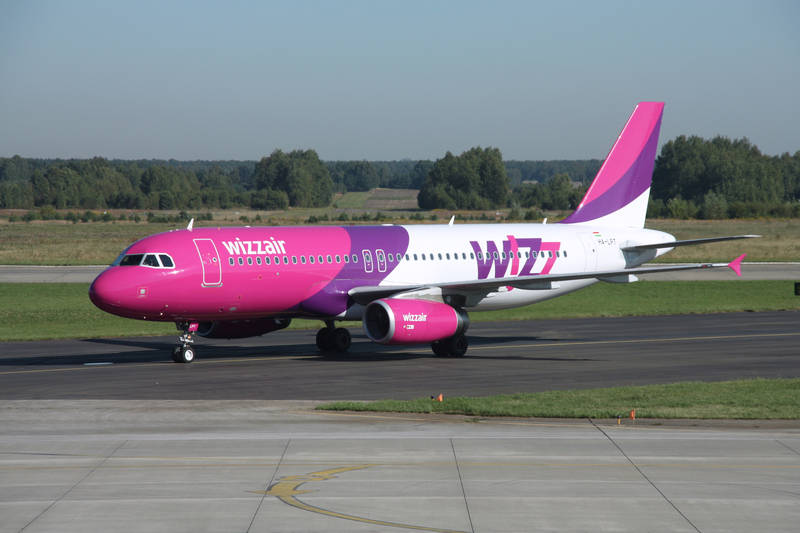
Wizz Air is making its biggest Spanish move yet, opening its first operating bases in the country at Valencia Airport (VLC) and Adolfo Suárez Madrid-Barajas Airport (MAD) in November 2026.

The expansion gives the Central and Eastern European low-cost carrier a permanent aircraft footprint in Spain for the first time. Valencia (VLC) will open on November 2, followed by Madrid (MAD) on November 3. Each airport will receive two Airbus A321neo aircraft, giving Wizz Air the local capacity needed to launch domestic Spanish flying at scale while also expanding international routes from both airports.
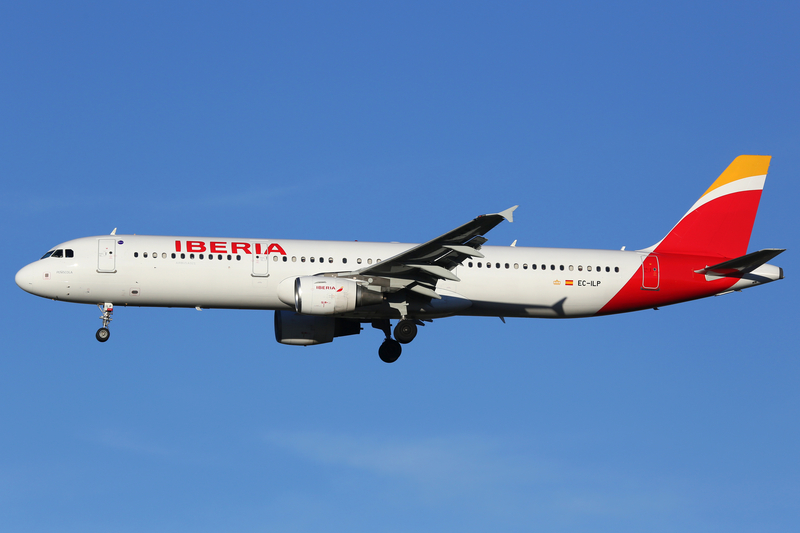
For Wizz Air, this is more than another route announcement. It is a strategic change in how the airline competes in Spain. Until now, Wizz has served the country largely from bases elsewhere in Europe. By basing aircraft and crews in Madrid and Valencia, it can build schedules around Spanish demand, improve aircraft utilization, and compete directly in domestic markets long dominated by Iberia, Vueling, Ryanair, Volotea, and Air Europa.
Read our stories in your inbox
Two aviation newsletters. Zero fluff.
Spain Becomes a Real Base Market for Wizz Air
Wizz Air already has a meaningful presence in Spain, serving 16 Spanish airports with 151 routes to 15 countries. The airline says it has carried more than 15 million passengers in the Spanish market over 22 years. But serving Spain and being based in Spain are very different things.
A base changes the commercial equation. It allows an airline to station aircraft overnight, hire local crews, build early-morning departures, run more reliable rotations, and design routes around local passengers rather than only around inbound flows from other European bases.
That is especially important in a country like Spain. Domestic flying remains structurally important because of the country’s geography, island markets, tourism flows, and large regional cities. Madrid (MAD) and Valencia (VLC) give Wizz two very different platforms: one is Spain’s largest airport and a major European hub, while the other is a fast-growing Mediterranean airport with strong leisure, visiting-friends-and-relatives, and regional demand.
Together, they give Wizz Air a way into both national and international Spanish traffic.
Valencia Gets the First Base
The first new base opens at Valencia (VLC) on November 2, 2026. Wizz Air will place two Airbus A321neo aircraft at the airport and operate 23 routes to eight countries. The airline says the base will increase its capacity at Valencia by 76%, bringing the airport to 3.6 million Wizz Air seats.
That is a large increase for VLC. Valencia has become one of Spain’s most attractive secondary airport markets, benefiting from strong tourism, a growing technology and business base, Mediterranean leisure demand, and lower operating complexity than Spain’s largest airports.
The new Valencia domestic routes are particularly interesting. Wizz Air plans service from Valencia (VLC) to Asturias Airport (OVD), Bilbao Airport (BIO), Palma de Mallorca Airport (PMI), Seve Ballesteros-Santander Airport (SDR), and Santiago-Rosalía de Castro Airport (SCQ).
That gives Wizz a domestic network from Valencia into northern Spain, Galicia, the Balearic Islands, and the Basque Country. It is a bold move because these are not traditional Wizz Air markets. They are Spanish domestic city pairs, and they put the carrier directly into the country’s internal leisure and regional travel flows.
Valencia (VLC) will also gain new international Wizz Air links to Brașov-Ghimbav International Airport (GHV) in Romania and Naples International Airport (NAP). The Naples route is especially logical because it connects two strong Mediterranean city markets and fits Wizz’s existing Italian growth strategy.
Madrid Gives Wizz Air Scale and Visibility
The second base opens one day later at Madrid-Barajas (MAD), also with two Airbus A321neo aircraft. Wizz Air says the Madrid base will operate 27 routes to 12 countries and increase the airline’s capacity at the airport by 48%, reaching 4.8 million seats.
Madrid is a very different challenge from Valencia. MAD is Spain’s largest airport and one of Europe’s major hub gateways. It is the home of Iberia, a major base for Air Europa, and a large airport for Ryanair and other European carriers. Competing at Madrid means competing in a dense, sophisticated, and highly visible market.
Wizz Air’s new Madrid domestic routes include Asturias (OVD), Palma de Mallorca (PMI), and Santiago de Compostela (SCQ). It will also add Madrid (MAD)-Pisa International Airport (PSA) in Italy.
The domestic routes matter most strategically. Madrid-Palma is one of Spain’s important leisure and island-access markets, while Madrid-Asturias and Madrid-Santiago give Wizz a position in northern Spain and Galicia. These are short sectors, but short sectors can be valuable for a high-density low-cost operator if aircraft utilization and fares work.
Wizz is not trying to turn Madrid into a long-haul hub. It is using MAD as a large local market with enough demand to support dense A321neo flying across short- and medium-haul sectors.
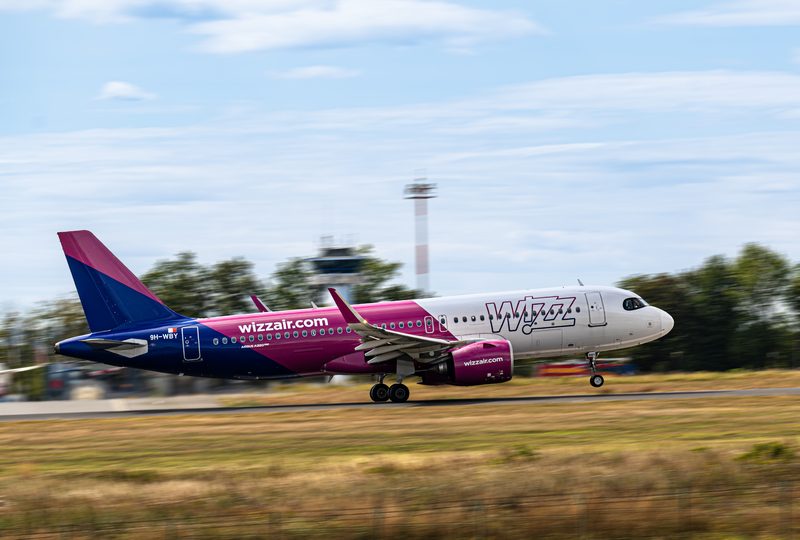
The A321neo Is the Center of the Strategy
The aircraft choice is critical. Wizz Air is building the Spanish bases around the Airbus A321neo, the largest member of the A320neo family and one of the most important aircraft in European low-cost flying.
Airbus says the A321neo can carry 180 to 220 passengers in a typical two-class layout and up to 244 passengers in a high-density configuration. It offers up to 4,000 nautical miles of range and delivers 20% lower fuel burn and CO2 emissions per seat compared with previous-generation aircraft.
That makes the A321neo ideal for Wizz Air’s model. The aircraft has enough capacity to drive low unit costs, enough range to serve most of Europe and nearby North Africa from Spain, and enough efficiency to support lower fares in competitive markets.
For Madrid (MAD) and Valencia (VLC), the A321neo also means a lot of capacity arriving quickly. Four based aircraft can generate a large number of daily departures, especially on short domestic and intra-European sectors. If Wizz runs the aircraft with high utilization, the new bases can quickly become material pieces of the airline’s Spanish network.
The A321neo also gives Wizz flexibility. The same aircraft can operate a short Valencia-Palma sector in the morning, a medium-haul Madrid-Pisa flight later in the day, and a longer international rotation from Spain to Central or Eastern Europe. That flexibility is exactly what makes the aircraft so valuable to a pan-European low-cost carrier.
Domestic Spain Is the Real Breakthrough
Wizz Air’s international growth in Spain is important, but the domestic routes are the real strategic shift.
The airline’s 16-route Spanish expansion package includes 11 domestic routes and five international routes. Publicly identified additions include Valencia (VLC)-Asturias (OVD), Valencia (VLC)-Bilbao (BIO), Valencia (VLC)-Palma (PMI), Valencia (VLC)-Santander (SDR), Valencia (VLC)-Santiago (SCQ), Madrid (MAD)-Asturias (OVD), Madrid (MAD)-Palma (PMI), Madrid (MAD)-Santiago (SCQ), Bilbao (BIO)-Málaga (AGP), and Bilbao (BIO)-Santiago (SCQ).
That is a major departure from the old Wizz Air playbook. The airline built its reputation on connecting Central and Eastern Europe with Western Europe, often linking labor, leisure, and visiting-friends-and-relatives markets. Domestic Spain is different. It is a mature market with established operators, high local expectations, and strong incumbents.
But it also offers opportunity. Spanish domestic demand is large, and several regional city pairs can be price-sensitive. If Wizz can stimulate traffic with low fares and high-capacity aircraft, it may be able to carve out a meaningful role, especially on routes where incumbents have been less aggressive or where travelers are open to no-frills fares.
Competition Will Be Immediate
Wizz Air will not have an easy path. Spain is one of Europe’s most competitive airline markets.
Iberia and Iberia Express are strong in Madrid (MAD), with deep domestic connectivity, corporate relevance, frequent-flyer strength, and powerful brand loyalty. Vueling remains a major Spanish low-cost player, especially in Barcelona and leisure markets. Ryanair is heavily established across Spain with a large domestic and international footprint. Volotea has built a strong niche in secondary Spanish and European city pairs.
That makes Wizz’s move aggressive. The airline is not entering empty routes. It is entering markets where frequency, local recognition, airport experience, and pricing discipline all matter.
The biggest question is whether Wizz can generate enough local awareness quickly. Spanish travelers know Wizz, but not in the same way they know Ryanair, Iberia, Vueling, or Air Europa. Basing aircraft in Madrid and Valencia gives Wizz the operational platform, but brand-building will still matter.
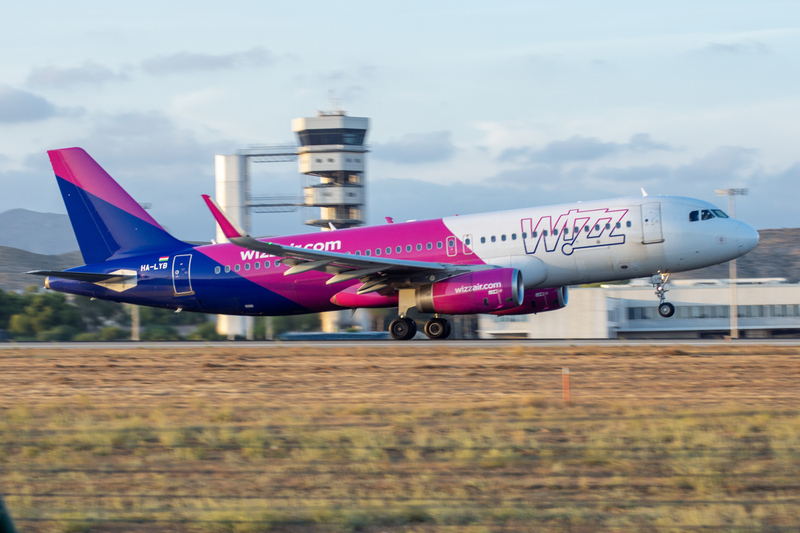
Valencia May Be the Easier Win
Of the two bases, Valencia may be the cleaner opportunity.
Madrid is bigger, but it is also more competitive and more expensive. Valencia (VLC) offers a strong local market with less direct hub complexity. Wizz can use VLC to build domestic links to northern Spain, Galicia, the Balearics, and international leisure/VFR routes with fewer head-to-head pressures than it will face at Madrid.
Valencia also has a natural fit with Wizz’s broader network. The city is a major destination for European leisure travelers, students, digital workers, visiting friends and relatives, and second-home traffic. It has strong demand from Italy, Romania, Central Europe, and the UK, all areas where Wizz already has brand strength.
That gives the Valencia base both outbound and inbound potential. Wizz can sell flights to Valencians traveling within Spain and across Europe, while also bringing inbound passengers from the airline’s existing network into the city.
Madrid Is About Ambition
Madrid (MAD), by contrast, is about ambition.
Wizz Air is entering one of Europe’s most important airports and adding enough capacity to be noticed. The Madrid base gives Wizz visibility with Spanish travelers, travel agents, airports, regulators, and competitors. It also positions the airline in a market where future growth could become much larger if the first wave performs well.
The challenge is cost and competition. MAD is a large, complex airport. It is not the cheapest place to operate, and the strongest incumbents are deeply entrenched. Wizz will need strong load factors, disciplined pricing, and reliable operations to make the base work.
Still, the logic is clear. If Wizz wants Spain to become a serious growth market, it cannot avoid Madrid forever. Opening with two A321neos gives the airline a meaningful start without overcommitting.
Jobs and Local Economic Impact
Wizz Air says the two new bases will create more than 150 direct jobs, with more than 80 positions at each base. The airline has already launched recruitment for pilots and cabin crew in Spain.
The indirect employment figure is much larger. The company expects the expansion to support more than 5,500 indirect jobs, including airport services, ground handling, tourism, hospitality, maintenance support, and related economic activity. Valencia is expected to support more than 2,500 indirect opportunities, while Madrid is expected to support more than 3,000.
Those numbers are politically important. New airline bases are not just route announcements. They bring local employment, airport activity, tourism spending, and regional connectivity. That is why airport operator Aena and Spanish transport officials have welcomed the expansion.
For Spain, Wizz’s arrival as a based operator adds competition. For Wizz, Spain adds scale in one of Europe’s strongest air travel markets.
A Broader Spain Push Beyond the Two Bases
The Madrid and Valencia bases sit inside a wider Wizz Air Spanish expansion.
Additional Spain-related routes include Almería Airport (LEI)–Bucharest Henri Coandă International Airport (OTP), Bilbao (BIO)-Wrocław Airport (WRO), and UK-Spain additions from London Luton Airport (LTN) to destinations such as Asturias (OVD), Granada (GRX), and Málaga (AGP).
That is important because it shows Spain is not a two-airport strategy for Wizz. Madrid and Valencia are the based-aircraft anchors, but the airline is also adding point-to-point capacity from other European bases into Spanish regional airports.
This is how Wizz builds density. A base is one layer. Routes from foreign bases are another. Over time, the airline can connect more Spanish cities to more parts of its wider network without needing every aircraft to be based in Spain.
Why This Matters for Spanish Passengers
For passengers, the near-term effect should be more choice and lower fares on selected routes. Wizz’s entry into domestic Spanish markets will put pricing pressure on incumbents, especially where the airline adds daily or near-daily service.
The impact will likely be most visible in markets such as Valencia-Palma, Valencia-Bilbao, Madrid-Palma, Madrid-Asturias, and Bilbao-Málaga. These are routes where low fares can stimulate demand and where travelers may be willing to trade full-service features for cheaper nonstop access.
The tradeoff is the usual Wizz Air model: low base fares, dense seating, paid extras, strict baggage rules, and a product built around efficiency. That will appeal to many price-sensitive travelers but may not suit passengers who value flexibility, bundled bags, connections, or premium service.
Still, for short domestic sectors of roughly one to two hours, the low-cost proposition can be powerful.
Bottom Line
Wizz Air’s new bases at Madrid (MAD) and Valencia (VLC) mark a major change in the airline’s Spanish strategy. After more than two decades serving Spain from elsewhere, Wizz will now base aircraft and crews in the country for the first time.
The airline is placing two Airbus A321neo aircraft at each airport, adding 3.6 million seats at Valencia and 4.8 million seats at Madrid, while launching a broad package of new domestic and international routes. The move puts Wizz directly into Spain’s internal air travel market and gives it a stronger platform to compete with Iberia, Vueling, Ryanair, Volotea, and Air Europa.
The Airbus A321neo is the right aircraft for the job: large, efficient, flexible, and capable of producing the low seat costs Wizz needs to challenge incumbents. Valencia offers a strong secondary-airport opportunity, while Madrid gives Wizz visibility in Spain’s largest aviation market.
For Spanish travelers, the expansion should mean more nonstop options and sharper fare competition. For Wizz Air, it is a serious bet that Spain can become not just a destination, but a core operating market.