Jubba Airways is preparing for another step in its fleet transition, with the Nairobi-based carrier planning to add two Fokker 100 regional jets as it phases out Fokker 50 turboprops and moves toward an all-narrowbody jet operation.

Chief Executive Saïd Qailie has reconfirmed the plan to acquire two Fokker 100s, although the deal has not yet been finalized. That caveat matters. The airline has not publicly confirmed the final serial numbers, and the aircraft involved could still change before induction.
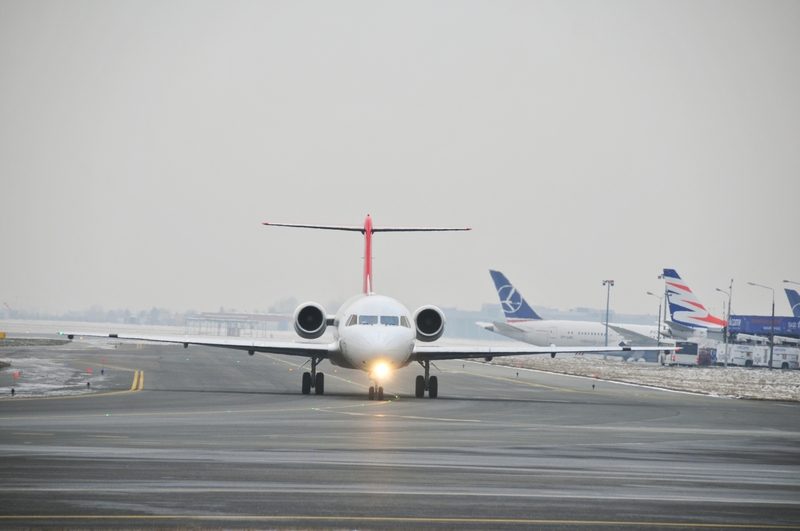
Even so, one candidate aircraft is already in Kenya. Fokker 100 5Y-MMX, manufacturer serial number 11373, arrived at Nairobi Jomo Kenyatta International Airport (NBO) on May 19 after ferrying from Woensdrecht Airport (WOE) in the Netherlands. The aircraft was previously active in Australia, including service with Virgin Australia Regional and Alliance Airlines.
Read our stories in your inbox
Two aviation newsletters. Zero fluff.
For Jubba Airways, the Fokker 100 would sit in an important middle ground. It offers significantly more capacity and speed than the Fokker 50 turboprop, but remains smaller and potentially easier to fill than a Boeing 737-300 or 737-400. That makes it a useful bridge aircraft for routes where the carrier wants jet performance but may not need full Boeing 737 capacity.
A Fleet Transition Built Around Jets
Jubba Airways is in the middle of a broader restructuring of its fleet.
The carrier has historically relied on Fokker 50 turboprops for parts of its operation, but management has now made clear that the long-term direction is away from turboprops and toward narrowbody jets. The Fokker 100 plan fits directly into that strategy.
The Fokker 100 is a narrowbody regional jet, typically seating around 100 passengers depending on layout. It is powered by rear-mounted Rolls-Royce Tay engines and has a five-abreast cabin, giving it a very different performance and passenger profile from the 50-seat Fokker 50.
That matters for Jubba’s network. A turboprop is useful where runway conditions, short sectors, and low demand dominate. A jet becomes more attractive where the airline needs faster block times, more seats, better schedule utility, and a product that feels more competitive on regional and international services.
Jubba’s network includes routes linking Nairobi (NBO) with Mogadishu Aden Adde International Airport (MGQ), along with services connected to markets such as Dubai (DXB), Jeddah (JED), Hargeisa (HGA), Bosaso (BSA), and other points in Somalia, the Horn of Africa, and the Middle East. Those are markets where passenger and cargo demand can vary sharply by season, day of week, and direction of travel.
A 100-seat jet can be useful in that kind of environment.
Why The Fokker 100 Makes Sense
The Fokker 100 is no longer a new aircraft, but it remains useful in certain regional markets.
The type was built by Fokker in the Netherlands and entered service in the late 1980s. Production ended in the 1990s after Fokker’s bankruptcy, but the aircraft has remained in service with specialist operators around the world, including in Australia, Europe, Iran, and parts of Africa.
Its appeal is straightforward. The Fokker 100 offers jet performance and around 100 seats without requiring the higher capacity of a Boeing 737. For an airline like Jubba Airways, that can be a practical advantage. The aircraft can support routes that are too large for a Fokker 50 but too thin for a 130- to 160-seat 737 Classic.
On longer regional routes, the Fokker 100 also improves passenger experience compared with a turboprop. It flies faster, generally cruises higher, and offers a cabin more comparable to a mainline narrowbody than a small regional aircraft.
That does not make the Fokker 100 a low-risk aircraft. It is an aging type, and operators need strong maintenance planning, parts support, engine support, and technical expertise. But for carriers that understand the aircraft and can source the right airframes, it can still fill a useful niche.
For Jubba, the question is not whether the Fokker 100 is modern. It is whether the aircraft gives the airline the right capacity and economics for its next stage of growth.
5Y-MMX Is The First Candidate Aircraft
The first reported Fokker 100 candidate is 5Y-MMX, MSN 11373.
The aircraft has a long operating history and was previously registered as VH-FNU in Australia. It was associated with Virgin Australia Regional and Alliance Airlines before moving out of the Australian market. Its arrival at Nairobi (NBO) on May 19 suggests Jubba’s Fokker 100 plan has moved beyond a paper exercise, even if management has not formally closed the transaction.
The aircraft’s age is notable. At more than 34 years old, 5Y-MMX is not a young jet. But older aircraft can still be commercially useful if they are maintained properly, supported with the right parts supply, and assigned to missions that match their economics.
For African regional operators, aircraft age is not automatically disqualifying. Many airlines in the region operate older aircraft because acquisition costs are lower and the aircraft can be matched to markets where new-generation jets would be too expensive to justify.
The key is supportability. A Fokker 100 induction requires a plan for spares, training, maintenance, reliability, and regulatory compliance. Without that, the aircraft can quickly become a burden rather than an asset.
Boeing 737 Classics Are Also Part Of The Plan
The Fokker 100s are only one part of Jubba’s fleet reshaping.
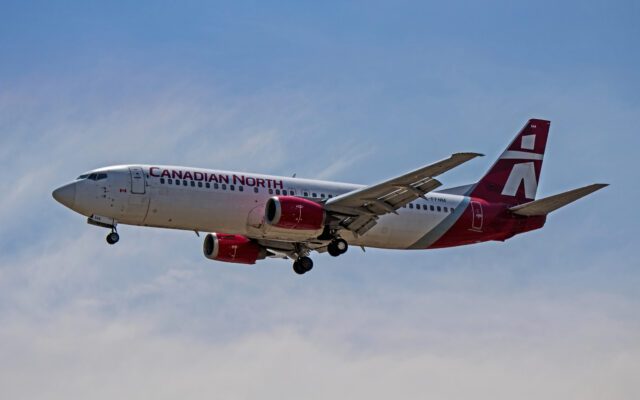
The airline has already taken delivery of a Boeing 737-300(QC), registered 5Y-JAB, from Brazil’s Sideral Linhas Aéreas. That aircraft, MSN 26851, remains stored at Nairobi Jomo Kenyatta (NBO) and has not yet entered commercial service.
A second Boeing 737-300 delivery has been delayed, and Jubba has also discussed plans to add two Boeing 737-400s. If those aircraft are acquired, the carrier would eventually operate four Boeing 737 Classics.
The 737 Classic family gives Jubba more range, capacity, and cargo capability than the Fokker 100. A 737-300 or 737-400 can support higher-demand services, longer sectors, and markets where passenger and freight demand justify a larger narrowbody.
The “QC” designation on 5Y-JAB is also relevant. A quick-change aircraft can be configured for passenger or cargo missions depending on operator requirements, although the exact use case for Jubba has not yet been publicly detailed. Given Jubba’s history of carrying both passengers and cargo, that kind of flexibility could be valuable if the aircraft is deployed accordingly.
Still, the 737 fleet plan remains incomplete. The first aircraft is not yet active, the second has been delayed, and the proposed 737-400 deal has not been finalized. That makes the Fokker 100 plan even more interesting, because the F100 could provide intermediate jet capacity while the Boeing fleet builds out.
Why An All-Narrowbody Strategy Matters
Jubba’s eventual goal of an all-narrowbody operation is strategically important.
Running a mixed fleet of turboprops, regional jets, and Boeing narrowbodies can create complexity for a small airline. Each type requires different pilots, training programs, spare parts, maintenance procedures, ground handling processes, and scheduling assumptions.
Phasing out Fokker 50 turboprops would simplify part of the operation, but only if the incoming jet fleet is managed carefully. Moving to Fokker 100s and Boeing 737 Classics still leaves the airline with two different jet families, both older and both requiring specialized support.
The advantage is capacity segmentation. The Fokker 100 can serve medium-demand routes, while the Boeing 737-300 and 737-400 can handle stronger markets. The risk is that operating two aging jet families could increase maintenance complexity unless Jubba has robust technical support arrangements.
For a carrier serving markets across Somalia, Kenya, the Gulf, and the wider region, the prize is clear: more capacity, faster aircraft, and a more competitive product. The challenge is keeping reliability high while managing older aircraft types.
Nairobi Remains The Operational Anchor
Nairobi Jomo Kenyatta International Airport (NBO) is central to this fleet transition.
Jubba Airways is based in Nairobi, and both the reported Fokker 100 arrival and the stored 737-300 are tied to NBO. The airport gives the airline access to maintenance infrastructure, regional connectivity, and a stronger operating platform than many smaller airports in the Horn of Africa.
Nairobi (NBO) also gives Jubba a natural base for services to Somalia and the Middle East. The Nairobi–Mogadishu (NBO–MGQ) corridor is one of the airline’s most visible routes, and additional jet capacity could support stronger performance if demand justifies it.
That said, fleet growth must match the network. Adding aircraft before routes, crews, maintenance, and commercial demand are ready can create cost pressure. Jubba’s gradual approach — adding a 737-300, pursuing Fokker 100s, and considering 737-400s — suggests the airline is trying to build capacity in stages.
The Fokker 50 Exit Changes The Network Profile
Moving away from the Fokker 50 would change Jubba’s network flexibility.
The Fokker 50 is a 50-seat turboprop well suited to shorter, thinner routes and smaller airports. It is not fast, and it does not offer the same passenger appeal as a jet, but it can be practical where demand is limited or infrastructure is more basic.
Replacing turboprops with jets suggests Jubba wants to focus on routes where higher capacity, speed, and aircraft utilization matter more than the ability to operate the smallest thin sectors.
That could mean more emphasis on trunk services such as Nairobi (NBO)–Mogadishu (MGQ), regional international routes, Hajj and Umrah-related traffic to Jeddah (JED), and Gulf links such as Dubai (DXB). It may also mean the airline is willing to reduce exposure to very small markets that are better suited to turboprop economics.
The fleet plan therefore says something about the network plan: Jubba appears to be preparing for a more jet-focused, higher-capacity future.
Older Aircraft Require Discipline
The biggest challenge is not acquiring the aircraft. It is operating them reliably.
The Fokker 100 and Boeing 737 Classic families are mature aircraft types. That can be an advantage because acquisition costs are lower and the aircraft are well understood. But it also means operators must deal with aging-aircraft inspections, parts sourcing, engine maintenance, corrosion control, and component reliability.
The Fokker 100 in particular requires access to specialized support. Fokker Services and other aftermarket providers continue to support the type, but the operator must plan carefully. Dispatch reliability can suffer if parts are not available or if maintenance events are not anticipated.
The same is true of Boeing 737 Classics. The 737-300 and 737-400 remain in service with airlines and cargo operators, but they are older-generation aircraft. They can work well in the right mission, but fuel burn and maintenance costs are higher than on newer 737NG, 737 MAX, or Airbus A320neo-family aircraft.
For Jubba, the fleet strategy can succeed if aircraft ownership costs are low enough and utilization is disciplined. It can become expensive if reliability falters.
A Small Airline Making A Big Fleet Shift
For a large airline, adding two Fokker 100s might be a minor fleet adjustment. For Jubba Airways, it is a significant move.
The airline’s current scale is modest, and each aircraft materially changes capacity, route flexibility, and operating risk. A pair of F100s could allow the carrier to increase frequencies, replace turboprops, open longer regional sectors, or right-size routes that do not need a 737.
At the same time, the airline is attempting to bring Boeing 737 Classics into service. That makes 2026 a pivotal year for the carrier’s fleet plan.
If the Fokker 100 and 737 additions are successfully inducted, Jubba could emerge with a more capable jet fleet and a stronger position on regional routes. If deliveries slip, maintenance costs rise, or aircraft remain stored, the transition could take longer and create pressure on the schedule.
The fact that Qailie is cautious about final aircraft details is sensible. Until contracts close, aircraft are accepted, and regulatory work is complete, fleet plans can change quickly.
Bottom Line
Jubba Airways is planning to add two Fokker 100 regional jets as part of a broader move away from Fokker 50 turboprops and toward an all-narrowbody jet fleet.
The first reported aircraft is 5Y-MMX, MSN 11373, a former Australian-operated Fokker 100 that arrived at Nairobi Jomo Kenyatta (NBO) on May 19 after ferrying from Woensdrecht (WOE) in the Netherlands. However, the airline has not finalized the transaction publicly, and CEO Saïd Qailie has cautioned that the final aircraft serial numbers could still change.
The Fokker 100 would give Jubba a useful intermediate jet: larger and faster than the Fokker 50, but smaller than the Boeing 737-300 and 737-400 aircraft the airline is also pursuing. That makes it a practical bridge aircraft for regional routes where a 737 may be too much capacity.
Jubba has already received Boeing 737-300(QC) 5Y-JAB, though the aircraft remains stored at Nairobi (NBO), and a second 737-300 delivery has been delayed. The airline also wants to add two 737-400s, but that deal is not yet final.
The strategy is clear: Jubba wants more jet capacity, better regional reach, and a fleet better suited to medium-density routes. The execution challenge is equally clear: older Fokker 100s and Boeing 737 Classics can still be useful aircraft, but only if Jubba can support them with strong maintenance, spare parts, training, and reliable operations.
Keep reading FlyMag
Get the Daily Brief in the morning or the Route Watch weekly recap on Fridays. Or both.