Kuwait temporarily closed its national airspace on July 18 after renewed Iranian missile and drone attacks created an immediate threat to civilian aviation across the Gulf.

The closure halted takeoffs and landings at Kuwait International Airport (KWI), prompting Kuwait Airways to reschedule most of its flights and advise passengers not to rely on their original departure times.
Kuwaiti authorities reopened the airspace later Saturday after reviewing the security situation. Arrivals and departures resumed in phases, but the relatively brief closure continued to affect passengers as aircraft, flight crews, airport slots, and connecting itineraries fell out of position.
Read our stories in your inbox
Two aviation newsletters. Zero fluff.
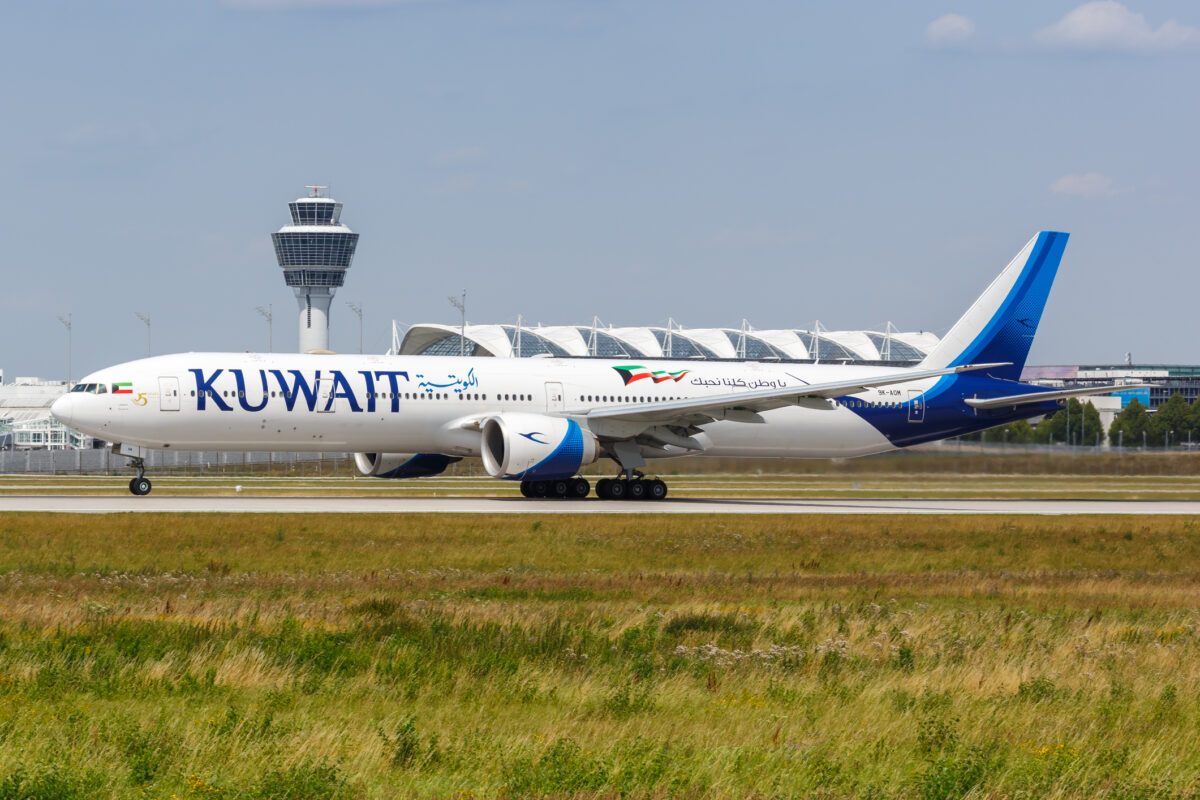
The incident demonstrates why an airspace closure lasting only several hours can disrupt an airline well beyond the period in which the sky is technically unavailable. Kuwait Airways operates a tightly connected network from its dedicated terminal at Kuwait International Airport (KWI), meaning one wave of delays can affect regional Airbus narrowbody flights and long-haul Boeing 777 and Airbus A330 rotations for the remainder of the day.
Kuwait Reopened Its Airspace Later Saturday
The closure was temporary rather than an indefinite shutdown.
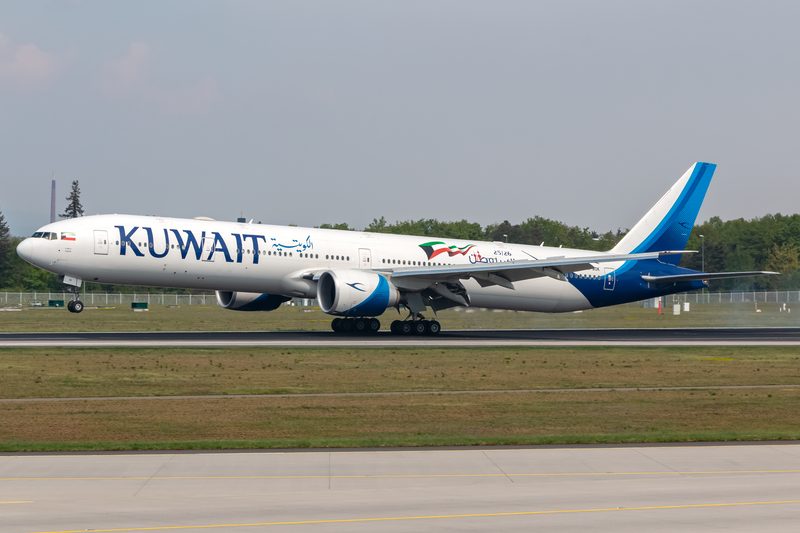
Kuwait International Airport (KWI) resumed arrivals and departures later on July 18 after aviation and security authorities determined that operations could restart. Flights returned gradually, with priority given to aircraft that had been delayed, diverted, or held outside the country.
The reopening did not immediately restore the published timetable.
Airlines had to reposition aircraft and crews, process passengers whose original departures had been missed, assign new airport slots, and manage inbound flights that had been delayed at foreign airports.
According to a local report on the reopening of Kuwaiti airspace, Kuwait Airways services to Manchester Airport (MAN) and Borg El Arab International Airport (HBE), serving Alexandria, departed approximately five hours behind schedule as the carrier worked through the backlog.

The situation can be summarized as follows:
| Event | Status |
|---|---|
| Kuwaiti airspace | Temporarily closed on July 18 |
| Kuwait International Airport (KWI) | Takeoffs and landings suspended during closure |
| Kuwait Airways schedule | Most flights rescheduled |
| Passenger notifications | Sent through registered telephone numbers and booking contacts |
| Airspace status later July 18 | Reopened |
| Flight operations after reopening | Restored gradually, with continued delays |
Passengers were still advised to confirm their individual flight before leaving for Kuwait International Airport (KWI), even after authorities reopened the airspace.
Kuwait Airways Rescheduled Most Flights
Kuwait Airways did not publish a complete list of canceled, delayed, or retimed services.
Instead, the airline said that most flights were being rescheduled because of the temporary suspension of takeoff and landing operations. It urged travelers to monitor the carrier’s official flight-status page rather than traveling to the airport based solely on the original time printed on their ticket.

The airline said schedule-change notifications and text messages would be sent to the telephone numbers recorded in passenger bookings.
That makes accurate contact information particularly important. A traveler whose booking contains an outdated telephone number—or the number of a travel agency rather than the passenger—may not immediately receive a change notification.
Kuwait Airways also directed passengers to its customer-service department for assistance. The carrier’s contact information lists 171 for calls within Kuwait and an international telephone number for passengers outside the country.
The airline’s announcement described most flights as rescheduled, not necessarily canceled. That distinction matters.
A rescheduled service may still operate several hours later after the airspace reopens. A canceled flight is removed completely, requiring passengers to be refunded, rebooked onto another Kuwait Airways departure, or transferred to another carrier when agreements and available seats permit.
The rapidly changing security environment meant that some flight times could be revised more than once.
Why Kuwait Closed Its Airspace
Kuwait imposed the closure as Iranian missiles and drones entered or approached the country’s airspace during another escalation in the conflict between Iran and the United States.
Kuwaiti forces said air-defense systems intercepted hostile missiles and unmanned aircraft. Authorities also reported injuries among firefighters and energy-sector workers responding to damage caused during the attacks.
Kuwait Petroleum Corporation said one of its oil facilities was struck during repeated Iranian attacks. Kuwaiti officials separately reported damage and a fire at a power-generation and water-desalination facility.
The strikes were part of a wider wave of Iranian attacks against U.S. military assets and infrastructure in countries that host American forces. Iran reported targeting military installations in Kuwait, Bahrain, and Jordan, although some of Tehran’s specific damage claims could not be independently confirmed.
A Reuters account of the July 18 attacks said Kuwait faced sustained missile and drone activity while the United States continued attacks against Iranian military and coastal infrastructure.
The airspace closure was therefore more than a response to general political tension. It occurred while weapons and air-defense activity were affecting the country.
Air-Defense Operations Create Their Own Aviation Risk
Civilian aircraft face several separate hazards when missiles, drones, and defensive weapons are operating in the same area.
The most obvious risk is a direct strike. A missile or unmanned aircraft that misses its intended target can enter a civilian flight path or land near an airport.
Interceptions generate another hazard. Air-defense missiles may destroy an incoming weapon, but the resulting fragments must still fall somewhere. Debris can damage aircraft, runways, airport buildings, navigation equipment, or communities beneath the interception area.
The third risk is misidentification.
Air-defense units responding to repeated attacks must make rapid decisions about radar contacts. Civilian airliners normally transmit identifying information, follow established routes, and remain in contact with air traffic control, but those protections do not remove every possibility of confusion during an active military engagement.
The European Union Aviation Safety Agency has advised affected operators to avoid the airspace of Kuwait, Bahrain, Qatar, and the United Arab Emirates, as well as part of the Gulf of Oman.
EASA’s warning identifies Iranian missile and drone attacks and the possibility of civilian aircraft being misidentified by U.S. or regional air-defense systems as central risks. The bulletin remains valid through July 29 unless it is revised or withdrawn earlier.
This means Kuwait can legally reopen its airspace while some foreign airlines continue to avoid it under their own risk assessments or national guidance.
An airspace being open does not require every airline to use it.
Kuwait International Airport Is the Country’s Primary Aviation Gateway
Kuwait International Airport (KWI) is the center of the country’s commercial air transport system.
Unlike countries with several major international gateways, Kuwait cannot easily transfer large numbers of flights to another domestic airport when KWI is unavailable. An airspace closure therefore interrupts nearly all scheduled passenger operations to and from the country.
Kuwait Airways operates primarily from Terminal 4, which is dedicated to the national carrier. The airline says its exclusive use of Terminal 4 allows it to manage check-in, boarding, transfers, and other ground processes within a facility designed around its own operation.
Jazeera Airways uses Terminal 5, while foreign airlines have historically used other airport facilities. An airspace closure affects all of them because no passenger aircraft can depart or arrive until the restriction is lifted.
The closure also affects aircraft that merely planned to overfly Kuwait without landing at Kuwait International Airport (KWI). Those flights must be rerouted around the restricted area, increasing distance and potentially adding fuel burn and operating time.
Kuwait Airways Operates Several Different Aircraft Types
The interruption affected an airline with a mixed fleet serving everything from short Gulf routes to long-haul destinations in Europe, Asia, and North America.
Kuwait Airways lists the following aircraft families in its current fleet profile:
- Boeing 777-300ER
- Airbus A330-800neo
- Airbus A330-900
- Airbus A321
- Airbus A320neo
The Airbus A320neo and A321 are suited to shorter and medium-range services within the Gulf, Middle East, South Asia, and parts of Europe.
The widebody Airbus A330s and Boeing 777-300ERs support longer routes and flights requiring additional passenger or cargo capacity.
An airspace closure affects each fleet differently.
A regional Airbus A320neo may be able to remain at its foreign destination and return to Kuwait International Airport (KWI) shortly after the reopening. A Boeing 777-300ER operating a long-haul rotation may require additional crew planning, revised fuel calculations, new departure slots, and coordination with passengers connecting onward from Kuwait.
The airline’s A330-800neo is particularly notable. Kuwait Airways is one of only a small number of operators of the long-range aircraft, which is powered by Rolls-Royce Trent 7000 engines.
The 777-300ER uses General Electric GE90 engines and provides the airline’s largest passenger capacity. Kuwait Airways’ fleet sustainability information identifies both aircraft as important parts of its long-haul operation.
When one widebody departure is delayed, the effect can extend into the following day because that aircraft may be scheduled to operate several additional sectors before returning to its original position.
Reopening Airspace Does Not Instantly Restore the Schedule
An airline network cannot be restarted as quickly as a runway light can be switched back on.
During the closure, aircraft scheduled to arrive at Kuwait International Airport (KWI) may have been held at their departure airports, delayed before boarding, diverted while airborne, or prevented from leaving another station.
Once the airspace reopened, those aircraft did not all arrive simultaneously. Air traffic control and airport operators had to sequence them around normal safety limits, available gates, ground-handling capacity, and runway demand.
Flight crews also remained subject to duty-time limits.
A crew that spent several hours waiting at a foreign airport could reach the maximum period it was legally permitted to work before clearance to depart was received. The aircraft may have been ready, but a replacement crew or an extended rest period could still be required.
Other complications include:
- Passengers missing onward connections at Kuwait International Airport (KWI)
- Checked baggage needing to be retagged or transferred
- Aircraft arriving at terminals different from the original plan
- Maintenance inspections becoming due during the delay
- Catering and fuel orders needing to be revised
- Airport slots being lost at the destination
- Crews and aircraft ending the day in the wrong cities
These effects explain why flights continued to depart late after Kuwait officially reopened its airspace.
Long-Haul Flights Are Especially Difficult to Recover
A short flight can sometimes be delayed until the threat passes and then operate later the same day.
Long-haul services are more complicated.
A Kuwait Airways Boeing 777-300ER or Airbus A330 may have a crew specifically scheduled around a long duty period. A delay of several hours at the beginning of the trip can make it impossible for that crew to complete the flight within legal limits.
The destination airport may also have operating restrictions.
Some airports limit arrivals during overnight hours, and several major hubs require airlines to operate within assigned slots. A delayed flight from Kuwait International Airport (KWI) may miss its approved arrival window and need a completely new departure time.
The aircraft’s next assignment must then be considered. A widebody arriving six hours late from Europe or Asia may no longer be available for its following scheduled service.
Kuwait Airways can substitute another aircraft when one is available, but replacements must have the appropriate range, crew qualifications, maintenance status, and passenger capacity.
The result is a rolling disruption in which a temporary closure on Saturday morning can continue affecting unrelated flights on Saturday evening or Sunday.
Gulf Airspace Remains Operationally Fragmented
Kuwait’s closure did not occur in isolation.
The wider Gulf aviation system has been operating under repeated warnings, temporary restrictions, airport closures, and airline suspensions since the conflict escalated earlier in 2026.
During the latest attack wave, warning sirens and air-defense activity were reported in Bahrain and Saudi Arabia. Jordan said it intercepted Iranian missiles, while military and civilian facilities across the region remained at elevated risk.
Kuwait took the most disruptive publicly reported civil-aviation measure during Saturday’s attacks by closing national airspace. Other major Gulf airports continued operating, but open airspace should not be confused with normal operating conditions.
Airlines may still avoid particular routes or cancel service because of:
- National aviation-security guidance
- Insurer requirements
- Crew-security concerns
- Missile and drone warnings
- Airport vulnerability
- Navigation interference
- The availability of safe diversion airports
- Restrictions in neighboring airspace
Bahrain International Airport (BAH), Hamad International Airport (DOH), Dubai International Airport (DXB), Zayed International Airport (AUH), and Muscat International Airport (MCT) can remain open while individual airlines suspend or reroute their flights.
The decision belongs to the airline and its state of registry, not only to the country controlling the airspace.
The Conflict Has Reduced Available Routing Options
The Gulf is an important corridor for flights connecting Europe with South Asia, Southeast Asia, East Africa, and Australia.
When Iranian and Iraqi airspace is restricted, airlines depend more heavily on routes across the Arabian Peninsula, the Persian Gulf, Egypt, Saudi Arabia, and the Gulf of Oman.
Closing Kuwait removes another portion of that already constrained network.
Aircraft that would normally pass near or over Kuwait may need to fly farther south across Saudi Arabia or use other approved corridors. Even relatively small diversions can add meaningful costs when applied to dozens of flights.
Longer routes increase:
- Fuel consumption
- Carbon emissions
- Flight time
- Crew-duty exposure
- The possibility of missed connections
- The amount of reserve fuel required
- Pressure on alternative air traffic corridors
A reroute can also reduce the amount of cargo or baggage an aircraft can carry if additional fuel pushes it closer to its maximum takeoff weight.
The impact therefore extends beyond airlines based in Kuwait.
Kuwait Has Closed Its Airspace Repeatedly in 2026
The July 18 disruption was not Kuwait’s first major aviation interruption during the conflict.
Kuwait initially closed its airspace on February 28 following the outbreak of the wider war. Authorities did not reopen it until April 23, after which Kuwait Airways and Jazeera Airways gradually restored flights.
Kuwait Airways initially resumed service to 17 destinations from Terminal 4, while Jazeera Airways restarted a smaller network from Terminal 5. During the extended closure, Jazeera temporarily operated some services from airports in neighboring Saudi Arabia.
The April reopening of Kuwait’s airspace was deliberately phased rather than immediate. Authorities prioritized safety and gradually increased the number of permitted movements.
Kuwait International Airport (KWI) subsequently experienced additional security interruptions as missile and drone threats continued.
That history has forced Kuwait Airways, Jazeera Airways, the civil aviation authority, and airport operators to develop repeated shutdown-and-recovery procedures.
It has also created significant uncertainty for passengers and foreign airlines considering whether to maintain service.
Why Civil Aviation Authorities Close Airspace Before an Airport Is Hit
Authorities do not need to wait for a missile or drone to strike an airport before suspending civilian aviation.
The primary objective is to prevent passenger aircraft from entering an area in which military activity could make normal separation and navigation unreliable.
An airport may be undamaged but still unsafe to use because missiles are crossing nearby airspace, air-defense systems are active, or radar and communications could be disrupted.
The decision is preventive.
Once an aircraft is airborne, it may require considerable time and fuel to leave a threatened area. Preventing takeoff avoids adding another airplane to the problem.
Holding inbound flights outside Kuwaiti airspace or diverting them to alternate airports similarly preserves distance between civilian traffic and military operations.
The closure can be lifted when authorities determine that the immediate threat has reduced and air traffic services can again provide the required level of safety.
That does not mean the broader regional risk has disappeared.
Passengers Should Not Travel Based Only on the Reopening
Travelers should confirm that their specific flight is operating before leaving for Kuwait International Airport (KWI).
A general announcement that the airport is open does not guarantee that an individual departure has returned to its original schedule.
The aircraft may still be delayed overseas. Its crew may require rest. The destination airport may no longer have an available slot. The flight may be combined with another service or postponed until the following day.
Passengers should verify:
- The latest departure time
- The operating terminal
- Whether online check-in remains valid
- The status of connecting flights
- Any revised baggage-drop deadline
- Whether the airline has changed the aircraft
- Whether a transfer visa is required after rerouting
- Whether ground transportation remains available at the revised arrival time
Kuwait Airways says Terminal 4 passengers may sometimes use early check-in to reduce congestion, but its check-in guidance notes that counter times may change during delayed operations.
Passengers should follow the revised flight time supplied by the airline rather than the normal check-in schedule.
Foreign Airlines May Remain Cautious
The reopening creates the legal and operational possibility for foreign airlines to return, but it does not guarantee that every carrier will do so immediately.
European operators covered by EASA’s conflict-zone bulletin are advised to avoid Kuwaiti airspace through July 29 unless the risk assessment changes.
Other airlines may follow recommendations issued by their own governments, security departments, insurers, or aviation authorities.
A foreign carrier may also decide that operating one flight into Kuwait is not worth the risk of having an aircraft and crew stranded if the airspace closes again before departure.
This is particularly relevant for airlines with only one or two weekly Kuwait services. They may have limited local maintenance capability and fewer options to recover passengers than Kuwait Airways or Jazeera Airways.
Airlines with daily or multiple-daily service may have more flexibility, but they also have more capacity exposed to disruption.
The result can be a two-speed recovery in which local airlines rebuild first while some foreign operators wait for greater stability.
Kuwait Airways’ Hub Model Magnifies the Impact
Kuwait Airways carries both local passengers and travelers connecting through Kuwait International Airport (KWI).
A passenger flying from Europe to South Asia through Kuwait may have two separate Kuwait Airways flights on the same ticket. Delaying the first flight can cause the traveler to miss the second even if the onward aircraft departs normally.
The airline must then provide a new itinerary, accommodation when required, baggage assistance, and updated entry information.
A single delayed widebody arrival can therefore generate hundreds of disrupted connections.
Terminal 4 was designed to simplify Kuwait Airways transfers, but no terminal can eliminate the network effects of a national airspace closure.
The airline’s recovery priorities are likely to include flights with large numbers of connecting passengers, aircraft needed for later long-haul departures, and destinations with limited alternative service.
The Latest Closure Was Short but Strategically Significant
The length of an airspace closure is only one measure of its seriousness.
Kuwait reopened later on July 18, avoiding another prolonged shutdown like the one that began in February. That limited the immediate damage to the flight network.
The reason for the closure remains significant.
Kuwait was responding to active missile and drone attacks, not a theoretical security advisory. Civilian infrastructure was damaged, people were injured, and air-defense systems were operating.
An Associated Press account of the regional escalation reported that Kuwait briefly closed its airspace as missiles and drones targeted the country and emergency crews responded to fires at energy and desalination facilities.
The attacks also continued after the airport reopened, with Kuwait remaining on alert into July 19.
That means additional short-notice restrictions cannot be ruled out.
Bottom Line
Kuwait temporarily closed its airspace on July 18 as Iranian missile and drone attacks created an immediate threat to civil aviation and activated the country’s air-defense systems.
The restriction halted takeoffs and landings at Kuwait International Airport (KWI), forcing Kuwait Airways to reschedule most of its flights. The airline advised passengers to monitor their bookings and said schedule changes would be sent to the telephone numbers registered with each reservation.
Kuwaiti authorities reopened the airspace later Saturday, and arrivals and departures resumed in phases.
The reopening did not instantly return the airport to normal. Aircraft and crews had been displaced, departure slots had been missed, and thousands of passengers faced delayed or broken itineraries. Some Kuwait Airways flights departed approximately five hours late as the carrier rebuilt its schedule.
The event affected an airline operating everything from Airbus A320neo regional services to long-haul Airbus A330 and Boeing 777-300ER flights. Widebody delays can continue affecting the network long after the airspace itself reopens because each aircraft and crew is assigned to multiple subsequent services.
Kuwait’s closure was a precautionary aviation measure, but the threat behind it was real. Iranian missiles and drones were targeting Kuwait, air-defense systems were active, and energy and water infrastructure sustained damage.
The continuing danger is reflected in EASA’s recommendation that covered operators avoid the airspace of Kuwait, Bahrain, Qatar, and the United Arab Emirates through July 29.
For passengers, the most important distinction is between an open airport and an operating flight. Kuwait International Airport (KWI) may be accepting aircraft, but individual services can remain delayed, rescheduled, or canceled because of crew limits, displaced airplanes, foreign-airline restrictions, or another sudden deterioration in regional security.
Kuwait avoided another extended aviation shutdown on July 18. Until the conflict stabilizes, however, its flight schedule will remain vulnerable to closures that can be imposed—and lifted—with very little warning.
Keep reading FlyMag
Get the Daily Brief in the morning or the Route Watch weekly recap on Fridays. Or both.