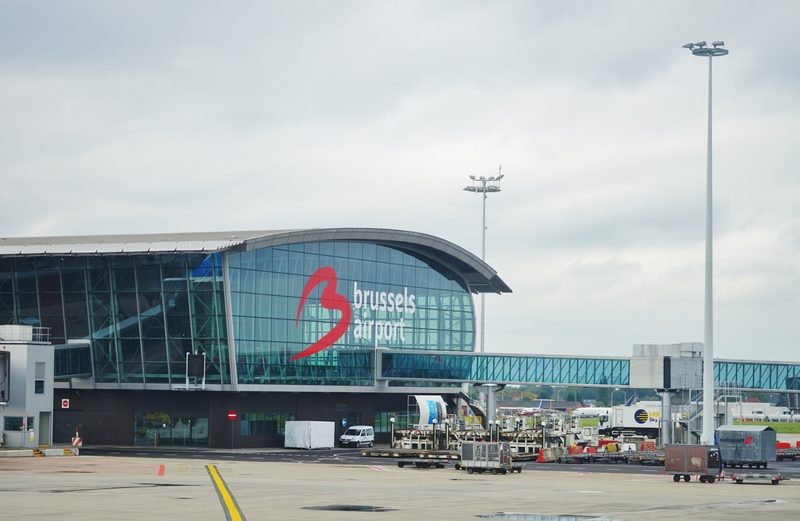
Most passenger flights at Brussels Airport (BRU) will be canceled on Monday, November 23, after air traffic control employees confirmed their participation in a national demonstration in Brussels.

The airport said it expects significant disruption affecting both departures and arrivals. Its notice stops short of describing a full-day shutdown, stating that the majority of scheduled flights will have to be canceled.
Brussels Airlines provided a more precise operating window. The carrier said Belgian airspace will be closed from 7 a.m. until 9 p.m. local time Monday because of the air traffic control action. Most flights scheduled within that 14-hour period cannot operate, although the timing potentially leaves room for some services early in the morning and later at night.
Read our stories in your inbox
Two aviation newsletters. Zero fluff.
Airlines are registering cancellations individually, meaning the airport’s departure and arrival boards may not show the entire disruption at once. Passengers should rely on direct messages from their airline and check their booking before traveling to BRU.
Brussels Airlines Begins Rebooking Passengers
Brussels Airlines, the airport’s largest hub operator, said the airspace closure will affect its own schedule and that teams are working to reduce the passenger impact. The airline will contact affected customers by email with instructions and is directing travelers to its booking-management tools or their travel agents.

Under the airline’s normal irregular-operations process, passengers whose flights are canceled can be moved to another available service without a rebooking fee. A refund is also available for eligible unused tickets when the replacement itinerary is unsuitable.
The duration of the closure presents a more complex recovery problem than a short air traffic flow restriction. Aircraft and crews that would normally cycle through Brussels during the day will be out of position, while passengers with connections through BRU will need complete itinerary changes rather than a simple departure delay.
Brussels Airlines may be able to protect some flying outside the closure window, but the hub structure limits how much of the daytime schedule can be shifted. European flights feed long-haul departures and distribute arriving intercontinental passengers across the airline’s network. Canceling one part of that sequence can remove the operational basis for later sectors.
The disruption will also affect other operators serving Brussels, including airlines whose aircraft would otherwise arrive during the closure and remain overnight. Some may cancel entire rotations rather than operate an outbound or inbound sector without its corresponding flight.

National Demonstration Extends Beyond Aviation
The air traffic control action is linked to a wider demonstration planned in central Brussels. In an October 21 statement, the ABVV-FGTB said it and other labor and civil-society organizations were calling for a large mobilization on November 23.
The organizers are challenging the federal government’s fiscal and social policies, arguing that efforts to balance public finances should not fall disproportionately on workers, benefit recipients and public services. Their demands include stronger purchasing power, employment protection, public investment and preservation of Belgium’s social security system.
Brussels Airport said surface access may also be affected and advised travelers to consult the city’s STIB/MIVB network and regional operator De Lijn before starting their journey. That warning matters even for passengers whose flights remain scheduled outside the airspace closure, as reduced public transportation could complicate early-morning and late-evening airport access.
Another Strike Hit for Brussels Airport
Monday’s action continues a series of labor-related interruptions at BRU. A national union action on October 9 caused 105 flight cancellations and prevented about 12,000 passengers from traveling as planned, according to the airport’s October traffic report. The airport described that event as the third national trade union action day of 2026 to affect its operations.
The November disruption is set to cover a much longer section of the operating day. The airport handled 2.27 million passengers and 15,705 passenger flights in October, with an average of 153 passengers aboard each service. Those figures do not provide a cancellation estimate for Monday, but they show the scale of traffic normally moving through BRU.
The timing also cuts across the airport’s winter schedule, which began October 25 with 136 direct destinations. Forty of those are nonstop intercontinental markets, increasing the scope for disruption to spread beyond Belgium as airlines reposition aircraft and reaccommodate connecting passengers.
Brussels Airport has not published a final cancellation count. The total will become clearer as each airline loads its revised schedule and contacts booked passengers.
Bottom Line
The key operational distinction is that BRU is not announcing an unconditional 24-hour closure. The confirmed constraint is a 14-hour Belgian airspace shutdown from 7 a.m. to 9 p.m., and both the airport and Brussels Airlines say most flights will be canceled. Services outside that period may remain possible, but passengers should not assume that an early or late departure will operate: aircraft rotations, crew positioning and inbound availability can still force cancellations beyond the formal closure.
Brussels Airlines bears the greatest network exposure because BRU is its connecting hub rather than simply an outstation. Recovery will depend on how much traffic the carrier can move to later dates or reroute through other Lufthansa Group gateways. Short-haul passengers may have rail or neighboring-airport alternatives, while long-haul and connecting customers face fewer immediate options and potentially longer rebooking delays.
The action also adds to the cumulative cost of repeated strike days at Belgium’s main airport. What to watch next is the number of flights airlines preserve outside the closure window and whether the disruption carries into Tuesday, November 24, as aircraft and crews return to their planned rotations.