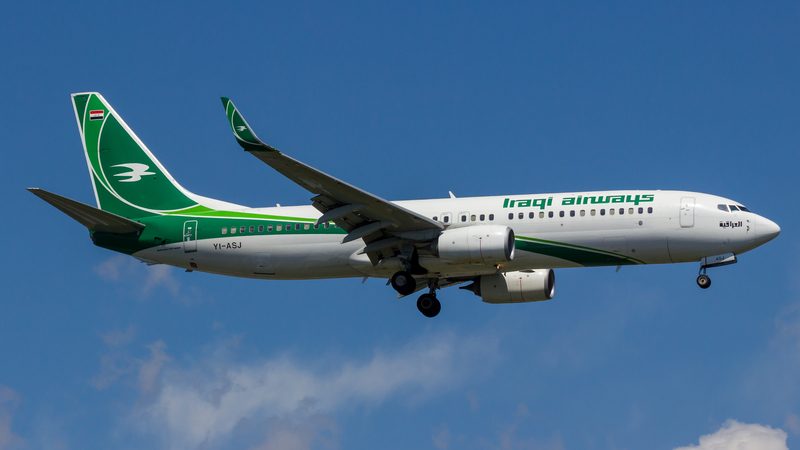
Iraqi Airways has opened a direct-sale process for two Boeing 747s that have remained in Tunisia since the Gulf War period, setting an estimated value of $900,000 for each aircraft.

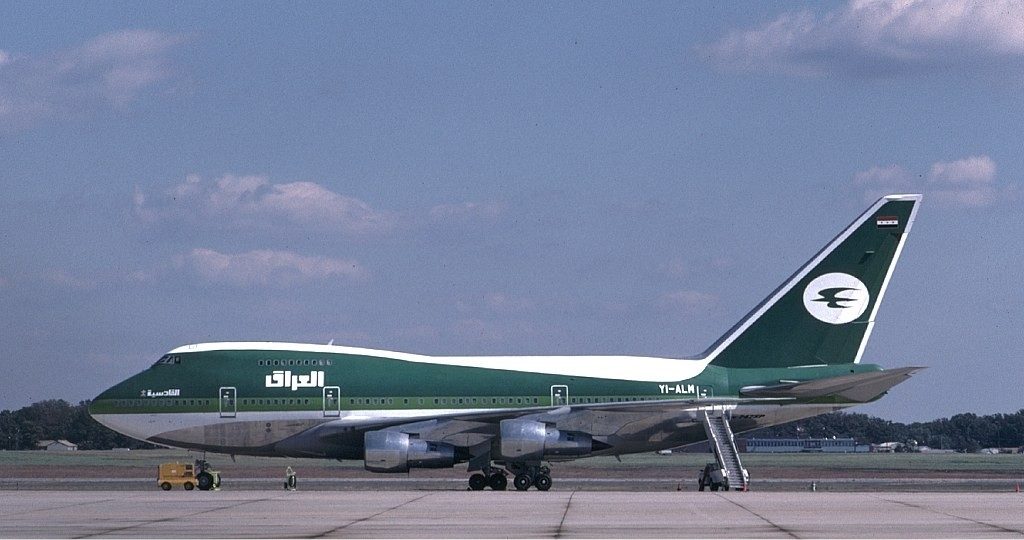
The state-owned carrier’s November 18 sale notice covers Boeing 747-270C YI-AGP and Boeing 747SP-70 YI-ALM, both parked at Tozeur-Nefta (TOE). Iraqi Airways will consider applications for either aircraft individually or for the pair.
Both four-engine aircraft were built in 1982 and are listed with Pratt & Whitney JT9D-7F engines. The notice gives manufacturer serial number 22366 for YI-AGP and 22858 for YI-ALM.
Read our stories in your inbox
Two aviation newsletters. Zero fluff.
The $900,000 figure is an estimated value rather than a guaranteed transaction price. Iraqi Airways says its committee may reject applications that fail to meet the conditions or are considered unreasonable on price. Any completed sale also requires approval from Iraq’s transport minister.
Aircraft Offered Without Technical Guarantees
The airline is selling the aircraft as they stand at TOE, without a technical warranty. A successful buyer will assume the cost of transferring ownership, customs clearance, taxes and moving the aircraft.
Parking charges become the buyer’s responsibility once payment has been made and the on-site handover record signed. That clause is significant for aircraft that have occupied airport space for more than three decades and would require a substantial logistical project to remove.
Applicants invited to the final stage must provide security equal to 20% of the estimated value, amounting to $180,000 per aircraft. The purchaser must also pay a service charge equal to 2% of the final purchase price, along with the cost of publishing the sale advertisement.
Payment is due within five days of the successful applicant receiving notice that its offer has been accepted. Failure to pay within that period cancels the sale and allows Iraqi Airways to retain the security.
The carrier will accept preliminary applications for 30 days without requiring the deposit at that stage. A sales committee is then scheduled to work from the Iraqi Embassy in Tunis between December 21, 2026, and January 5, 2027. The first 10 days are allocated to formal applications and inquiries, with the final five days set aside for evaluating offers and concluding the process.
A Convertible 747 and a Short-Body SP
Although Iraqi Airways describes YI-AGP generally as a 747-200, its serial number identifies it more specifically as a Boeing 747-270C. The Boeing 747 type certificate lists serial number 22366 among the three aircraft built as 747-270Cs.
The C variant was the convertible member of the early 747 family, designed to support passenger and main-deck cargo operations. ICAO’s historical material records YI-AGP as an Iraqi Airways 747-200C delivered on July 15, 1982.
YI-ALM is a substantially different aircraft despite sharing the basic 747 architecture and JT9D powerplant. Boeing developed the 747SP as a long-range derivative of the 747-100, shortening the fuselage while enlarging the vertical and horizontal tail surfaces. The type certificate lists serial number 22858 as the sole 747SP-70.
The SP’s fuselage is more than 48 feet shorter than that of the original full-length 747. Its lower capacity and reduced structural weight were intended to improve long-range performance at a time when intercontinental routes remained the domain of three- and four-engine widebodies.
The Kuwaiti Property Dispute
The aircraft’s prolonged stay in Tunisia became entangled with the effort to recover Kuwait Airways property removed during Iraq’s 1990 invasion of Kuwait.
A 2003 United Nations report recorded Tunisia’s confirmation that two Iraqi aircraft were on its territory. Tunisian authorities said they had no interest in retaining the jets and were incurring substantial costs because of their presence. Tunisia also raised the possibility of a sale through the United Nations sanctions framework then governing Iraqi assets.
A joint Iraqi-Kuwaiti inspection team visited Tozeur in September 2005. The mission found a Kuwait Airways engine installed on YI-AGP, along with aircraft and engine parts in its forward cargo compartment. Additional Kuwaiti parts were found aboard YI-ALM.
The engine and parts issue was resolved the following year. According to a subsequent UN report, technicians removed the engine from YI-AGP and transported it, with the other recovered equipment, to the port of Tunis. Iraq and Kuwait signed the handover documentation on May 25, 2006.
That settlement closed the Kuwaiti property file associated with the aircraft, but it did not settle the status of the 747s themselves. Tunisian correspondence submitted to the UN said the return of the engine and parts still left unresolved the aircraft’s return to Iraq and the storage and maintenance costs generated by their stay.
Two decades later, Iraqi Airways is again trying to separate itself from the aircraft. The current process places the practical and financial burden of extracting them from Tozeur squarely on the buyer.
Bottom Line
The sale’s structure says more than the headline valuation. Iraqi Airways is not offering operational aircraft with records, support and a defined delivery condition; it is transferring two airframes in place, without a technical warranty, while requiring the purchaser to handle customs, transport and future airport charges. The acquisition price would therefore be only the first component of any buyer’s budget.
YI-AGP may have value as a large pool of legacy 747 material, while the unusual 747SP-70 gives YI-ALM a stronger preservation case. Either outcome would still require detailed inspections and an agreement on how to remove an aircraft that cannot simply be assumed capable of flying away. Dismantling at Tozeur, moving major sections by road or retaining an aircraft locally as a static exhibit would each create separate regulatory and engineering demands.
The next indication of genuine market interest will come when Iraqi Airways identifies applicants prepared to post the $180,000 security and attend the final process in Tunisia. Until a buyer pays, signs the handover and secures ministerial approval, the two 747s remain where they have spent most of their lives: parked at Tozeur and carrying obligations that extend well beyond their nominal $900,000 valuations.