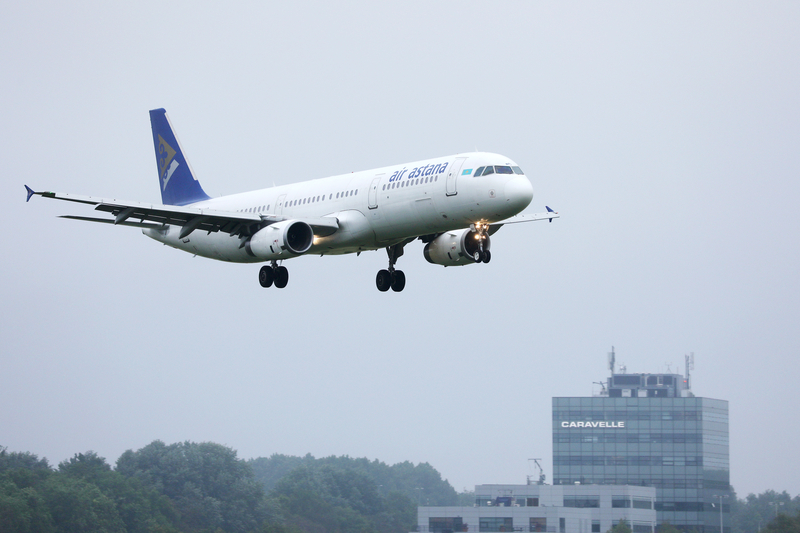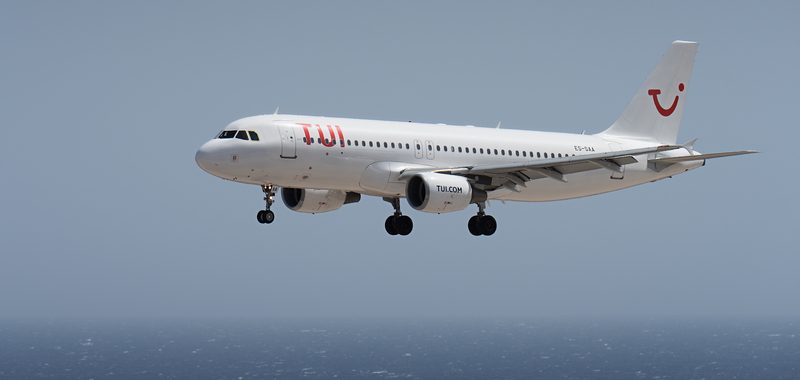
TUI fly Belgium has closed its operating bases at Casablanca (CMN) and Marrakech (RAK), ending a Morocco-based operation that connected four cities in the country with France and Italy.
The closure took effect on November 9, 2026. Nine routes flown from Casablanca, Marrakech, Agadir (AGA) and Rabat (RBA) have been removed, along with two Oujda (OUD) services operated using aircraft routed from Belgium.
The change leaves TUI fly Belgium serving Morocco from its home markets rather than using locally based aircraft to operate point-to-point sectors elsewhere in Europe.
Read our stories in your inbox
Two aviation newsletters. Zero fluff.
Eleven Morocco Routes Removed
The withdrawn network comprised:
- Casablanca to Paris-Orly (ORY), Lille (LIL) and Metz-Nancy-Lorraine (ETZ)
- Marrakech to Paris-Orly, Lille and Bologna (BLQ)
- Agadir to Paris-Orly and Lille
- Rabat to Paris-Orly
- Oujda to Paris Charles de Gaulle (CDG) and Lille
The Oujda flights differed operationally from the other nine routes because they were not dependent on an aircraft stationed overnight in Morocco. They were incorporated into rotations originating in Belgium, but have also been removed as TUI simplifies the wider operation.
TUI’s own published route material had listed Casablanca links with Lille, Orly and Metz-Nancy, while its Casablanca destination page marketed flights in both directions. The airline also identified Agadir, Casablanca, Marrakech and Oujda among its principal destinations from Lille.
The Bologna route is independently visible in the airport’s summer 2026 timetable. Flight TB7601 from Marrakech and the reciprocal TB7602 operated through the end of October. Neither Marrakech nor TUI fly appears in Bologna’s winter 2026-27 schedule, updated November 16.
A Morocco Operation Built Around Two Bases
The closure dismantles a structure that had been part of TUI fly Belgium’s network for years. A TUI Belgium company presentation identified Casablanca and Marrakech as the airline’s two Moroccan bases and described a 23-destination network in the country at the time.
The operation had roots in Jet4you, the Moroccan low-cost carrier absorbed into Jetairfly in 2012. Jetairfly later adopted the TUI fly Belgium name, but the Morocco bases continued to give the Belgian carrier a locally oriented network distinct from its flights bringing passengers from Belgium and the Netherlands.
During summer 2026, the Morocco flying was supported by two Airbus A320s leased from Bulgaria Air. The A320 was well matched to sectors linking Morocco with France and northern Italy: Airbus lists the A320ceo with typical seating for 140 to 170 passengers, a maximum capacity of 180 and a range of up to 6,200 kilometers. The type offered ample capability for the network without requiring aircraft from TUI fly Belgium’s core Boeing 737 fleet to remain stationed in Morocco.
Competition Expands Across Morocco
TUI’s retreat comes as other European carriers add substantial Morocco capacity. The contrast is clearest at Marrakech, where easyJet opened a three-aircraft base in April 2026. The airline said the base would support four million seats during its first year and expand its Morocco network to 58 routes, including year-round Marrakech-Lille service. The easyJet program directly increases pressure on some of the same France-Morocco flows served by TUI.
Ryanair has also continued building its locally based operation. Its winter 2026 schedule includes 5.3 million seats across 156 routes, supported by 16 aircraft based in Morocco following the opening of an additional base at Rabat.
France-Morocco capacity is growing as well. Transavia France plans more than 610,000 seats and as many as 160 weekly flights for winter 2026-27. The airline’s 25-route Morocco network includes service from Paris-Orly and several regional French airports to 11 Moroccan destinations.

That expansion makes a relatively small, separately crewed TUI operation harder to defend. Closing the bases removes the cost and complexity of maintaining aircraft and crews in Morocco while concentrating capacity in markets where TUI can combine airline seats with its larger tour operator distribution.
Brussels Flying Continues
The base closures do not amount to a withdrawal from Morocco. TUI fly Belgium continues to link Brussels (BRU) with a broad range of Moroccan cities, including Agadir, Casablanca, Marrakech, Nador, Oujda, Rabat, Tangier, Tetouan and Al Hoceima.
The Brussels program is also expanding toward Fez (FEZ) and Essaouira (ESU). Both cities now appear among the carrier’s destinations on the official Brussels Airport TUI fly page, alongside the airline’s established Moroccan network.
The result is a narrower operating model rather than a smaller commitment to the destination. TUI is moving away from using Morocco as a base for intra-European flying while preserving Morocco as a major outbound leisure and visiting-friends-and-relatives market from Belgium.
Bottom Line
The immediate winners are carriers with greater scale in the France-Morocco market. Transavia can feed its network through a large Orly operation, while easyJet and Ryanair can spread base costs across dozens of routes and multiple locally stationed aircraft. TUI’s two-aircraft structure faced competitors able to offer more frequencies, stronger local recognition and larger pools of interchangeable capacity.
For TUI fly Belgium, the decision releases aircraft planning from a stand-alone overseas base and brings the flying closer to its core tour operator business. The shift toward Brussels-originating routes also gives TUI more control over package inventory, connecting capacity and aircraft utilization while retaining access to Morocco’s leisure and family-travel demand.
The next measure of the strategy will be whether the added Brussels flying, including Fez and Essaouira, absorbs enough demand to offset the lost France and Italy operation. Morocco is still attracting additional aircraft and routes from across Europe, but TUI has decided that participating from its home market is preferable to competing there with a small locally based fleet.