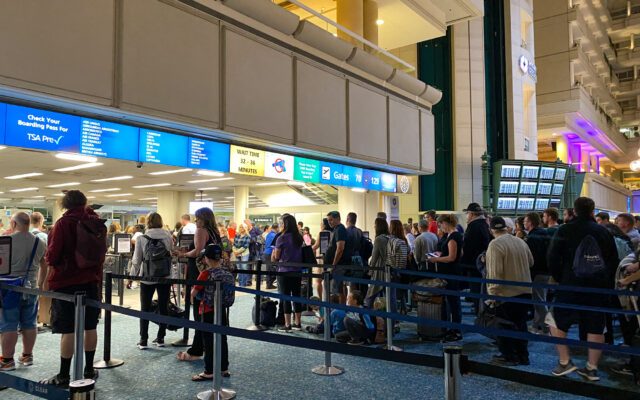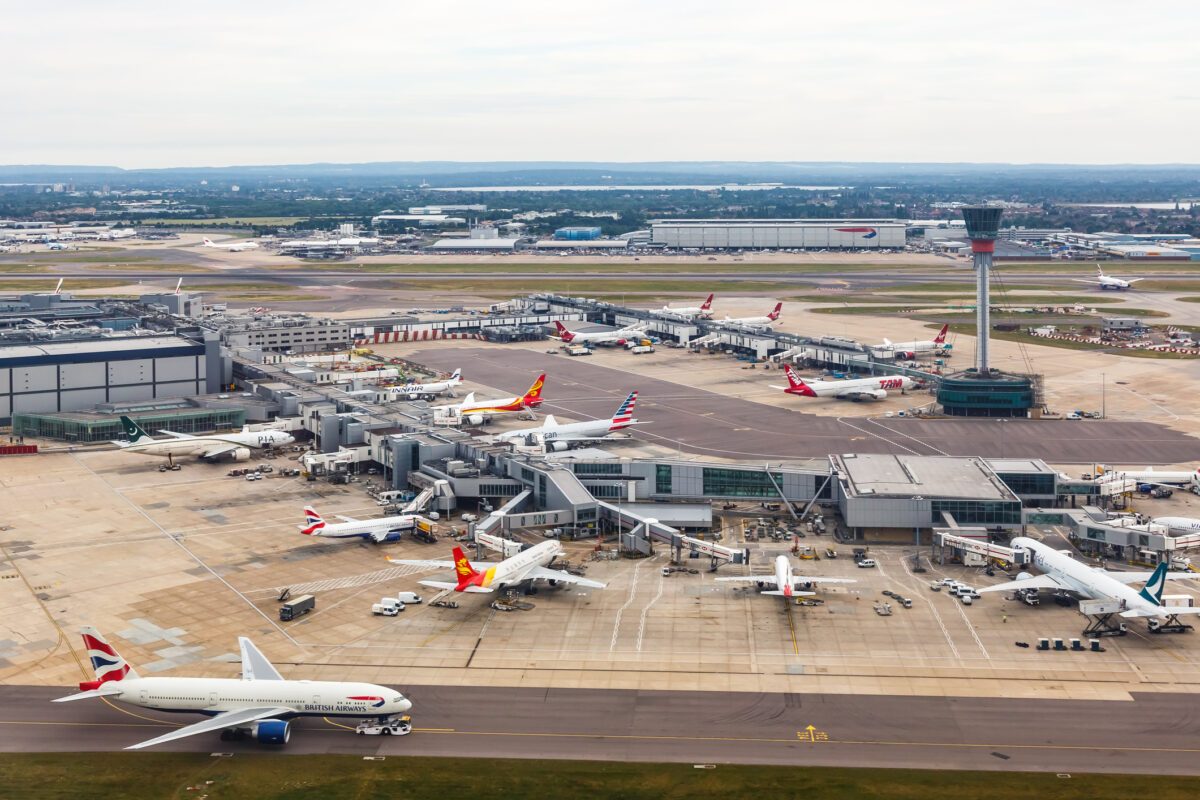
A technical failure in the UK’s air traffic management network sharply restricted flights Tuesday afternoon, disrupting departures from London Heathrow (LHR), London Gatwick (LGW) and airports across Britain before engineers restored the affected system.


NATS said the problem affected its flight-processing system, the infrastructure used to turn filed flight plans into the information controllers need to manage traffic. The air navigation service provider first acknowledged the disruption at 1:46 p.m. British Summer Time on September 8.
The failure did not close UK airspace. Aircraft already in the system continued to operate, and some departures were released, but only at reduced rates. That distinction mattered operationally: this was a capacity restriction rather than a blanket grounding, although the effect at several airports was long periods with few departures.
Read our stories in your inbox
Two aviation newsletters. Zero fluff.
NATS identified the affected system at 3:25 p.m. and said engineers were working to restore normal service. It implemented a fix at 4:40 p.m., but the recovery proved slower than initially expected. At 7:30 p.m., NATS said the problem had been resolved and normal operations had resumed, while warning that the accumulated backlog would take time to clear.
A further update at 10:10 p.m. described the recovery as complex and said disruption had spread through the wider aviation network. By Wednesday morning, the technical fault itself was no longer the principal constraint. Airlines instead faced the familiar aftermath of a large-scale ground delay: aircraft, flight crews and passengers were no longer positioned where the next day’s schedule required them.
Reduced Capacity Spread Beyond London
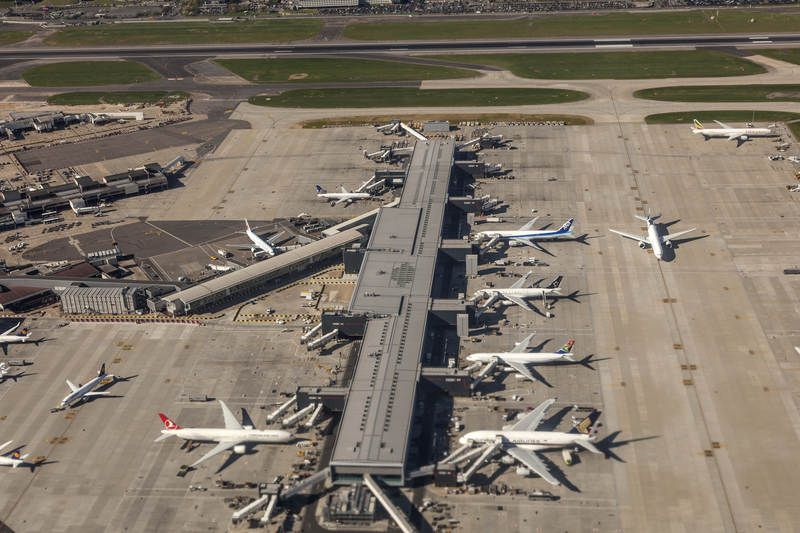
The disruption was initially most visible at Heathrow and Gatwick, where tightly utilized runway and stand systems leave little room to absorb a sustained interruption to departures. As outbound aircraft remained parked, available gates and remote stands came under pressure, complicating the handling of arriving traffic.
The consequences extended well beyond the London airports. The Eurocontrol Network Manager issued requests for information on diversion capacity from airports across Europe after reporting that the entire London Flight Information Region was operating at a reduced rate because of faulty ATC equipment. The requests, issued shortly after 2:10 p.m. UTC, specifically warned of high delays for traffic serving London airports.
At Birmingham (BHX), the airport said departing traffic was affected by an airspace problem in southern England. Departures from BHX restarted at 6:40 p.m., after which the airport, airlines and ground handlers began working through the queue.
The network effect reached aircraft operating well outside UK airspace. A flight scheduled to arrive in Britain could be held at its origin to prevent additional demand entering constrained sectors or arriving at an airport without a suitable stand. Aircraft that could not leave the UK then failed to operate later sectors elsewhere in Europe, spreading delays across successive rotations.

That pattern is particularly damaging to high-frequency Airbus A320-family and Boeing 737 operations. A single aircraft may operate several sectors in a day, often with limited ground time between flights. Losing an afternoon departure can therefore remove multiple later legs from the schedule, even after the original air traffic restriction ends.
Airlines Cancel Flights and Rebuild Rotations
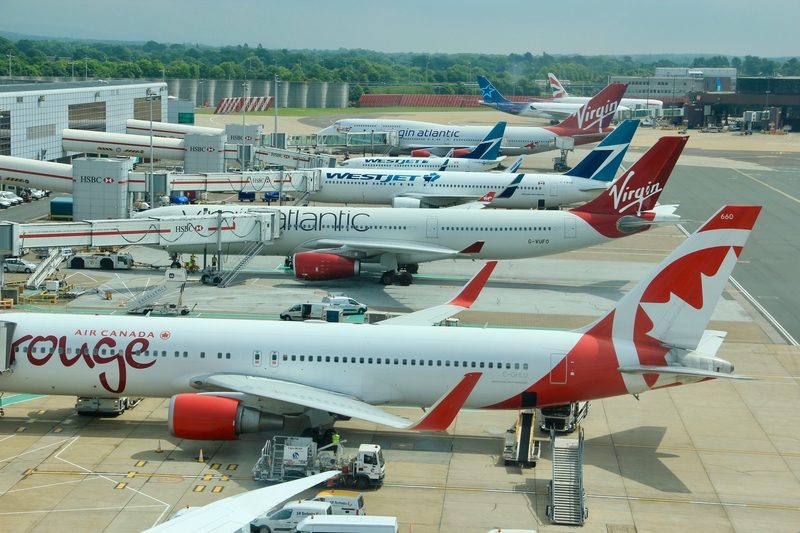
Ryanair said the failure delayed more than 65,000 of its passengers, in some cases by as much as eight hours, and forced it to cancel more than 50 flights. In a sharply worded statement issued Tuesday, the airline called for NATS chief executive Martin Rolfe to resign and argued that the incident raised fresh questions about the provider’s resilience.
easyJet, which has a particularly large operation at Gatwick, said the failure had caused delays and cancellations for carriers across Europe. Its passenger advisory directed customers to flight-status information and warned of longer airport lines while its operations teams worked through the disruption.
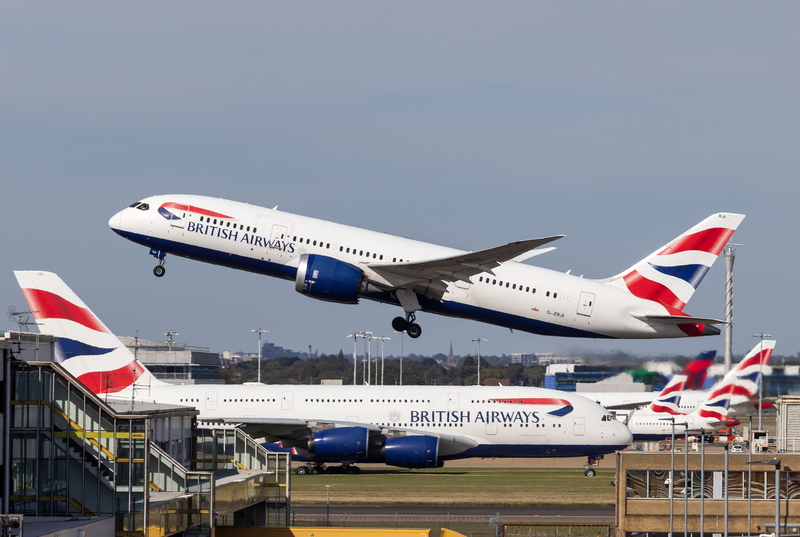
British Airways warned Wednesday that some services would remain affected because aircraft and crews were out of position. The carrier’s travel update said it would automatically rebook onward travel for passengers at risk of missing connections held on the same ticket.

Heathrow said flights were operating Wednesday, but warned of continued knock-on disruption as airlines repositioned equipment and personnel. The airport added staff in its terminals and advised passengers to travel only after confirming that their flight would operate.
Recovery at a hub such as LHR is not simply a matter of releasing delayed departures in sequence. Airlines must account for crew duty limits, available gates, connecting passengers, baggage already loaded or offloaded, and overnight restrictions at destination airports. Long-haul aircraft displaced by several hours can also miss their planned return slot, extending the disruption into the following operating day.
Failure Renews Scrutiny of NATS Resilience
Tuesday’s event follows the major NATS flight-planning failure of August 28, 2023. That incident forced controllers to rely on a more labor-intensive fallback process after the automatic system encountered a flight plan it could not process. NATS later estimated that airlines canceled about 1,500 flights that day, with further cancellations during the recovery.
The UK Civil Aviation Authority’s review of the 2023 failure called for stronger contingency planning, clearer communication and greater consideration of how quickly the wider aviation system could recover. NATS implemented a software fix for the specific fault and adopted additional recommendations arising from its investigation.
NATS has continued investing in the systems behind its en route operation. Its 2025 strategic report said it had completed a significant update to the National Airspace System flight data processor to improve resilience and integration with other critical systems. It also said the legacy processor would be replaced by an interim platform ahead of the longer-term deployment of iTEC SkyNex.
The company’s latest annual results, published in June, show the scale of the operation that depends on that infrastructure. NATS handled 2.54 million flights in the year ended March 31, 2026, with an average attributable delay of 7.8 seconds per flight.
NATS has not publicly established the underlying cause of Tuesday’s failure or connected it to the specific software anomaly responsible for the 2023 outage. Its incident updates identify only the flight-processing system and the timeline of the repair. A technical investigation will be needed to determine whether the event arose from software, hardware, data input or the interaction between connected systems.
Bottom Line
The immediate beneficiaries of the repair are the airlines able to rebuild their schedules without another day of ATC capacity restrictions. That does not make Wednesday a normal operating day. Carriers with dense UK schedules will continue trading cancellations against aircraft and crew recovery, protecting rotations that reposition equipment for the following morning while consolidating passengers onto available flights.
The larger issue is confidence in the resilience of a system on which nearly every UK airline depends. The 2023 failure prompted detailed technical work, new contingency recommendations and investment in replacement infrastructure. A second major flight-processing disruption, even if caused by an unrelated fault, will increase pressure on NATS and the CAA to show that fallback capacity can sustain more of the schedule when automation becomes unavailable.
The next significant information will come from the technical findings rather than the headline cancellation count. The industry will want to know which component failed, why redundancy did not prevent a sharp capacity reduction, how quickly controllers could move to contingency procedures and whether the planned transition away from the current processor needs to be accelerated.
Keep reading FlyMag
Get the Daily Brief in the morning or the Route Watch weekly recap on Fridays. Or both.