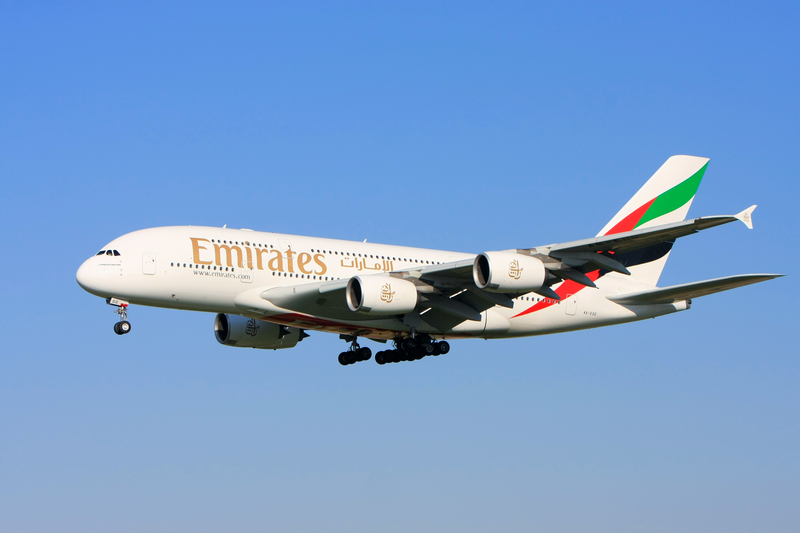
Emirates is preparing to end Airbus A380 service between Dubai International Airport (DXB) and Copenhagen Airport (CPH), bringing the carrier’s latest superjumbo chapter in Denmark to a close on May 31, 2026. On the surface, that sounds like a downgrade. In reality, it is closer to a recalibration.

From June 1, Emirates will replace its single daily A380 flight on the DXB–CPH corridor with two daily widebody services: one operated by the Airbus A350-900 and the other by a Boeing 777. So while Copenhagen loses the spectacle and scale of the double-decker A380, it does not lose capacity in any meaningful sense. In fact, the market will see more seats overall, more departure options, and much better connectivity over Dubai.
That is what makes this story more interesting than the headline suggests. Emirates is not walking away from Copenhagen. It is reshaping how it serves it.
Read our stories in your inbox
Two aviation newsletters. Zero fluff.
The A380’s Return To Copenhagen Was Always A Distinct Phase
Emirates only brought the A380 back to Copenhagen in January 2025, restoring superjumbo service for the first time since March 2020. That resumption mattered because it reintroduced one of the world’s most recognizable passenger aircraft to a Scandinavian market that had lost it during the pandemic-era network reset.
On the route, Emirates has been using its high-density two-class Airbus A380 layout with 615 seats, including 58 lie-flat Business Class seats and 557 Economy seats. That is a very specific type of deployment. It is an aircraft and cabin configuration designed to move serious volume, especially in markets where premium demand exists but does not necessarily justify the airline’s higher-end four-class A380 product.

For Copenhagen, the A380’s presence was operationally significant, but it also carried symbolic weight. CPH was one of the smaller European points in Emirates’ A380 network, and the aircraft gave the route a certain prestige.
That is why the withdrawal feels like the end of an era, even if the underlying network logic points in another direction.
More Frequencies Often Matter More Than A Bigger Aircraft
The real driver behind the change is simple: frequency.
A single daily A380 gives Emirates scale, but two daily flights with smaller aircraft give it flexibility. That matters enormously at Dubai International Airport (DXB), where the value of a route is not just how many seats it carries, but how effectively it feeds onward banks to Asia, Africa, the Indian subcontinent, and Australasia.
That is where Copenhagen’s schedule becomes much more useful from June onward.
Emirates has confirmed that the new second daily Copenhagen service, EK153/154, will operate with the Airbus A350-900 from June 1. The new timing is built around additional connectivity, especially from Scandinavia to destinations such as Bangkok (BKK), Bali/Denpasar (DPS), Manila (MNL), Tokyo Haneda (HND), Phuket (HKT), Colombo (CMB), and Malé (MLE). That is a strong clue as to what Emirates is really optimizing here: not just local Dubai traffic, but network flow.
For an airline built around hub connectivity, that trade can be more valuable than simply putting the largest possible aircraft on the route.
Copenhagen Is Losing The A380, But Gaining Better Network Utility
This is where the capacity story becomes important.
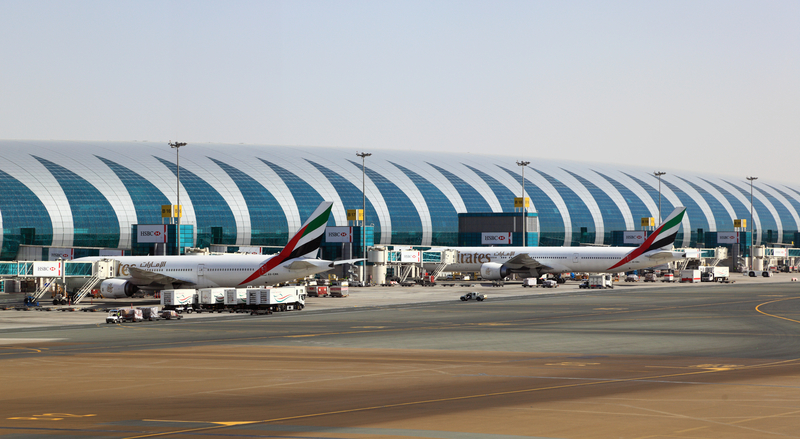
The outgoing daily A380 offers 615 seats each way in Emirates’ current Copenhagen operation. From June 1, Emirates will instead operate one daily Airbus A350-900 service and one daily Boeing 777 service. Emirates’ published update confirms the A350 arrival into Copenhagen, while multiple schedule reports indicate the existing core service moves to a Boeing 777-300ER in the near term. That creates a combined daily capacity above the A380’s single-frequency total.
That means this is not a seat cut. It is a structural change in how those seats are offered.
For passengers originating in Copenhagen (CPH), that brings a practical benefit: choice. Two daily departures create more itinerary options, more same-day connection possibilities, and a better spread of timings for both business and leisure traffic. For Emirates, it means more opportunities to channel Scandinavian passengers into different connecting banks at DXB instead of funneling everyone onto one large arrival and one large departure.
The A350 Brings A Different Kind Of Product Story
The incoming Airbus A350-900 is also important in its own right.
For Copenhagen, this will not just be a replacement aircraft. It will be the arrival of one of Emirates’ newest fleet types, bringing a fresher cabin and, notably, Premium Economy to the market. Emirates has been using the A350 rollout to extend its updated onboard proposition to more cities, and Copenhagen is one of the beneficiaries of that push.
That changes the route’s product mix in an interesting way. The A380 brought scale and familiarity. The A350 brings novelty, improved efficiency, and a more current cabin story. From a fleet-planning perspective, it also fits the wider industry pattern: airlines are increasingly using next-generation twinjets to add frequency and improve economics instead of relying on very large four-engine aircraft.
So while the emotional angle is all about the loss of the superjumbo, the commercial angle is really about the arrival of a more flexible modern fleet strategy.
Emirates Is Quietly Rebalancing Fleet Deployment
There is a broader fleet implication here as well.
Every time Emirates removes an A380 from a city, it is making a statement about where that aircraft is most valuable now. The airline still has the world’s largest A380 operation, but the network is changing. Some markets continue to justify the superjumbo because of slot constraints, premium demand, or sheer traffic volume. Others are now better served by combinations of A350s and Boeing 777s.
Copenhagen appears to have moved into that second category.
That does not mean the route is weak. Quite the opposite. The increase to double-daily service suggests Emirates sees enough strength in the market to justify more total flying. What has changed is the shape of the demand and the value of timing. Emirates appears to believe Copenhagen is now better served by more frequency and more connection utility than by a single daily high-capacity A380 rotation.
That is a classic hub-airline move.
The Boeing 777 Side Matters Too
The Boeing 777 taking over part of the schedule is not just filler. It is a key part of the capacity math.
While the A350-900 attracts most of the attention because it is new, the 777 remains one of the most important aircraft in Emirates’ long-haul system. On Copenhagen, it allows the airline to keep substantial seat volume on the route without needing the A380’s sheer size. It also gives Emirates room to adjust capacity more precisely over time if seasonal demand changes.
There is one wrinkle worth noting: current schedule reporting suggests the 777 assignment may not remain static all year. Some updates indicate a 777-300ER for much of the period, with a shift later in the year toward the 777-200LR on certain services. That matters because the exact seat count can move depending on the subfleet used. But the larger strategic point remains unchanged: Emirates is replacing one very large daily aircraft with a more flexible two-flight pattern using twinjets.
For a route like DXB–CPH, that may prove commercially stronger than the superjumbo model.
Why This Matters For Copenhagen
For Copenhagen Airport (CPH), the change is also revealing.
Losing A380 service carries visibility value. Airports like having the superjumbo on the board because it signals scale and long-haul relevance. But from a practical aviation perspective, double-daily Emirates service is arguably more useful than a once-daily A380.
More frequencies improve connectivity for Danish travelers, strengthen Copenhagen’s long-haul access through Dubai, and make the airport more functional for time-sensitive trips. The route may lose some visual drama on the apron, but it gains schedule depth.
That is not always how aviation headlines frame these changes, but it is often how airlines and airports think about them internally.
Bottom Line
Emirates’ final Airbus A380 flight from Dubai (DXB) to Copenhagen (CPH) on May 31, 2026 really does mark the end of a chapter. The superjumbo has only been back in Denmark since January 2025, and its withdrawal closes another brief but memorable A380 phase in Scandinavia.
But this is not a retreat.
From June 1, Emirates will serve Copenhagen twice daily using an Airbus A350-900 and a Boeing 777, giving the market more seats overall, more departure options, and better connecting utility over Dubai. For aviation professionals, that is the real takeaway. Emirates is choosing frequency, flexibility, and network efficiency over flagship aircraft symbolism.
So yes, Copenhagen is losing the Airbus A380. But in airline-strategy terms, Emirates is probably strengthening the route, not weakening it.
Keep reading FlyMag
Get the Daily Brief in the morning or the Route Watch weekly recap on Fridays. Or both.