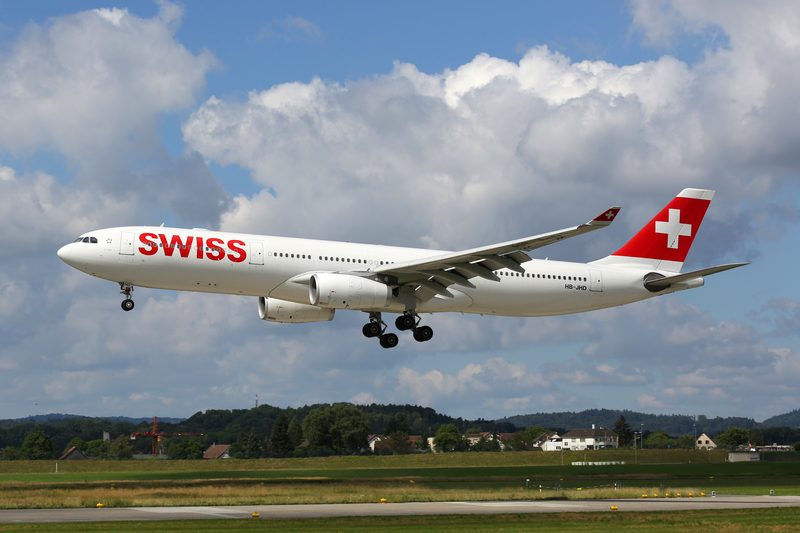
SWISS International Air Lines is keeping Dubai International Airport (DXB) off its board for longer than initially planned, extending the suspension of its Zurich Airport (ZRH) service through July 11, 2026. That is a meaningful shift from the airline’s previous cutoff of May 31, and it turns what first looked like a short-term disruption into a much more material summer schedule decision.

For aviation readers, that matters because the Zurich (ZRH) to Dubai (DXB) route is not a marginal link. It is one of SWISS’s established long-haul markets, typically operated by the Airbus A330-300, a widebody that sits at the center of the carrier’s medium-density intercontinental network. On a sector of roughly six and a half hours, Dubai is the kind of route that blends premium demand, leisure traffic, and cargo relevance in a way that usually makes it commercially attractive. When an airline keeps a market like that suspended well into July, it is sending a clear signal that security and operational confidence are still outweighing normal summer demand logic.
This is no longer a short disruption
The calendar is what makes this extension more significant than it may first appear.
Read our stories in your inbox
Two aviation newsletters. Zero fluff.
Moving the suspension from the end of May to July 11 effectively wipes out another six weeks of service and pushes the route’s return beyond the first wave of the northern summer travel period. That is not the kind of adjustment airlines make lightly on a daily long-haul route. By this point, schedules, aircraft rotations, crew planning, and commercial inventory are already deep into summer execution. Extending the pause means SWISS does not yet see the operating environment as stable enough to confidently restore daily flying between Zurich (ZRH) and Dubai (DXB).
That distinction is important. Airlines can tolerate uncertainty for a few days. They can absorb short suspensions during a rapidly changing crisis. But once the pause stretches into mid-summer, the route ceases to be a temporary irregularity and becomes a deliberate network gap.
The issue is not just Dubai. It is the full operating corridor.
SWISS has tied the decision directly to the still-volatile security situation in the Middle East, and that phrasing matters. For an airline, restarting a route to Dubai (DXB) is not simply a question of whether the airport itself is open or functioning. It is about whether the full mission can be flown with acceptable confidence.
That includes the airspace picture, dispatch flexibility, alternate planning, fuel availability, crew-duty resilience, and the margin an airline is comfortable carrying when conditions can change quickly. Aviation professionals know this well: a destination may be operational, but the route can still be strategically unattractive if the broader corridor is unstable.
That is why SWISS’s language has been so firm. The airline has said it is continuing to assess the situation in coordination with Swiss authorities, local partners, and Lufthansa Group. In other words, this is not a commercial trial-and-error exercise. It is a security-led operating decision, and those decisions tend to move conservatively for good reason.
The A330-300 angle matters more than it might seem
The aircraft type adds another layer to the story.
SWISS’s Airbus A330-300 is one of the airline’s core long-haul workhorses, used on markets where widebody economics need to balance premium demand, cargo capability, and disciplined capacity. That makes it a good fit for Zurich (ZRH) to Dubai (DXB) in normal conditions. But it also means the route occupies a more valuable place in the fleet plan than a thin narrowbody sector would.
When a route like this comes off the board, the airline is not just losing a destination. It is freeing up a long-haul widebody that can be redeployed elsewhere in the network or simply removed from risk exposure until conditions improve. For a carrier managing an intercontinental fleet as tightly as SWISS does, that is a meaningful planning lever.
This is one reason the Dubai suspension deserves more attention than a standard travel-advisory headline. It says something about how SWISS is choosing to deploy scarce long-haul assets in an environment where operational predictability matters as much as passenger demand.

Passengers still have options, but the route remains closed
From the passenger side, SWISS is offering the usual two-track remedy: flexible rebooking to a later travel date or a full refund. The airline has also said its customer support teams remain available around the clock for affected travelers.
That is operationally routine, but strategically telling. Airlines only emphasize that level of rebooking and refund flexibility when they expect the disruption to meaningfully affect summer itineraries and onward travel planning. On a route like Zurich (ZRH) to Dubai (DXB), that can ripple into a range of itineraries beyond the nonstop itself, particularly where travelers were relying on Dubai for wider regional access.
A wider industry signal is still visible here
Even though this is a SWISS story, it fits a broader pattern across international aviation.
Carriers have continued to redraw Middle East schedules, delay resumptions, or reduce frequencies as the regional situation remains unsettled. What makes the SWISS move notable is not that it is alone, but that it is extending a flagship Gulf market deeper into the summer rather than cautiously restoring it with reduced operations. That suggests the airline still sees too much uncertainty to justify even a limited restart on Zurich (ZRH) to Dubai (DXB).
For industry observers, that is the real signal. Dubai is normally one of the more resilient markets in the region. If SWISS is still unwilling to put the route back into operation by early June, the threshold for return is clearly higher than a simple airport-open, airport-closed calculation.
Bottom Line
SWISS’s latest Dubai decision is important because it shows how a security-driven suspension can evolve into a genuine seasonal network adjustment.
The airline has now pushed its Zurich Airport (ZRH) to Dubai International Airport (DXB) restart through July 11, keeping a core Airbus A330-300 long-haul route out of service well into summer. That is not a symbolic extension. It is a sign that SWISS still does not see the broader operating environment as stable enough to support a confident return.
For airline professionals, the takeaway is straightforward. This is no longer just a temporary pause on a Gulf route. It is a measured decision to protect the network, the fleet plan, and the operating margin until the region offers a more predictable set of conditions.
Keep reading FlyMag
Get the Daily Brief in the morning or the Route Watch weekly recap on Fridays. Or both.