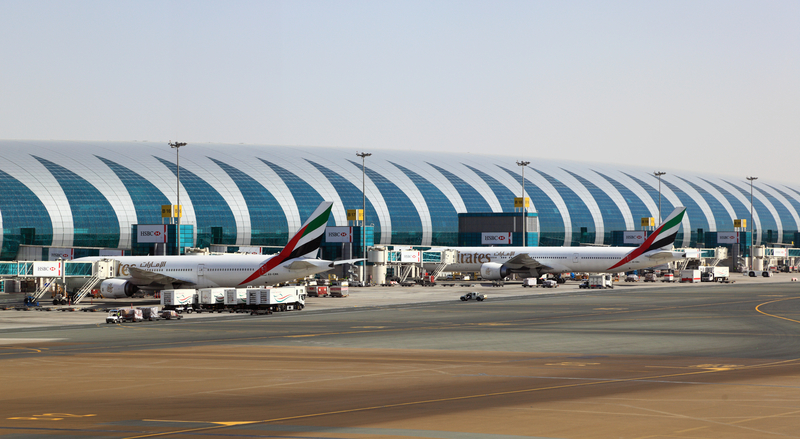
Emirates (EK) is preparing to restart a tightly controlled slice of its Dubai operation after the United Arab Emirates’ civil aviation regulator partially reopened airspace access to several northern UAE airports, including Dubai International (DXB).

The airline said it will begin operating a limited number of flights from the evening of March 2, as authorities transition from a full stop to a managed restart following the region-wide shutdown that began on February 28. The initial focus is expected to be clearing backlogs—reuniting aircraft, crews, and passengers that have been stranded worldwide as Gulf routings were abruptly severed.
The key enabler: a GCAA NOTAM that reopens DXB, DWC, SHJ, and RKT via limited routes
The UAE General Civil Aviation Authority (GCAA) issued a NOTAM effective 1716L (1316Z) on March 2 authorizing arrivals and departures through a limited number of routes for:
Read our stories in your inbox
Two aviation newsletters. Zero fluff.
-
Dubai International (DXB)
-
Dubai World Central – Al Maktoum (DWC)
-
Sharjah International (SHJ)
-
Ras Al Khaimah International (RKT)
For airline operations teams, “limited routes” is the entire story. It implies throughput constraints driven by safe-corridor availability, ATC capacity, and risk management—meaning the restart won’t behave like a typical post-weather recovery. Instead, it’s likely to be paced, slot-managed, and heavily dependent on which corridors remain open minute by minute.
Why Emirates can’t simply “resume” — it has to rebuild a banked hub
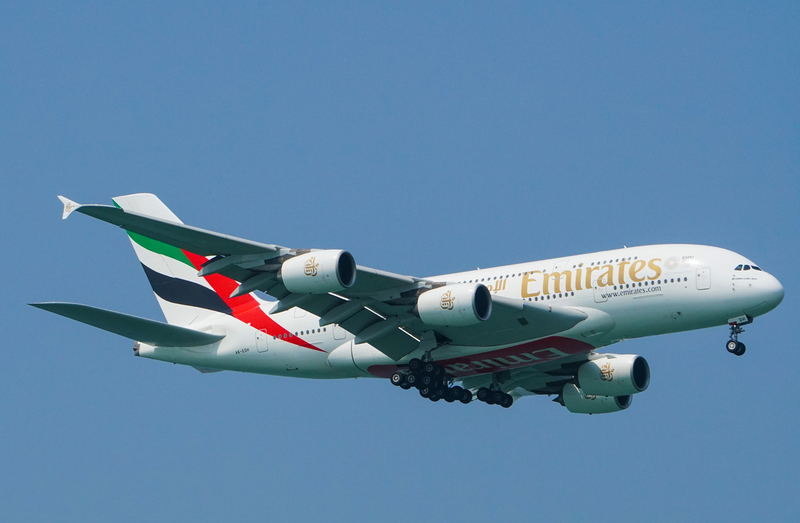
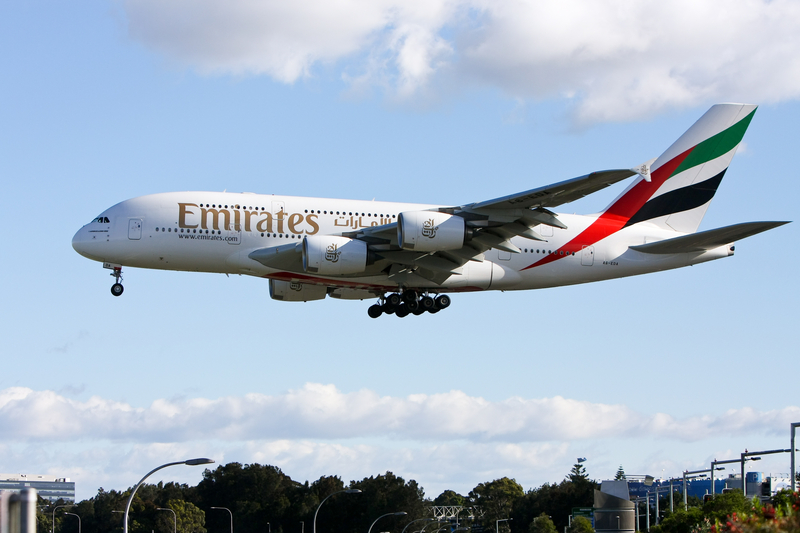
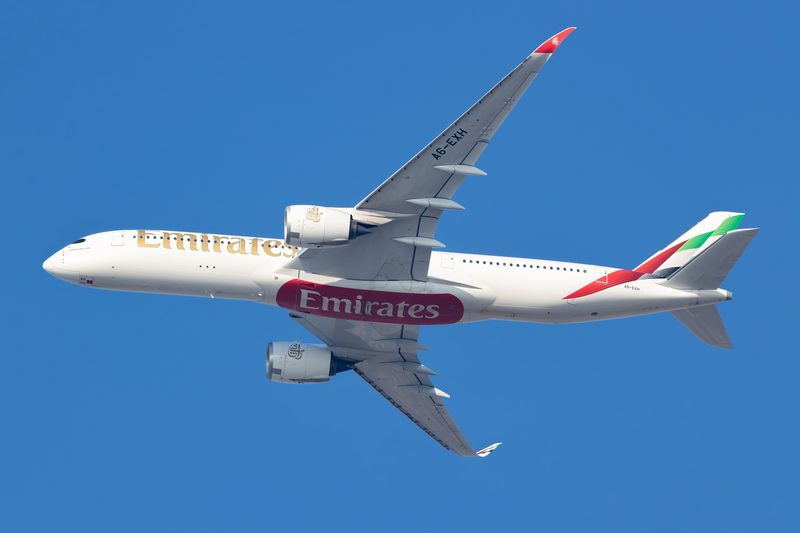
DXB is a classic wave hub: widebody arrivals, short connection times, then widebody departures. Emirates’ core fleet—Airbus A380-800s and Boeing 777-300ERs—is designed to move huge numbers of connecting passengers in tight banks. When the hub pauses, recovery becomes a multi-step choreography:
Aircraft are out of position, often parked at diversion fields.
Crews may be out of duty time and geographically scattered.
Maintenance plans and nightly checks are tied to being “home” at DXB.
Passenger flows are mismatched—thousands trying to get into DXB while thousands more are trying to leave it.
That’s why Emirates’ language about a “limited number of flights” matters. Even with DXB open, the airline has to restore the network in layers: reposition aircraft, move stranded travelers, then gradually rebuild the normal connectivity engine.
Abu Dhabi (AUH) restarted first — and it’s the pattern Dubai is now following
Airports farther from the most constrained corridors, including Abu Dhabi (AUH), reopened earlier. Etihad (EY) has already resumed limited operations, prioritizing passengers whose travel was disrupted during the February 28 closure.
That phased reopening is typical in security-driven events: bring back the airports with the most stable access first, then reopen the highest-volume hubs (like DXB) once safe routings and air traffic flows can be managed without creating uncontrolled congestion.
Jordan adds another constraint: nightly airspace closures affect AMM schedules
As the wider region works through closures and partial reopenings, Jordan has implemented a new operating rhythm that will impact carriers transiting or relying on Jordanian corridors.
Authorities in Amman announced that Jordan’s airspace will be closed daily from 18:00 local (15:00Z) to 09:00 local (06:00Z) until further notice. Royal Jordanian (RJ) will continue operating from Amman Queen Alia (AMM), but the airline’s schedule will be shaped by the reduced operating window—particularly for late-night departures, early arrivals, and any recovery flying that normally relies on overnight flexibility.
What passengers should expect at DXB and across the EK network
For travelers, the practical takeaway is that “reopen” does not mean “normal”:
Expect rolling cancellations and rebookings as Emirates rebuilds aircraft rotations.
Expect longer flight times on some routes as airlines avoid still-restricted airspace and funnel into approved corridors.
Do not go to DXB (DXB) or DWC (DWC) unless your airline has confirmed your flight is operating and you’ve received direct communication.
The first 24–72 hours of a banked-hub restart are usually the most chaotic, because every flight you operate must also serve the recovery plan—moving the right aircraft and crews into the right places at the right time.
Bottom Line
Emirates will begin flying a limited schedule from the evening of March 2 after the UAE issued a corridor-restricted NOTAM reopening access to DXB, DWC, SHJ, and RKT. With Dubai’s hub still operating under constrained routings, the restart will be gradual and recovery-driven rather than a full timetable reset. Meanwhile, Jordan’s nightly airspace closures will further complicate regional routing and timing for airlines operating through AMM and nearby corridors.
Keep reading FlyMag
Get the Daily Brief in the morning or the Route Watch weekly recap on Fridays. Or both.