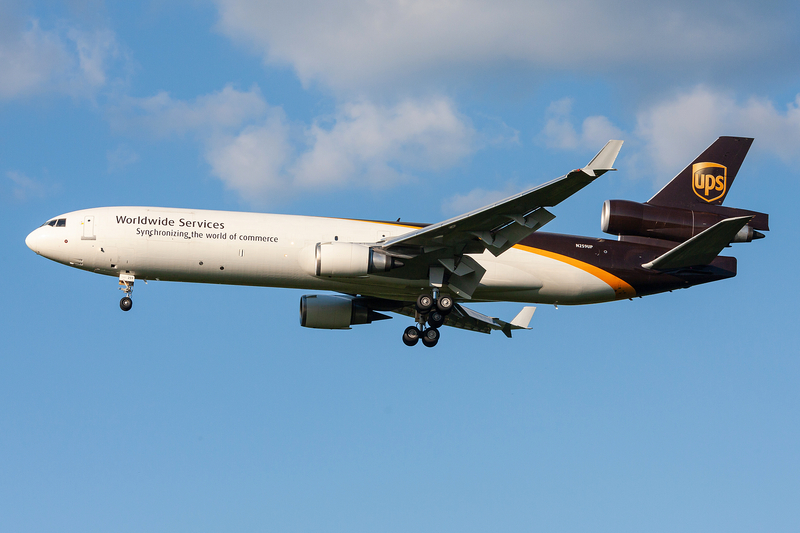
UPS has formally closed the book on one of cargo aviation’s most distinctive workhorses: the McDonnell Douglas MD-11F. For two decades, the trijet sat in a sweet spot for express networks—big enough to move serious volume across oceans, common enough to source frames and feedstocks, and rugged enough to live in the overnight world of tight sort windows and hard utilization.
The MD-11’s appeal was always very “cargo airline”: a widebody main deck built around palletized efficiency, strong structural margins, and the kind of range/payload flexibility that made it useful on both long trunk sectors and high-volume repositioning. But it also carried a growing set of realities—three engines to maintain, shrinking parts availability, and a cost curve that modern twins have made increasingly difficult to justify.
What UPS Actually Announced
UPS disclosed that it completed the retirement of its MD-11 fleet in Q4 2025, taking a $137 million non-cash, after-tax charge tied to writing off the aircraft. In the same disclosure, UPS described the move as an acceleration of its broader fleet modernization plan.
Read our stories in your inbox
Two aviation newsletters. Zero fluff.
In practical terms, that’s not a “we’ll see how it goes” pause. It’s a financial and operational line in the sand: the MD-11 isn’t coming back to UPS ramp positions at Louisville Muhammad Ali International Airport (SDF), and the network planning assumptions now shift to a twin-engine future.
The Louisville (SDF) Accident That Compressed The Timeline
The MD-11’s UPS chapter didn’t end quietly. The retirement follows the UPS Flight 2976 accident that occurred shortly after takeoff from Louisville (SDF) on November 4, 2025, on a planned flight to Honolulu (HNL). Investigators have reported that the left engine and pylon separated during the departure sequence, and the aircraft impacted terrain and nearby structures just outside the airport environment.
The National Transportation Safety Board’s public case file lists three crew fatalities and 11 fatalities on the ground, with 23 people on the ground injured. Separately, some later reporting has indicated the total death toll rose after an injured person died weeks later—an important detail for readers tracking casualty figures as the investigation evolves.
Why The MD-11 Was Always Living On Borrowed Time
Even before the accident, the MD-11 was increasingly a “legacy lift” solution in a world that has moved on:
-
Economics: Modern twin-engine freighters deliver materially better fuel burn per ton-mile and typically lower maintenance overhead per block hour.
-
ETOPS maturity: The original rationale for extra engines—redundancy—has been eroded by long-standing ETOPS standards and the proven reliability of high-bypass turbofans.
-
Fleet complexity: A third engine isn’t just a third powerplant; it’s another set of spares, tooling, inspections, shop capacity assumptions, and training burdens.
-
Supply chain friction: As global inventories thin, “routine” can become “AOG risk,” especially on older widebodies with aging-component watchlists.
That’s why the MD-11 has been slowly disappearing everywhere except express and niche cargo operators—carriers that could still make the utilization math work and had the operational discipline to keep older widebodies reliable. UPS clearly decided the margin for error is no longer acceptable.
How UPS Backfills The Lift
UPS isn’t walking away from the capacity requirement—just the airframe. The company has indicated it will replace much of the MD-11 lift with incoming Boeing 767 freighters, a type that has become the backbone of modern express networks because it’s efficient, versatile, and far easier to support at scale.
The catch, of course, is simple physics: the MD-11 sits in a higher payload class than a 767, so replacing it is rarely a clean 1:1 swap. That typically forces network decisions airline professionals will recognize immediately:
-
More frequencies on trunk lanes to maintain nightly volume flows
-
Re-optimized sort timing at key hubs—especially where gate, ramp, and de-ice constraints matter
-
Selective upgauging to remaining heavy lift on peak lanes (where available)
-
Tighter aircraft routing discipline to protect completion factor during weather and peak season surges
In an express system anchored by mega-sort operations—most notably UPS’s Worldport at Louisville (SDF)—fleet simplification isn’t just an accounting story. It changes how the airline protects service during the hours that matter most: late-night departures, early-morning arrivals, and the narrow windows where cascading delays become systemic.
What This Means For The Remaining MD-11 Operators
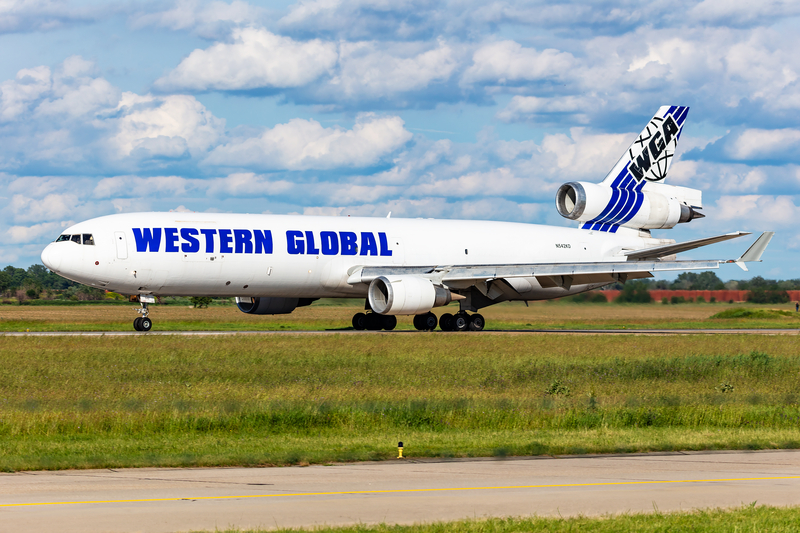
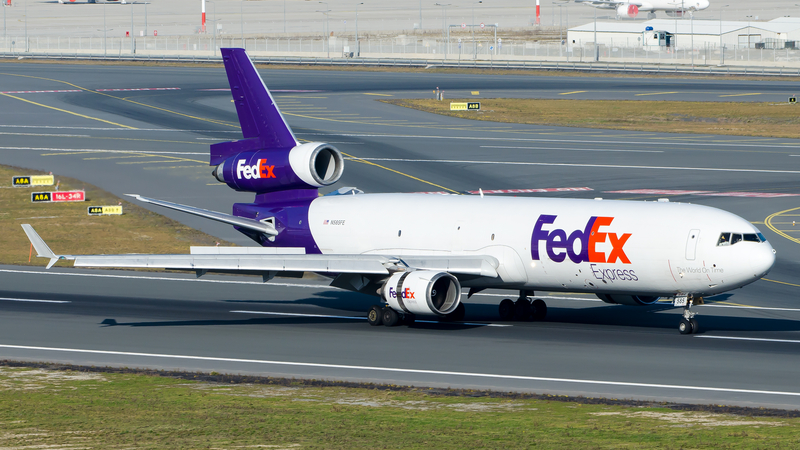
With UPS out, FedEx Express and Western Global remain the principal MD-11 freighter operators that industry trackers have consistently identified as still operating the type in recent years. But the key point right now isn’t who still owns MD-11s—it’s whether MD-11s can return to routine flying.
After the UPS 2976 accident, the FAA issued an emergency directive effectively prohibiting MD-11/MD-11F operations until specific inspections and any required corrective actions are completed. In other words, the aircraft’s near-term future is being defined as much by regulatory clearance and inspection outcomes as by commercial demand.
So, while the MD-11 may not be “gone” globally overnight, UPS’s exit is a major inflection point. It removes the type from one of the world’s most sophisticated, reliability-driven cargo networks—and that tends to accelerate the industry’s retirement curve for any aging platform.
Bottom Line
UPS’s MD-11 retirement is more than a fleet note—it’s a strategic signal. A trijet that once made perfect sense for global express flying has become a complexity and risk profile the carrier no longer wants in its system, particularly after the Louisville (SDF) accident and the resulting regulatory scrutiny.
For cargo aviation, the direction is clear: the center of gravity continues moving toward efficient twin-engine fleets, simplified maintenance ecosystems, and aircraft that can be supported predictably at scale. The MD-11 will still have a place in the story for as long as inspections, economics, and parts pipelines allow—but at UPS, the trijet era has ended.
Keep reading FlyMag
Get the Daily Brief in the morning or the Route Watch weekly recap on Fridays. Or both.