airBaltic and EL AL Israel Airlines have signed a new codeshare agreement.

The partnership begins on July 1, 2026. That is the same day airBaltic plans to resume nonstop flights between Riga Airport (RIX) and Tel Aviv Ben Gurion Airport (TLV).
The deal will improve travel between Israel, the Baltic states, and Northern Europe.
Read our stories in your inbox
Two aviation newsletters. Zero fluff.
It also gives Riga (RIX) a stronger role as a connecting point between Tel Aviv (TLV) and several European cities.
How The Codeshare Works
Under the agreement, EL AL will place its LY code on airBaltic flights between Riga (RIX) and Tel Aviv (TLV).
EL AL will also place its code on airBaltic flights from Riga to ten European cities.
Those cities are Copenhagen (CPH), Frankfurt (FRA), Helsinki (HEL), Munich (MUC), Oslo (OSL), Stockholm (ARN), Tallinn (TLL), Vienna (VIE), Vilnius (VNO), and Zurich (ZRH).
That gives EL AL passengers more one-stop options through Riga.
In return, airBaltic will place its BT code on selected EL AL-operated flights from Tel Aviv (TLV).
Those flights serve Amsterdam (AMS), Vienna (VIE), Munich (MUC), Frankfurt (FRA), Milan (MXP), Berlin (BER), and Zurich (ZRH).
For passengers, the benefit is simple. More city pairs can be booked under one airline code, with smoother connections through either Riga or Tel Aviv.
Riga Gains A Bigger Role
The agreement strengthens Riga’s position in the region.
Riga is already airBaltic’s main hub. The airline uses it to connect the Baltic states with Scandinavia, Western Europe, Central Europe, and the Middle East.

The new EL AL partnership adds another layer.
Passengers from Israel can now use Riga to reach cities across Northern and Central Europe. At the same time, passengers from Latvia and nearby markets can connect through Tel Aviv to more destinations on EL AL’s network.
This is useful for a smaller hub.
Riga cannot match the scale of Frankfurt, Amsterdam, Istanbul, or Warsaw. But it can offer simple, efficient connections in specific markets.
Israel–Baltics traffic is one of those markets.
Tel Aviv Flights Resume The Same Day
The codeshare starts as airBaltic brings back Riga–Tel Aviv flights.
The route is scheduled to resume on July 1, 2026. airBaltic plans to operate it three times per week.
That timing is important.
The codeshare would be far less useful without the nonstop Riga–Tel Aviv sector. The route provides the base for many of the new connection options.
airBaltic says the return follows stronger demand and a gradual improvement in the regional operating environment.
However, the airline is not treating the market as fully normal.
The Tel Aviv restart remains subject to safety monitoring, European Union Aviation Safety Agency guidance, and insurer requirements.
Safety Still Shapes The Schedule
Flights to Israel remain sensitive for European airlines.
The regional security situation has affected airline schedules for months. Several carriers have suspended, reduced, or delayed Tel Aviv service at different points.
airBaltic is therefore taking a cautious approach.
The airline says it will keep monitoring conditions and adjust operations if needed.
That wording matters.
The July 1 restart is a planned return, not a guarantee that schedules can never change. If the security picture worsens, insurers or regulators may affect airline operations again.
For passengers, that means flexibility remains important when booking.
The Airbus A220-300 Is Expected
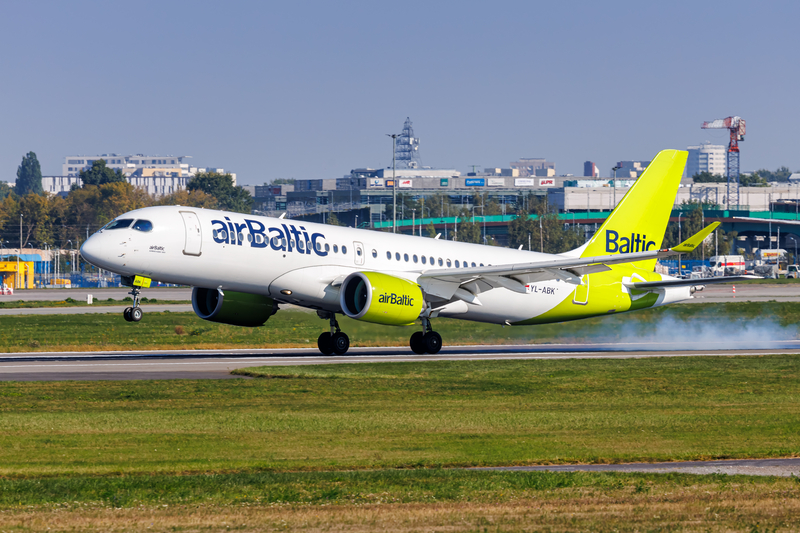
airBaltic operates a single-type fleet built around the Airbus A220-300.
That makes the A220-300 the expected aircraft for Riga (RIX)–Tel Aviv (TLV).
The aircraft is well suited to the route.
Airbus lists the A220-300 with up to 3,400 nautical miles of range. That is more than enough for the flight between Latvia and Israel.
The A220-300 is also efficient on medium-length routes that do not need larger Airbus A320 or Boeing 737-family aircraft.
For airBaltic, the aircraft supports a simple operating model. One fleet type means common training, common maintenance, and more scheduling flexibility.
Why The A220 Fits airBaltic’s Network
The A220 is central to airBaltic’s strategy.
It gives the airline enough range to serve the Middle East, Western Europe, Scandinavia, and the Caucasus from Riga.
It also gives airBaltic the right seat count for thinner routes.
That is important for Riga.
Many airBaltic markets are not large enough for widebody aircraft or high-frequency narrowbody service. The A220 lets the airline serve them with lower risk.
On Riga–Tel Aviv, the aircraft should allow airBaltic to offer nonstop service while keeping capacity disciplined.
That matters because the route is returning during a still-sensitive operating period.
EL AL Adds More Northern Europe Reach
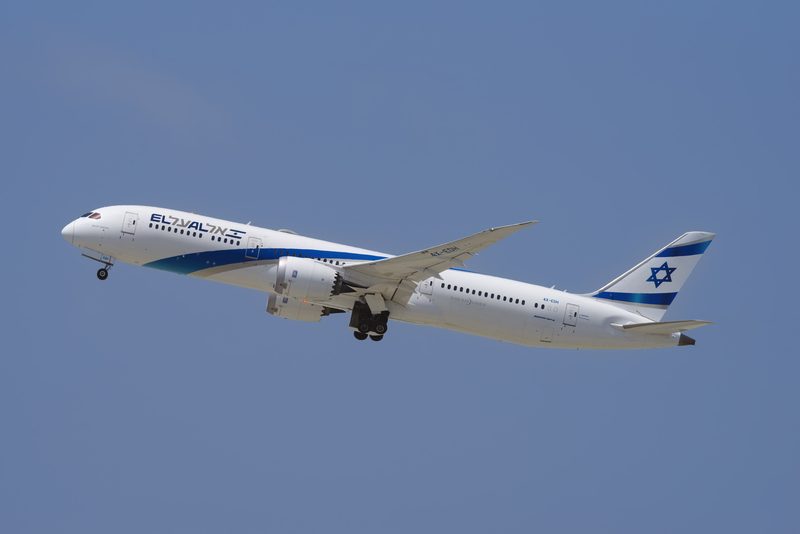
For EL AL, the agreement extends its European network without launching its own flights to every city.
By placing the LY code on airBaltic flights, EL AL can sell more destinations through Riga.
That gives its customers easier access to the Baltics, Scandinavia, and several Central European cities.
The deal also supports EL AL’s broader partnership strategy.
The Israeli carrier has added several airline partnerships in recent years. These agreements help it compete beyond its own aircraft network.
That matters because EL AL’s home market is limited by geography and security conditions. Partnerships make the network more useful without requiring every route to be flown by EL AL aircraft.
airBaltic Gets More Southern Connectivity
The agreement also helps airBaltic.
By placing the BT code on EL AL flights from Tel Aviv, airBaltic can offer more one-stop options for passengers traveling from Riga.
That includes cities such as Amsterdam, Milan, Berlin, Frankfurt, Munich, Vienna, and Zurich.
Some of these destinations are already in airBaltic’s own network. But the codeshare gives passengers more routing options and may improve schedule choice.
It also makes airBaltic more relevant for passengers traveling between the Baltics and Israel.
For a non-alliance airline, codeshares are especially valuable. They help build network depth without joining a global alliance.
What Passengers Should Expect
Codeshares can make travel easier.
Passengers may be able to book one itinerary, travel under one airline code, and connect between flights with less friction.
However, passengers should still check the operating carrier.
A flight marketed by EL AL may be operated by airBaltic. A flight marketed by airBaltic may be operated by EL AL.
That affects check-in rules, baggage policies, onboard product, seat selection, and service style.
Travelers should also check visa, entry, and security requirements for Israel and any connecting country.
This is especially important because Tel Aviv operations remain more sensitive than normal European flying.
A Targeted Partnership, Not An Alliance Move
This is a codeshare agreement. It is not an alliance membership move.
airBaltic is not joining a global alliance. EL AL is also not part of one of the three major airline alliances.
That makes the codeshare practical and targeted.
Both airlines are using each other’s networks where they overlap well. airBaltic adds Riga and Northern Europe. EL AL adds Tel Aviv and its European reach.
The deal does not need to be large to be useful.
It only needs to make specific Israel–Europe itineraries easier to sell and easier to book.
Tourism, Business And Family Traffic Support The Route
The market has several demand drivers.
There are cultural and family links between Israel and the Baltic region. There is also business traffic, tourism demand, and religious travel.
Riga can also work as a convenient transfer point for Israeli travelers heading to Scandinavia and the Baltics.
The route is not only about point-to-point travel between Latvia and Israel.
The value comes from the wider network.
That is why the codeshare matters. It turns one nonstop route into a broader set of one-stop itineraries.
Bottom Line
airBaltic and EL AL will begin a new codeshare agreement on July 1, 2026.
EL AL will place its LY code on airBaltic flights between Riga (RIX) and Tel Aviv (TLV), along with ten onward Riga connections. airBaltic will place its BT code on selected EL AL flights from Tel Aviv to seven European cities.
The agreement begins as airBaltic resumes Riga–Tel Aviv service with three weekly flights.
For airBaltic, the deal strengthens Riga’s role as a regional hub. For EL AL, it adds easier access to the Baltics and Northern Europe.
The partnership is useful, but it remains shaped by the security environment. airBaltic says Tel Aviv flights will operate subject to continued safety assessments, EASA recommendations, and insurer requirements.
For passengers, the main benefit is more choice. The deal should make travel between Israel, the Baltics, and Northern Europe easier to book and easier to connect.
Keep reading FlyMag
Get the Daily Brief in the morning or the Route Watch weekly recap on Fridays. Or both.