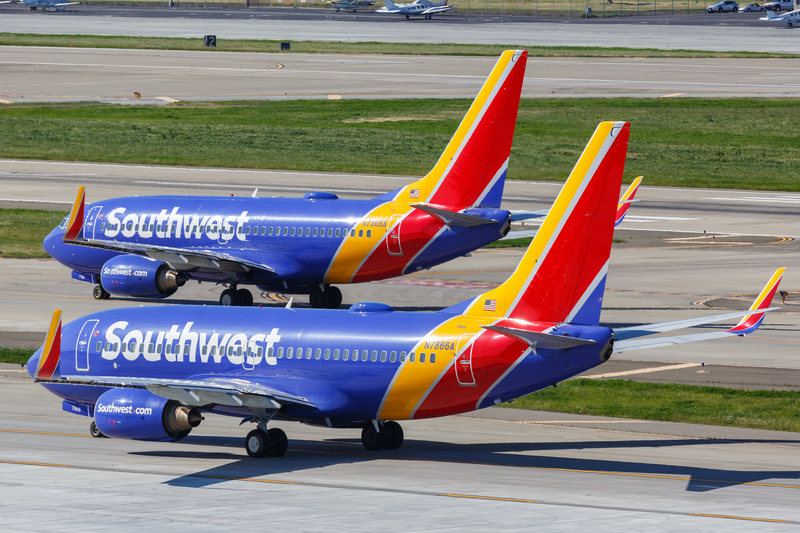
Southwest Airlines is pulling out of two major airports at once, ending all service at Chicago O’Hare International Airport (ORD) and Washington Dulles International Airport (IAD) effective June 4, 2026. On paper, it is a network refinement move. In practice, it is a revealing reset of how Southwest wants to compete in two large metro areas where it already has stronger, more natural positions elsewhere.

For Chicago, that means doubling down on Chicago Midway International Airport (MDW). For the Washington region, it means leaning harder into Baltimore/Washington International Thurgood Marshall Airport (BWI) and Ronald Reagan Washington National Airport (DCA). Those have long been the airports that fit Southwest’s operating model best. ORD and IAD, by contrast, always looked more opportunistic than foundational.
That is what makes this development significant. Southwest is not simply trimming underperforming flying. It is stepping back from two airports that never truly became central to its strategy.
Read our stories in your inbox
Two aviation newsletters. Zero fluff.
The Cut Is Clean And Comprehensive
Southwest has told customers that any itinerary including ORD or IAD on or after June 4 will be affected. Travelers can keep their existing itinerary if they fly on or before June 3, rebook through other airports, or request a refund depending on the ticket and routing.
There is no partial drawdown here. This is not a seasonal suspension or a frequency cut. Southwest is ending all flights to, from, or through both airports at the same time. For a carrier that has spent the past several years reassessing what actually earns acceptable returns in its network, that kind of full withdrawal says a lot.
It suggests Southwest no longer sees a compelling reason to maintain a secondary presence at either ORD or IAD when it already has much stronger positions in the same metropolitan regions.
Chicago Was Always Going To Come Back To Midway
The Chicago side of this decision feels the least surprising.
Southwest built its identity in Chicago around Midway, not O’Hare. MDW is one of the airline’s most important airports systemwide and remains the obvious center of gravity for its Chicago operation. In that context, O’Hare was always an awkward fit. It gave Southwest access to the city’s largest airport and a different passenger base, but it also forced the carrier into a market dominated by two legacy giants, United Airlines and American Airlines, both of which view ORD as strategically essential.
That matters because O’Hare is not an easy airport for a smaller presence to influence. If an airline is not one of the major gate holders and frequency leaders, it can quickly become marginal in the competitive hierarchy. Southwest was never going to outscale United or American at ORD, and it did not need to. The problem is that even maintaining relevance can become expensive when those incumbents are adding capacity aggressively.
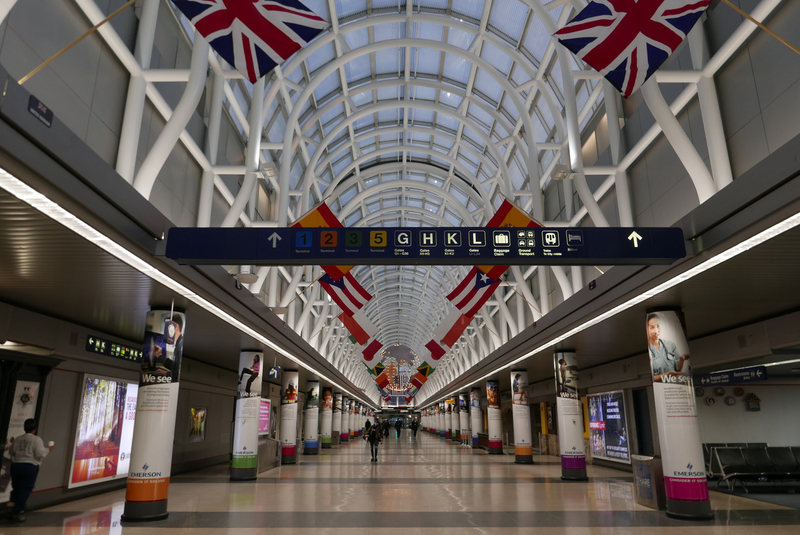
That environment has become even tougher. O’Hare is once again under intense scrutiny over summer scheduling levels, with the Federal Aviation Administration weighing flight reductions because of congestion and operational risk. In a market where the two dominant legacy airlines are fighting hard over frequency and future gate positioning, Southwest’s smaller ORD operation increasingly looked like a distraction rather than an advantage.
O’Hare’s Problem Is No Longer Just Airfield Capacity
One of the more important points often missed in surface-level takes on O’Hare is that the airport’s challenge is not simply runway throughput.
O’Hare has come a long way operationally since the pre-reconfiguration era, and its runway system is far stronger than it was in the early 2000s. But that does not mean the airport is unconstrained. The pressure point today is broader and more complex. Gate availability, ramp congestion, construction impacts, and the interaction between aggressive scheduling and real-world operational limits are all central to the ORD story.
That is why the current competitive surge at O’Hare matters so much. American and United are both pushing hard, and the question is no longer just how many aircraft can land and take off. It is also how smoothly those aircraft can turn, where they park, and how reliably the airport can absorb a schedule that has become more ambitious.
For Southwest, that is not an ideal environment in which to defend a relatively small operation. The carrier does not need to be part of an arms race at ORD when it already owns a much clearer position at MDW.
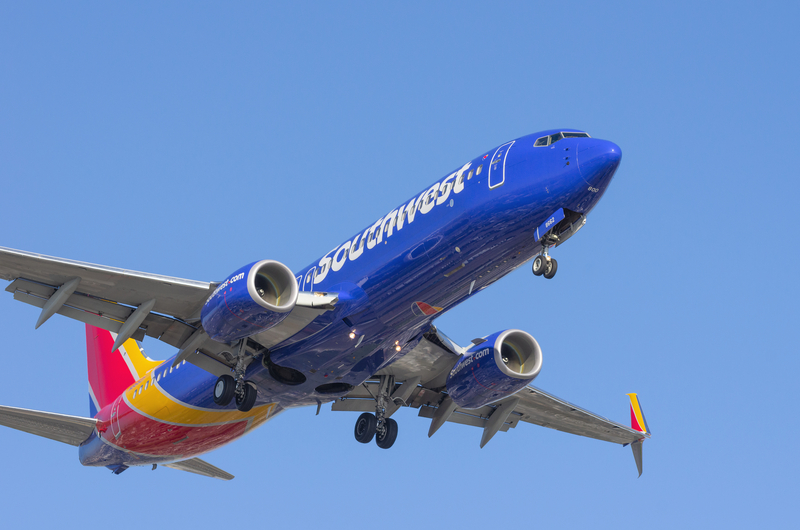
Washington Was Also Pointing Elsewhere
The same underlying logic applies in the Washington market, even if the airport dynamics are different.
Washington Dulles International Airport (IAD) is a major international gateway and a core United hub. Southwest has served Dulles, but it was never the airline’s most natural airport in the region. That role has long belonged to Baltimore/Washington International Airport (BWI), which is one of Southwest’s strongest and most established stations in the eastern United States. Reagan National (DCA), while slot-constrained and structurally different, also gives Southwest valuable access closer to central Washington.
Against that backdrop, IAD was always the third leg rather than the pillar.
Exiting Dulles simplifies the map. Southwest can keep serving the Washington metro area through BWI and DCA without stretching itself across a third airport where it lacks the same degree of structural advantage. For customers, that does not mean Southwest disappears from the region. It means the airline is concentrating service in the airports where it is already more deeply embedded.
This Is A Retreat, But Also A Reallocation
The more interesting question now is what Southwest does with the aircraft time and operational resources that had been tied up at ORD and IAD.
This kind of move is rarely just about subtraction. Airlines exit stations because they believe the same aircraft can produce better returns somewhere else. That could mean more flying in higher-performing leisure markets, additional frequencies in core cities, or redeployment to stations where Southwest believes it has stronger pricing power and more defensible market share.
For Chicago, some of that benefit may flow back into Midway. For the Washington region, BWI is the most obvious beneficiary. More broadly, this feels aligned with Southwest’s recent pattern of being more selective about where it competes and less sentimental about maintaining presence for its own sake.
That is a notable shift for a carrier that historically liked broad visibility and simple, expansive coverage. The network is increasingly being judged on fit and productivity, not just map size.
The Competitive Impact Will Be Uneven
At ORD, the competitive implications are clearer than at IAD.
Southwest’s departure removes a modest but still relevant competitor from Chicago’s primary airport. That does not transform the market overnight, but it does leave United and American with one less domestic rival inside the airport itself. Given how hard both carriers have been pushing schedule growth at O’Hare, even small changes in the competitive set can matter, especially on frequency-sensitive routes.
At IAD, the effect is likely to be more limited because United’s position is already so dominant. Southwest was part of the airport’s domestic mix, but not a central force shaping its competitive identity. The bigger impact there is probably on customer choice at the margin rather than on the structure of the airport’s network.
Still, in both cities, the move reflects a reality that has become harder to ignore: secondary positions at fortress or quasi-fortress airports are increasingly difficult to justify unless they produce clear strategic value.
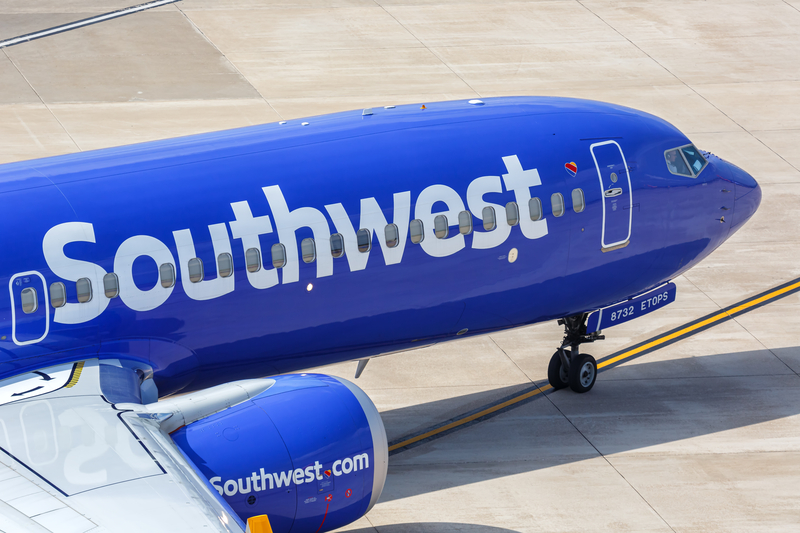
One Quiet Twist: Partnerships
There is also a smaller but still interesting angle here involving Southwest’s growing international partnership strategy.
Southwest’s current airline-partnership page lists Chicago O’Hare (ORD) and Washington D.C. Dulles (IAD) among shared gateway airports for some partner itineraries, including Turkish Airlines at both airports and EVA Air at ORD. That does not mean those partnerships depended on Southwest service at those airports, but it does mean the airline now has one less connecting option at two airports it had previously presented as part of its expanding international horizon.
That is worth watching. Southwest has been trying to widen its appeal through interline-style partnerships, and airport presence can matter in how seamless or useful those arrangements feel. Pulling out of ORD and IAD does not derail that strategy, but it does narrow the physical footprint through which it can support it.
Bottom Line
Southwest’s decision to end service at Chicago O’Hare (ORD) and Washington Dulles (IAD) on June 4, 2026 is more than a tidy network adjustment. It is a clear statement about where the airline believes it can compete most effectively.
In Chicago, that means returning focus to Midway (MDW), the airport that has always made the most sense for Southwest. In the Washington market, it means relying on Baltimore/Washington (BWI) and Reagan National (DCA) rather than stretching into Dulles. Both decisions reflect the same underlying principle: concentrate flying where the airline has stronger structural advantages and stop spending energy on secondary positions that do not move the needle enough.
For ORD, Southwest’s exit also comes at a moment when the airport is under renewed operational and competitive strain, with American and United battling hard and the FAA weighing summer flight limits. In that environment, a smaller player stepping aside is not shocking. It is rational.
The bigger story now is what Southwest does next with the freed-up aircraft time. That redeployment will tell us much more about the airline’s real growth priorities than the station exits themselves.