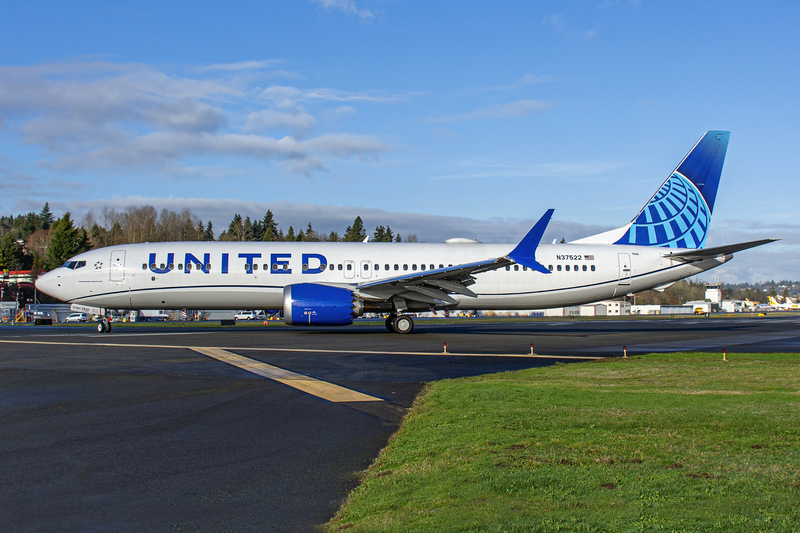
A United Airlines flight from Newark Liberty International Airport (EWR) to La Aurora International Airport (GUA) in Guatemala City was forced to divert to Washington Dulles International Airport (IAD) after an unruly passenger allegedly tried to open a cabin door while the aircraft was cruising at altitude.

The flight, UA1551, was operated by a Boeing 737 MAX 8 and was carrying 145 passengers and six crew members. According to air traffic control audio and subsequent reporting, the passenger also allegedly assaulted another traveler during the incident. The aircraft landed safely at Dulles at about 8:38 p.m., where law enforcement boarded the plane and removed the passenger.
For aviation readers, the key point is that this was not just a disruptive-passenger case. The moment a passenger attempts to tamper with a cabin door in flight, the incident immediately moves into a much more serious category of onboard security risk.
Read our stories in your inbox
Two aviation newsletters. Zero fluff.
The Crew Had Little Choice But To Divert
Once the passenger allegedly tried to open door 2L and became physically aggressive, the crew’s decision to divert was the only realistic one.
On a short- or medium-haul flight, the nearest suitable major airport often becomes the automatic answer because the priority shifts immediately from schedule completion to restoring control and getting law enforcement onto the aircraft as fast as possible. In this case, Dulles was the practical diversion point.
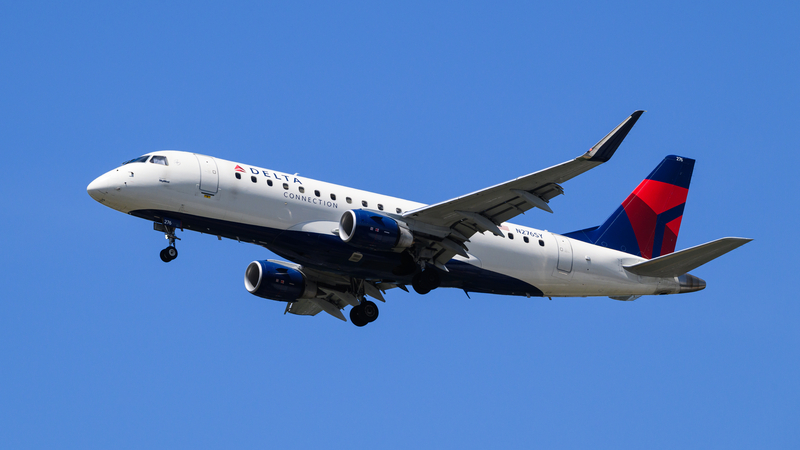
That matters because diversions for unruly passengers are not mainly about inconvenience. They are about removing a live onboard threat before it escalates further.
Cabin Doors Are Not The Real Risk People Think They Are
A lot of public attention tends to focus on the idea of a passenger “opening the door at 36,000 feet.”
In reality, a passenger cannot simply open a pressurized aircraft door in cruise under normal conditions because of the enormous pressure differential. But that does not make the event harmless. A person trying to force a door in flight is still a major security problem because it signals panic, aggression, or loss of control severe enough to threaten crew authority and cabin safety.
So even if the door itself was never in realistic danger of opening, the diversion was still fully justified.
United’s “Empty” Routes Aren’t What They Look Like: The 10 Lowest Load-Factor Markets
The Assault Allegation Makes The Case More Serious
Reports also indicate the passenger assaulted another traveler during the disturbance.
That is an important detail because it moves the case beyond attempted interference with aircraft equipment and into direct physical violence onboard. Once another passenger is attacked, the threat is no longer theoretical. It is active. At that point, the crew has to treat the person not as merely disruptive, but as someone who may continue to endanger others for the rest of the flight.
That is one reason law enforcement met the aircraft immediately on arrival.
United Canceled The Flight And Rebooked Passengers
After the diversion, United canceled the original service and arranged a replacement flight the next morning.
Passengers were reportedly given overnight accommodations, which is the standard recovery move when a security diversion destroys the original flight’s duty-time and aircraft plan. Even once the disruptive passenger is removed, the airline still has to deal with crew legality, aircraft scheduling, passenger reaccommodation, and the practical reality that the original operation is usually no longer recoverable that same evening.
That is why one passenger incident can quickly become a much larger operational problem for everyone onboard.
The FBI’s Presence Shows The Incident Was Treated As A Security Matter
The FBI confirmed that agents responded at Dulles, although officials have not released further details.
That matters because it reflects the seriousness with which door-interference and onboard assault incidents are handled in the United States. These are not just customer-service disputes or airline-rule violations. They can quickly become federal law-enforcement matters, especially when the conduct involves interference with the safety of the aircraft or violence in the cabin.
For the passenger involved, the consequences may extend well beyond being removed from the flight.
This Is Another Reminder That Human Disruption Can Still Be One Of Aviation’s Hardest Problems
Airlines have become much better at managing technical reliability, weather recovery, and operational complexity. But one thing that still produces immediate chaos is the unstable or violent passenger.
Incidents like this are especially difficult because they are unpredictable, can escalate in seconds, and often leave crews with no better option than an unscheduled landing. That is true whether the aircraft is a short-haul narrowbody or an ultra-long-haul widebody.
The aircraft can be functioning perfectly. The flight can still be forced to end somewhere else.
Bottom Line
United flight UA1551 from Newark to Guatemala City diverted to Washington Dulles after a passenger allegedly tried to open a cabin door and assaulted another traveler. The Boeing 737 MAX 8 landed safely, law enforcement boarded the aircraft, and the original flight was canceled.
The important point is not whether the cabin door could actually have been opened at cruise altitude. It is that the passenger’s behavior was serious enough to force a diversion, disrupt an entire flight, and trigger a federal law-enforcement response. In modern airline operations, that is about as clear a sign as possible that the crew made the right call.
Keep reading FlyMag
Get the Daily Brief in the morning or the Route Watch weekly recap on Fridays. Or both.