Starlux Airlines is making a deliberately unconventional move for its first step into Europe: Prague (PRG), not London (LHR), Paris (CDG), or Frankfurt (FRA). On paper, Václav Havel Airport Prague isn’t a classic long-haul hub. Its transatlantic flying is heavily seasonal, and its Asia footprint has historically been less than daily in several markets. Yet Prague is about to become the first European destination in Starlux’s network—an entry point that says a lot about how the Taiwanese carrier thinks about demand, premium mix, and competitive risk.

Route details: Taipei to Prague, nonstop
The new service links Taipei Taoyuan International Airport (TPE) with Prague (PRG) beginning August 1, 2026, launching at three flights per week and increasing to four weekly frequencies from October 2026.
Planned flight numbers and timings (local times) are designed with connectivity in mind:
Read our stories in your inbox
Two aviation newsletters. Zero fluff.
-
JX101: TPE 00:10 → PRG 07:50
-
JX102: PRG 10:20 → TPE 05:10 (+1)
That pattern is classic “bank-friendly” scheduling. The midnight departure out of Taipei allows Starlux to sweep up evening arrivals from across its Asian network and push them straight into a morning arrival wave in Europe. The mid-morning Prague departure then turns into an early-morning arrival back in Taipei, timed to connect onward to Asia and Oceania during the next bank.
Why the Airbus A350-900 fits this mission
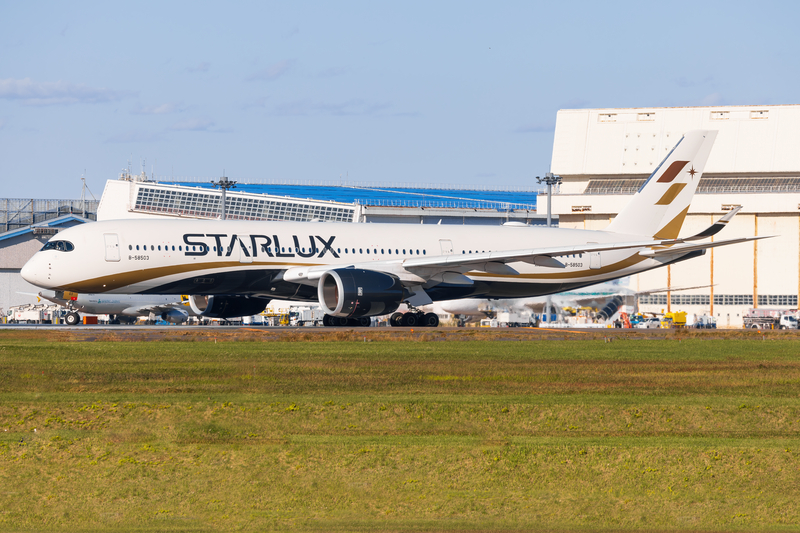
Starlux is assigning the route to the Airbus A350-900, which is exactly the kind of aircraft you want when launching a long-haul market that has strong demand but still needs disciplined capacity.
The A350-900’s big advantages on this stage length are well known to airline planners:
-
Long-range efficiency: excellent fuel burn per seat mile on transcontinental sectors
-
Cargo capability: meaningful belly-hold volume, which matters on thinner long-haul routes where freight can help stabilize economics
-
Passenger comfort: quieter cabin, higher humidity than older widebodies, and a modern pressurization profile—small things that frequent flyers notice and talk about
Starlux is also not going “all economy.” Its A350-900s operate in a four-cabin configuration with 306 seats, including First Class at the pointy end, which is unusual for a young carrier and extremely telling for Prague. Airlines don’t typically send true four-cabin widebodies into a market they expect to be purely leisure and price-led.
The real reason Prague makes sense: demand quality, not hub size
At first glance, Prague looks like a left-field choice. But if you strip away “hub logic” and look at demand composition, the decision gets clearer.
Punches Thrown Before Takeoff: EVA Air Probes Alleged Cockpit Assault During LAX Taxi
1) Prague is a Taiwan leisure magnet with year-round appeal
Prague has long performed well in Taiwanese outbound travel. It’s a high-recognition destination—historic, walkable, photogenic, and packaged heavily by tour operators. That matters because leisure demand isn’t just about summer; it’s about whether a route can sustain shoulder seasons without collapsing yields. Prague tends to hold interest beyond peak months thanks to culture, events, and multi-city itineraries that combine Central Europe.
2) Semiconductors are the premium tailwind
Starlux has explicitly pointed to growing semiconductor ties between Taiwan and Czechia as a key driver. This is the kind of traffic airlines love: recurring corporate movement that is less price-elastic, often premium-cabin weighted, and less seasonal than tourism.
For network planners, this is the magic mix: leisure volume to fill the back and business demand to protect the front.
3) Prague offers lower competitive friction than Europe’s megahubs
Starting in a slot-constrained, ultra-competitive hub market is expensive and messy. Heathrow (LHR), in particular, is not only difficult from a slots perspective—it also tends to force airlines into suboptimal timings unless they can buy or trade into the right pair.
Prague (PRG) gives Starlux a cleaner runway: less direct competition, fewer immediate schedule constraints, and more control over its product positioning. You can build loyalty and brand recognition without entering a knife fight on day one.
The competitive set: a focused duel, not a swarm
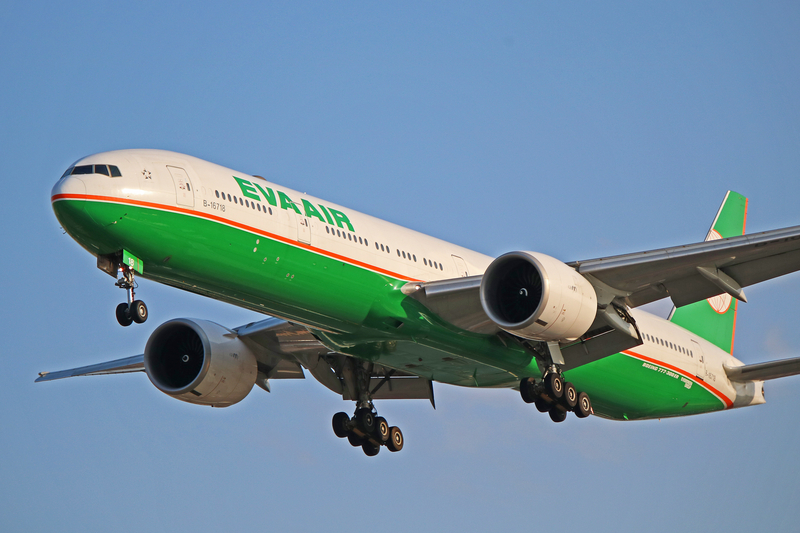
Starlux won’t be alone. China Airlines already operates Taipei–Prague (TPE–PRG) with the Airbus A350 up to three times weekly. That’s important context: Starlux isn’t “creating” the market from scratch—it’s betting the market is deep enough for two Taiwanese carriers, and that its product and scheduling can win meaningful share.
This becomes less about “can Prague support Taiwan nonstop?” and more about “which carrier owns the premium preference and the best onward connectivity?”
Prague isn’t the endgame—this is a European foothold
Starlux has been clear that Prague is the first step, not the last. The airline has been expanding aggressively with a young widebody fleet and a clear strategy: use Taipei (TPE) as the connective tissue between Asia and long-haul markets, while differentiating through a premium cabin mix that looks more like a boutique flag carrier than a typical start-up.
If Prague performs, it becomes a template:
-
Mid-frequency long-haul routes
-
Widebody with strong premium proportion
-
A city with both leisure pull and business justification
-
Less hub congestion and less fare warfare at launch
That’s a scalable recipe—especially for a carrier still building its long-haul identity.
Bottom Line
Starlux choosing Prague (PRG) as its first European destination isn’t a quirky detour—it’s a calculated entry strategy. The route leverages proven Taiwan–Prague leisure demand, adds a valuable premium tailwind via semiconductor-linked business travel, and avoids the cost and complexity of launching straight into Europe’s most congested hubs. With a four-cabin Airbus A350-900 and a planned frequency ramp from three to four weekly flights, Starlux is treating Prague not as an experiment, but as a foundation for a broader European rollout.