Japan Airlines has received another warning from Japan’s transport ministry after two cabin crew members breached company alcohol rules before a domestic flight.
The incident affected JAL flight JL252 from Hiroshima Airport (HIJ) to Tokyo Haneda Airport (HND) on May 23, 2026.
The flight was scheduled to depart Hiroshima (HIJ) at 07:40. It left at 08:22 instead, a delay of 42 minutes.
Read our stories in your inbox
Two aviation newsletters. Zero fluff.
JAL said alcohol was detected during a pre-flight test for one cabin attendant. The airline then had to find a replacement crew member before the flight could operate.
The Ministry of Land, Infrastructure, Transport and Tourism has ordered JAL to submit new prevention measures by July 17.
What Happened Before JL252
JAL said the crew member who tested positive was scheduled to work JL252 from Hiroshima (HIJ) to Tokyo Haneda (HND).
A second cabin attendant had also consumed alcohol the previous day. JAL said that person had already been removed from duty after reporting an inability to fly for reasons unrelated to alcohol.
The transport ministry’s findings were more serious.
According to MLIT, the senior cabin attendant delayed a required pre-duty alcohol check until arriving at the airport. The ministry said this appeared to be done in the hope that the alcohol reading would fall over time.
MLIT also said both cabin crew members gave false statements during JAL’s internal investigation.
The ministry concluded that the crew appeared to have tried to hide the violation.
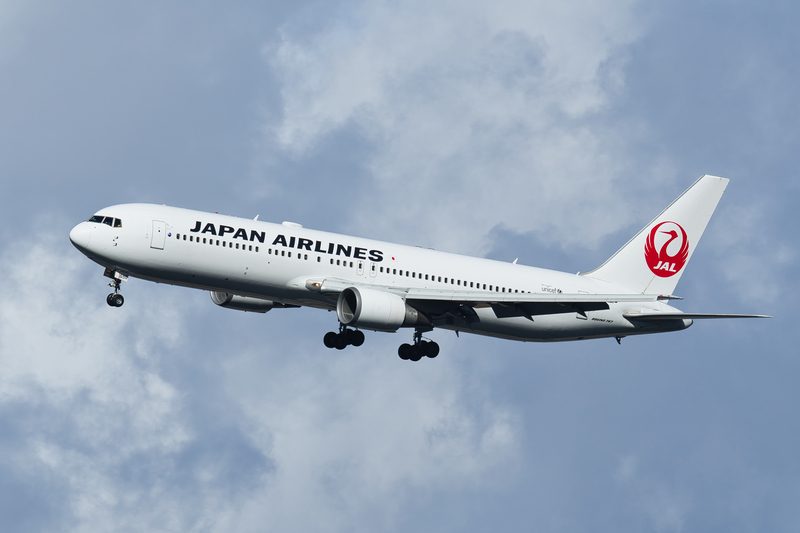
The Flight Was Operated By A Boeing 767
The delayed aircraft was a Boeing 767, registered JA613J.
JAL uses the 767-300ER on domestic routes and short-haul international services. The type remains an important part of the airline’s medium-haul and high-density domestic fleet.
The aircraft is larger than the narrowbody jets used on many domestic flights. It gives JAL more capacity on busy trunk routes into Haneda (HND).
For JL252, JAL listed two pilots and five cabin attendants. The flight carried 186 passengers, including four infants.
The aircraft itself was not the issue. The delay was caused by crew replacement after the alcohol test result.
Why Alcohol Rules Are Strict
Alcohol rules in aviation are strict for a reason.
Crew members must be fit for duty before an aircraft departs. That applies to pilots and cabin crew.
Cabin crew are not only service staff. They are trained safety professionals. They handle evacuations, medical events, passenger disturbances, fires, decompression events, and other emergencies.
That is why alcohol-related violations are treated seriously.
Japan’s Civil Aeronautics Act and airline operating rules place clear obligations on safe flight operations. JAL’s own internal rules also prohibit alcohol consumption within the company’s required pre-duty window.
In this case, the issue was not only that crew members drank before duty.
The ministry also criticized the delay in testing, the false statements, and the airline’s failure to identify the situation quickly.
MLIT Said JAL’s Safety System Failed
The ministry’s warning focused on more than the two crew members.
MLIT said another cabin crew member had repeatedly urged the senior cabin attendant to complete the required pre-duty alcohol check.
Even so, the organization did not detect the situation quickly enough. It also did not make a fast decision on whether the crew member could operate.
That is a major point.
For regulators, an individual violation is serious. But a weak reporting or monitoring system is often more concerning.
The ministry said JAL’s safety management system did not function sufficiently in this case.
JAL must now analyze the cause and report new measures to the Civil Aviation Bureau by July 17.
JAL Announces Discipline
JAL said it takes the matter very seriously.
According to Japanese aviation outlet Traicy, the senior cabin attendant was dismissed. The second cabin attendant was suspended.
The airline also imposed executive-level discipline.
JAL President Mitsuko Tottori will take a 30% monthly pay cut for two months. The company’s general safety manager and cabin division head will take 20% cuts for one month. Other directors and executive officers, including outside directors, will take 10% cuts for one month.
That response shows how much pressure JAL is facing.
This is no longer just a cabin crew discipline matter. It has become a governance and safety-culture issue.
JAL Had Already Been Under Scrutiny
The timing makes the case more damaging for JAL.
The airline has faced several alcohol-related incidents in recent years.
In September 2025, JAL received an administrative warning from MLIT after a captain scheduled to operate JL793 from Daniel K. Inouye International Airport (HNL) in Honolulu to Chubu Centrair International Airport (NGO) in Nagoya drank improperly before duty.
JAL’s own safety page says that warning pointed to insufficient alcohol management and supervision.
There was also a 2024 case involving cockpit crew on JL774 from Melbourne (MEL) to Narita (NRT). That incident led to a business improvement advisory.
Because of that history, the latest cabin crew breach carries more weight.
It suggests JAL’s previous reforms have not fully solved the problem.
Cabin Crew Layover Drinking Was Banned
After the May incident, JAL moved to tighten its rules for cabin crew.
The airline banned cabin attendants from drinking alcohol during layovers before return flights.
This was a major step.
Many airlines allow crew members to drink during layovers if they remain within legal and company time limits. JAL is now taking a stricter approach for cabin crew because of repeated issues.
The goal is simple: remove ambiguity.
If crew members are not allowed to drink during work layovers, there is less room for judgment errors, late testing, or attempts to manage alcohol levels before duty.
Passenger Impact Was Limited, But Trust Damage Was Not
JL252 was delayed 42 minutes.
That is not a long delay compared with many airline disruptions. The flight still operated the same morning and arrived at Haneda (HND) at 09:39.
However, the operational delay is not the main issue.
The larger problem is trust.
Passengers expect airline crew to be ready for duty. They also expect airlines to have systems that catch problems before they affect the operation.
In this case, JAL’s own process did detect alcohol before departure. That prevented the crew member from operating.
But MLIT’s warning suggests the process did not work early enough or firmly enough.
That is why regulators are now demanding a new plan.
Why This Matters For JAL
JAL is one of Japan’s two major full-service airline groups, alongside ANA.
It is also a member of the oneworld alliance and operates a large domestic and international network.
Its reputation depends heavily on safety, discipline, reliability, and service quality.
Repeated alcohol-related cases put that reputation at risk.
The issue is not whether one flight was delayed by 42 minutes. The issue is whether JAL can prove to regulators, passengers, and employees that its safety culture is working across the organization.
The July 17 report will be an important test.
Bottom Line
Japan Airlines has received another warning from Japan’s transport ministry after two cabin crew members breached alcohol rules before flight JL252 from Hiroshima (HIJ) to Tokyo Haneda (HND).
The May 23 flight was delayed 42 minutes after alcohol was detected during a pre-flight test for one cabin attendant. JAL replaced the crew member, and the Boeing 767, registered JA613J, later operated the flight with 186 passengers onboard.
The ministry’s findings went beyond the failed test. MLIT said the senior cabin attendant delayed the required check, both crew members gave false statements, and JAL’s safety management system did not respond quickly enough.
JAL has dismissed the senior cabin attendant, suspended the second crew member, and announced pay cuts for executives.
The airline now has until July 17 to submit new prevention measures.
For JAL, the challenge is no longer only rule enforcement. It must show that its alcohol controls, reporting culture, and safety management system are strong enough to prevent another repeat.
Keep reading FlyMag
Get the Daily Brief in the morning or the Route Watch weekly recap on Fridays. Or both.