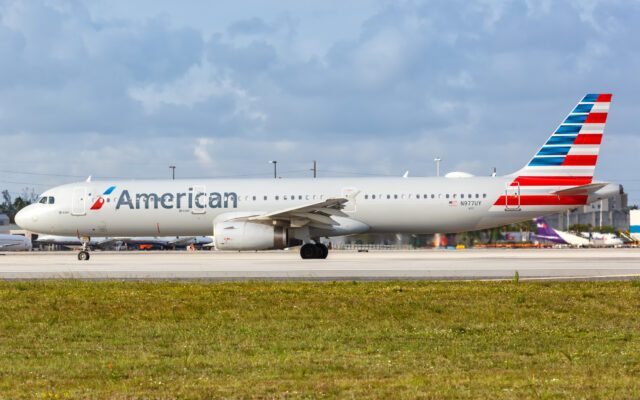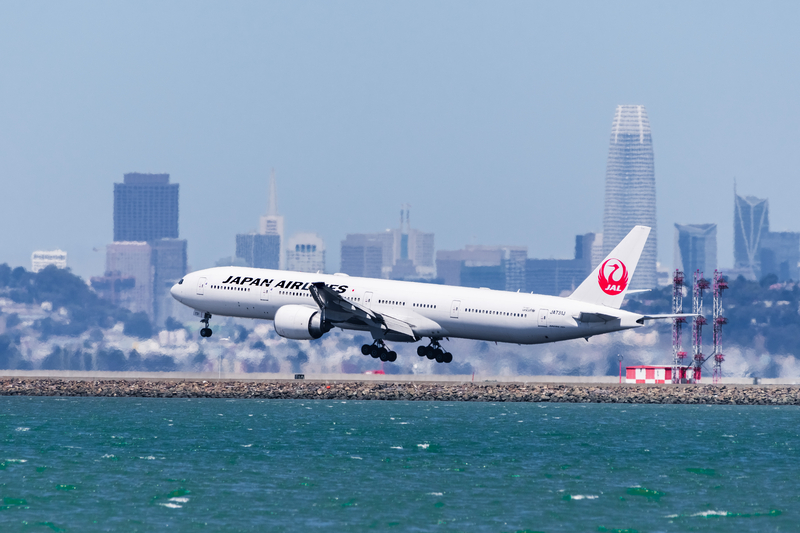
Japan is moving to standardize a tougher stance on lithium-ion power banks in the passenger cabin—following a wave of global policy shifts that accelerated after the Air Busan battery fire in South Korea.

Under new guidance from Japan’s Ministry of Land, Infrastructure, Transport and Tourism (MLIT), airlines operating to, from, or within Japan will be expected to ban the in-flight use of power banks as early as April 2026, while also capping how many a passenger can bring onboard. That means travelers passing through major gateways like Tokyo Haneda (HND), Tokyo Narita (NRT), Osaka Kansai (KIX), Nagoya (NGO), Fukuoka (FUK), and Sapporo New Chitose (CTS) should plan for a consistent rule set—whether they’re flying domestic on an A321neo, or international on a 787.
What this is not: a blanket “confiscation” or “possession ban.” Power banks will still be allowed in the cabin within limits. The major change is what you can do with them once the aircraft door closes.
Read our stories in your inbox
Two aviation newsletters. Zero fluff.
What Japan’s proposal actually does
The upcoming framework is straightforward, and it aligns with where regulators and safety bodies have been steering airlines:
-
No using a power bank to charge devices in flight.
-
No charging a power bank from the seat outlet/USB port in flight.
-
A limit on quantity per passenger (widely reported as two units).
Crucially, these restrictions target power banks specifically. They don’t automatically mean you can’t charge your phone from the aircraft’s built-in power—if your seat has AC/USB power and the airline permits device charging, that can still be fine. The key is that the power bank itself stays unused.
Japan’s larger aim is consistency: one rulebook that applies to flights touching Japan, rather than a patchwork where passengers discover different policies mid-itinerary.
Why this is happening: the Air Busan catalyst and the lithium battery problem
The aviation industry has treated lithium battery events as a growing cabin-safety issue for years. What changed the tempo was the Air Busan incident in January 2025, which sharply illustrated the worst-case scenario: a battery failure inside a confined cabin environment.
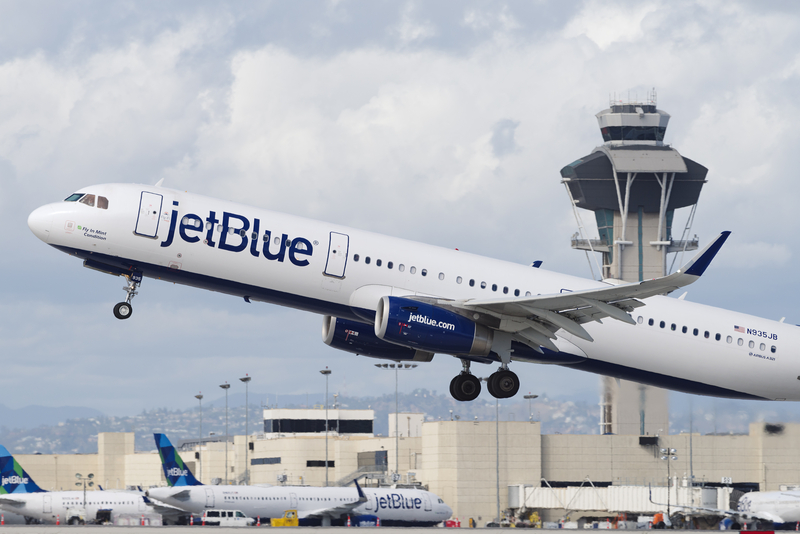
That event involved an Air Busan Airbus A321-200 that suffered a severe fire believed to be linked to a portable battery/power bank in an overhead compartment while the aircraft was preparing for departure. It’s the kind of incident that forces regulators to ask a simple question: if a device can enter thermal runaway without warning, what policies reduce both likelihood and consequences?
Here’s the engineering reality airline professionals focus on:
-
Lithium-ion batteries don’t fail gracefully. When they fail, they can enter thermal runaway—a self-heating reaction that can produce intense heat, smoke, and flame.
-
The most common triggers are manufacturing defects, physical damage (drops/crush), contaminated cells, poor-quality protection circuits, and short circuits at the terminals (coins/keys/cables bridging contacts).
-
Cabin detection and intervention matter. In the cabin, crew can respond quickly with procedures, containment equipment, and cooling. In the hold, access is limited, and while cargo compartments have suppression systems, lithium battery events can be stubborn—especially if the device continues to generate its own oxygen and heat.
Japan’s approach is essentially risk-reduction by policy: fewer power banks per passenger, and less in-flight handling/charging that can stress devices or conceal early warning signs.
The operational logic: why banning “use” is a big lever
Airlines care about two things here: probability and time-to-detect.
Allowing power bank use creates repeated handling—taking it out, plugging it in, moving it between seats and bags, sometimes resting it on soft surfaces. That increases the chance of:
-
mechanical damage (pinched cables, crushed devices),
-
terminal shorts (loose metal contact),
-
and delayed detection if a device is stowed out of sight while charging.
By prohibiting in-flight use, airlines shift the cabin posture from “active electrical accessory use” to “carriage only.” It’s easier for cabin crew to enforce, easier to message, and it reduces the number of moments where a battery is under load—when failures are more likely to show themselves.
What passengers should expect on ANA (NH), JAL (JL), and other Japan-touching carriers
Because this is being driven at the national policy level, travelers should expect broad compliance across Japanese operators—flag carriers ANA (NH) and JAL (JL), plus regional and low-cost airlines—on both:
-
Domestic routes (think HND–CTS or KIX–OKA), and
-
International routes departing from Japanese airports (for example, NRT- or HND-originating long-haul services).
Most airlines are likely to pair the “no use” rule with familiar best practices:
-
Keep power banks in carry-on baggage (not checked baggage).
-
Protect terminals (original packaging, terminal covers, or a pouch).
-
Avoid bringing damaged, swollen, recalled, or off-brand units.
If you’re connecting, expect the strictest carrier on your itinerary to define what’s allowed onboard.
Bottom Line
Japan is not “banning power banks outright.” It is moving to ban in-flight use and charging of power banks, while limiting how many passengers can carry, with implementation expected as early as April 2026 on flights operating to, from, or within Japan—including major gateways like HND, NRT, and KIX.
The change is a direct response to the industry’s growing lithium battery risk profile, sharpened by high-visibility incidents such as the Air Busan fire. For travelers, the practical takeaway is simple: bring your power bank in your carry-on within limits, but plan to board with devices already charged and expect to rely on aircraft-provided power (where available) rather than portable batteries in flight.
Keep reading FlyMag
Get the Daily Brief in the morning or the Route Watch weekly recap on Fridays. Or both.