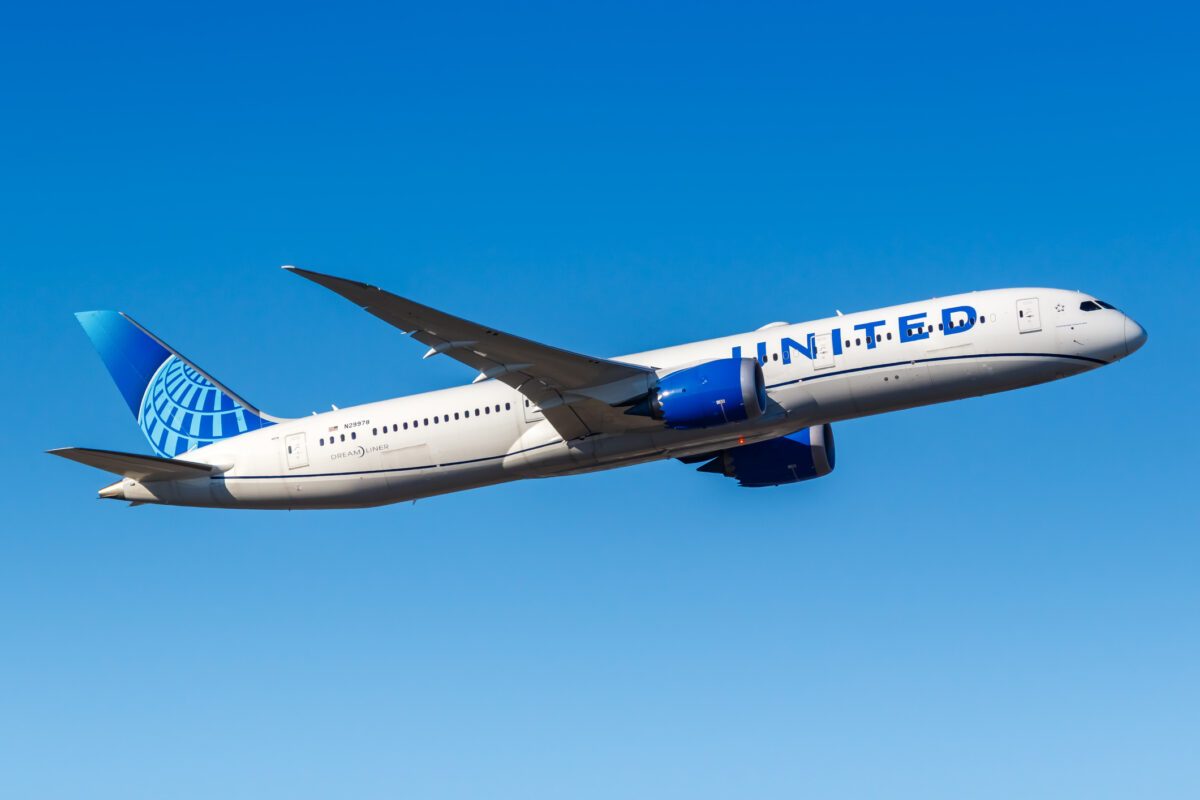
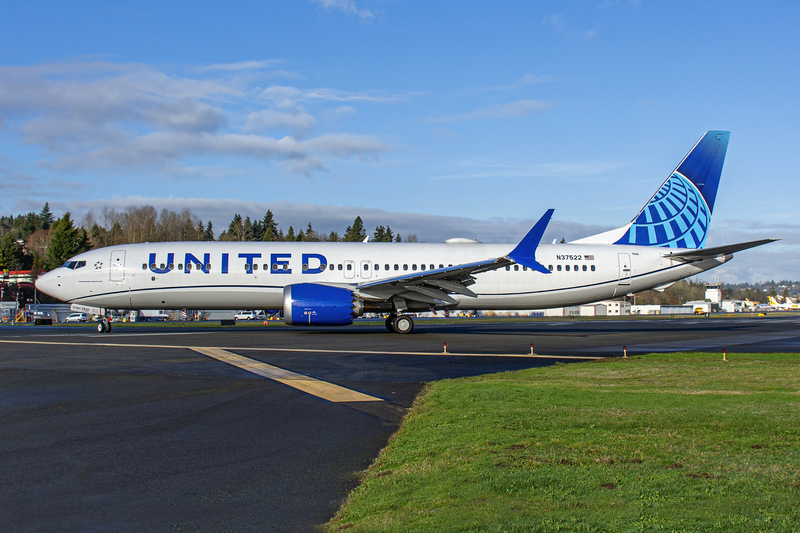
United Airlines will introduce its premium-heavy “Elevated” Boeing 787-9 Dreamliner on four major international routes from George Bush Intercontinental Airport (IAH), significantly upgrading the onboard experience for travelers flying from Houston to Europe, Asia, Australia, and South America.

The newly delivered 222-seat aircraft will begin operating from Houston Airport (IAH) to São Paulo Guarulhos International Airport (GRU), Sydney Kingsford Smith Airport (SYD), and Tokyo Narita International Airport (NRT) on October 24, 2026.
United will add the aircraft to Flights UA880 and UA879 between Houston Airport (IAH) and London Heathrow Airport (LHR) on January 5, 2027, according to the airline’s latest Northern Winter 2026/27 schedule update.
Read our stories in your inbox
Two aviation newsletters. Zero fluff.
The change does not add new destinations or frequencies. Instead, United is replacing conventionally configured aircraft with a substantially more premium Boeing 787-9 containing new Polaris Studio suites, an expanded Polaris business-class cabin, and more Premium Plus seats.
Four Houston Routes Receive the Elevated 787-9
United has scheduled the 222-seat Boeing 787-9 on the following routes:
Houston Airport (IAH)–São Paulo Guarulhos Airport (GRU): Beginning October 24, 2026
Houston Airport (IAH)–Sydney Airport (SYD): Beginning October 24, 2026
Houston Airport (IAH)–Tokyo Narita Airport (NRT): Beginning October 24, 2026
Houston Airport (IAH)–London Heathrow Airport (LHR): Beginning January 5, 2027, on UA880 and UA879
All four are established United long-haul routes rather than temporary demonstration flights. Their addition marks the first sustained deployment of United’s new flagship cabin from its Houston hub after the aircraft’s initial international rollout from San Francisco International Airport (SFO).
The October 24 start date also coincides with the transition into the Northern Winter 2026/27 airline scheduling season.
Only 222 Seats, but 99 Are in Premium Cabins
The Elevated Boeing 787-9 has one of the most premium-focused layouts operated by a U.S. airline.
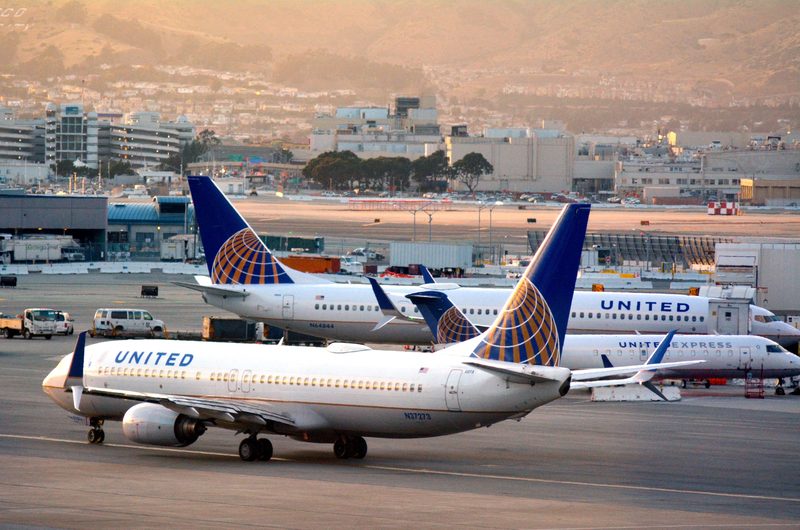
United’s existing 787-9 configuration accommodates 257 passengers:
- 48 United Polaris business-class seats
- 21 United Premium Plus seats
- 39 United Economy Plus seats
- 149 standard Economy seats
The new 222-seat configuration contains:
- 64 United Polaris seats, including eight Polaris Studios
- 35 United Premium Plus seats
- 39 United Economy Plus seats
- 84 standard Economy seats
That means each Elevated aircraft carries 35 fewer passengers than United’s conventional Boeing 787-9, a capacity reduction of approximately 14%.
The reduction is not evenly distributed across the cabin. United adds 16 Polaris seats and 14 Premium Plus seats while retaining all 39 Economy Plus seats. The standard Economy section loses 65 seats, shrinking from 149 to only 84.
United therefore gains 30 seats in its two highest-value cabins while removing more than 40% of the standard Economy capacity. There are 99 seats in Polaris and Premium Plus alone, representing nearly 45% of the aircraft. Including extra-legroom Economy Plus, 138 of the Dreamliner’s 222 seats are outside standard Economy.
Eight Polaris Studios Create a First-Class-Like Product
The centerpiece of the Elevated interior is United Polaris Studio, a new premium tier positioned above the airline’s standard international business-class seat.
Eight Studios are installed in the first row of the two Polaris cabins. They remain part of business class rather than being marketed as international first class, but they provide additional space and exclusive service elements.
The Polaris Studio is approximately 25% larger than a standard Polaris suite. Each seat includes a sliding privacy door, a fully flat bed, additional storage, wireless charging, and a 27-inch 4K OLED entertainment screen—the largest television United has installed aboard an aircraft.
Studios also have an ottoman with a seatbelt, allowing a traveling companion to sit opposite the passenger for dining or conversation while the aircraft is at cruise.
United has developed an upgraded service specifically for Polaris Studio passengers. Benefits include exclusive meal choices, Ossetra caviar service, Laurent-Perrier Cuvée Rosé Champagne, premium bedding, pajamas, and enhanced amenity kits.
The product gives United a way to compete for passengers who might otherwise purchase international first class on another airline without requiring the carrier to develop an entirely separate four-cabin aircraft.
Standard Polaris Seats Also Receive Privacy Doors
The remaining 56 Polaris seats are not simply copies of United’s current business-class product.
Every standard Polaris seat on the Elevated aircraft has direct aisle access, converts into a fully flat bed, and includes a sliding privacy door. The suites also feature larger 19-inch 4K OLED screens, Bluetooth audio connectivity, improved storage, and updated charging options.
United’s existing Polaris seats do not have full doors, making the new cabin a meaningful upgrade even for passengers who do not purchase one of the eight Studios.
With 64 total business-class seats, the Elevated 787-9 has one-third more Polaris capacity than the conventional United 787-9. That is a major increase on routes where corporate contracts, frequent flyers, and premium connecting passengers can support higher fares.
Premium Plus Expands From 21 to 35 Seats
United Premium Plus also grows considerably aboard the new aircraft.
The 35-seat premium-economy cabin is arranged in a 2-3-2 layout across five rows. It includes wider reclining seats, additional legroom, adjustable leg and foot rests, privacy dividers, larger entertainment screens, improved storage, and wireless charging.
The previous 787-9 has only 21 Premium Plus seats across three rows. Expanding the cabin to 35 seats gives United 67% more premium-economy capacity on every flight operated by the new aircraft.
Premium Plus has become an increasingly important product for long-haul airlines. It appeals to passengers who want more space and service than Economy but cannot justify—or obtain corporate approval for—a Polaris fare.
That is particularly relevant on lengthy routes such as Houston Airport (IAH)–Sydney Airport (SYD), where the difference between standard Economy and Premium Plus is more consequential than on a shorter transatlantic flight.
Economy Receives Better Technology Despite Losing Seats
Standard Economy becomes much smaller, but United has also updated the passenger experience in the rear cabin.
The new configuration contains 39 Economy Plus and 84 standard Economy seats in a 3-3-3 arrangement. Economy Plus provides additional legroom, while the underlying seat and entertainment technology is shared across both economy sections.
Passengers receive 13-inch 4K OLED seatback screens, Bluetooth audio connectivity, USB-C charging, and improved device holders. United has described the screens as among the largest offered in an international economy cabin.
The substantial reduction in standard Economy seating could make lower-priced inventory more limited on flights operated by the Elevated aircraft. United is effectively trading high-volume economy capacity for a much larger concentration of seats capable of generating premium revenue.
Route Selection Reflects Houston’s Premium Demand
United has not publicly explained why it selected these four routes, but each has characteristics that fit the new aircraft.
London Heathrow Airport (LHR), São Paulo Guarulhos Airport (GRU), and Tokyo Narita Airport (NRT) are important corporate markets with significant business links to Houston. The city’s energy, engineering, healthcare, technology, and international trade sectors generate demand for premium travel throughout the year.
Sydney Airport (SYD) is a different type of opportunity. Houston–Sydney is one of United’s longest flights and places passengers aboard the aircraft for well over 15 hours. Lie-flat seats, premium economy, improved privacy, larger entertainment screens, and better storage have greater value on an ultra-long-haul route than on a shorter journey.
The route selection suggests United believes the additional revenue from Polaris and Premium Plus can outweigh the loss of 35 total seats per departure. That is an inference based on the configuration and markets selected; United has not disclosed route-level financial projections.
The Aircraft Change Reduces Capacity per Flight
The premium upgrade also represents a meaningful capacity reduction.
If an existing 257-seat United 787-9 is replaced directly by the 222-seat Elevated version, each departure loses 35 seats. On a daily route, that amounts to 245 fewer seats in each direction every week.
However, the aircraft adds 210 Polaris and Premium Plus seats in each direction over a seven-day period compared with the standard configuration.
The tradeoff illustrates United’s strategy: fewer passengers overall, but a much larger number occupying higher-fare cabins. It also gives the airline greater flexibility to use pricing and upgrades to manage demand across Polaris, Premium Plus, Economy Plus, and Economy.
Travelers should not assume that a larger aircraft automatically means more capacity. The Boeing 787-9 is physically unchanged, but its interior contains fewer seats because considerably more floor space has been allocated to premium passengers.
Dreamliner Range Supports All Four Routes
The Boeing 787-9 has the range required to operate each of United’s selected Houston services.
Boeing lists a maximum range of approximately 7,635 nautical miles for the aircraft in a typical configuration. The Dreamliner combines a composite-intensive structure, advanced aerodynamics, and General Electric GEnx engines to reduce fuel consumption compared with older widebody aircraft.
The type is particularly important to United’s long-haul network because it can operate thinner intercontinental routes that might be difficult to support with a larger Boeing 777-300ER.
The 222-seat layout gives United even more payload flexibility than a denser configuration, although actual performance continues to depend on winds, temperatures, cargo, required reserves, and available airspace.
Houston–Sydney places the aircraft closest to the upper end of its operational mission among the four routes. London, São Paulo, and Tokyo are substantially shorter, allowing United to carry more cargo and operate with greater performance margin. Boeing’s 787 specifications list the 787-9 as capable of carrying approximately 290 passengers in a typical two-class configuration, making United’s 222-seat layout unusually spacious.
United Plans a Larger Elevated Fleet
United introduced the Elevated interior on newly delivered Boeing 787-9s rather than immediately rebuilding its entire existing Dreamliner fleet.
The first aircraft began international service from San Francisco Airport (SFO) in April 2026. United expects to have at least 30 Boeing 787-9s with the new configuration operating by the end of 2027, allowing the product to appear on a growing number of premium long-haul routes.
Houston’s four-route deployment indicates that the aircraft will not remain concentrated at a single West Coast hub. As additional Dreamliners arrive, United can spread the premium product across its global network while matching aircraft to routes with the strongest demand for business class and premium economy.
Passengers can identify the Elevated aircraft during booking by checking the seat map. The relevant configuration shows 64 Polaris seats, 35 Premium Plus seats, 39 Economy Plus seats, and 84 Economy seats.
Aircraft assignments remain subject to operational changes, and United may substitute another 787 or widebody when maintenance, weather, or scheduling disruptions require it.
Bottom Line
United Airlines will deploy its 222-seat Elevated Boeing 787-9 from George Bush Intercontinental Airport (IAH) to São Paulo Guarulhos Airport (GRU), Sydney Airport (SYD), and Tokyo Narita Airport (NRT) beginning October 24, 2026.
Flights UA880 and UA879 between Houston Airport (IAH) and London Heathrow Airport (LHR) will receive the aircraft on January 5, 2027.
The Dreamliner has 35 fewer total seats than United’s conventional 257-seat 787-9, but it carries 30 more passengers in Polaris and Premium Plus. Its 99 premium seats include eight new Polaris Studios, 56 standard Polaris suites, and 35 Premium Plus seats.
Standard Economy falls from 149 to only 84 seats, demonstrating that the new interior is not primarily a capacity upgrade. It is a deliberate shift toward passengers willing to pay for privacy, space, and a more complete premium experience.
For Houston travelers, the deployment brings United’s newest long-haul cabin to four of the hub’s most important international routes. For the airline, it represents a calculated bet that premium demand will generate more value than filling the same aircraft with an additional 35 economy passengers.