American Airlines’ latest Chicago long-haul announcement created exactly the kind of aviation guessing game route planners love. A blurred social media clue appeared to point toward Japan, and because the image resembled Osaka Garden in Chicago, speculation quickly moved toward a potential nonstop between Chicago O’Hare International Airport (ORD) and Kansai International Airport (KIX).

That would have been a fascinating route. ORD-KIX is a nearly 14-hour sector of roughly 6,500 miles, long enough to become one of the most demanding nonstop services in American’s Chicago network. It would also restore a nonstop link between the Midwest and western Japan, connecting Chicago directly with the Osaka, Kyoto, Kobe, and Nara region.
But American did not choose Osaka. It chose Tokyo.
Read our stories in your inbox
Two aviation newsletters. Zero fluff.
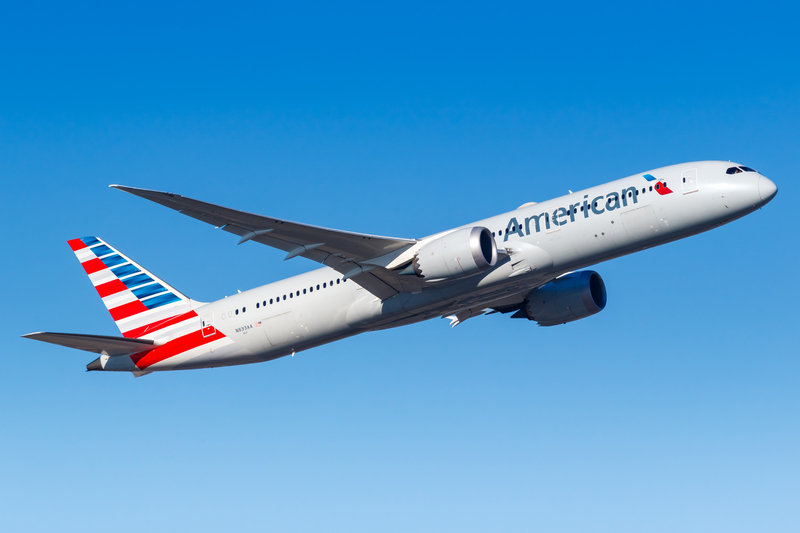
Beginning March 27, 2027, American Airlines will launch daily year-round service between Chicago O’Hare (ORD) and Tokyo Narita International Airport (NRT). The flight will be operated with a Boeing 787-9 Dreamliner, configured with 30 Flagship Business seats and 21 Premium Economy seats.
On the surface, Osaka may have looked like the more exciting surprise. From a network-planning perspective, Narita was the more logical move.
Narita Gives American More Than Tokyo Traffic
The Chicago-to-Tokyo market is not just about passengers whose final destination is Tokyo. That is especially true when the airport is Narita (NRT), which remains useful for onward Asia connections even as Haneda (HND) has become the preferred airport for many Tokyo-bound business travelers.
American’s new ORD-NRT flight will operate in partnership with Japan Airlines, its Pacific joint business partner and fellow oneworld alliance member. That matters because JAL can feed passengers beyond NRT to major Asian markets such as Bangkok (BKK), Singapore (SIN), Taipei (TPE), and Ho Chi Minh City (SGN).
That connecting logic makes Narita a safer play than Kansai. A nonstop ORD-KIX flight would rely much more heavily on local Chicago-Osaka demand, plus whatever connections could be built over O’Hare (ORD). A Chicago-Narita flight, by contrast, can carry Chicago-origin passengers, Japan-bound travelers, corporate traffic, connecting passengers from American’s domestic network, and onward Asia traffic over JAL’s Narita platform.
Porter Adds Austin and Levels Up Chicago to O’Hare as Toronto Flying Gets More Choice
That is the difference between a long-haul route that looks interesting and one that is easier to defend inside an airline network meeting.
The Aircraft Choice Also Tells the Story
American will use the Boeing 787-9 on ORD-NRT, and that is the right aircraft for this kind of route. The 787-9 has the range for deep transpacific flying, strong fuel efficiency for long sectors, and enough premium capacity to support business demand without requiring the much larger seat count of a Boeing 777-300ER.
American’s planned 787-9 layout for ORD-NRT includes 30 Flagship Business seats and 21 Premium Economy seats. That gives the airline a premium-heavy enough product for Chicago-Tokyo corporate and high-yield leisure demand, while still keeping total capacity manageable.
The aircraft could technically handle ORD-KIX as well. The issue is not whether the 787-9 can fly it. The issue is whether the market can support it consistently, year-round, at fares high enough to justify tying up a long-haul aircraft for a 13- to 14-hour mission.
For a widebody fleet planner, that distinction is everything.
Why Osaka Was Tempting But Riskier
Kansai International Airport (KIX) is not a weak airport. It serves one of Japan’s most important economic and tourism regions, including Osaka, Kyoto, Kobe, Nara, and Wakayama. For inbound U.S. travelers, KIX also offers a compelling alternative to entering Japan through Tokyo.
That said, Chicago-Osaka is a thinner local market than Chicago-Tokyo. The original route analysis showed Osaka outside O’Hare’s top ten unserved Asian markets, behind several larger South and Southeast Asian city pairs. Osaka may have better average fares than many of those markets, and the stage length is shorter than some of the Indian subcontinent options, but local demand still matters.
Historical performance also works against the case. Chicago-Osaka has seen nonstop service before, including past operations by Japan Airlines and United. American has also previously served Osaka from Dallas/Fort Worth International Airport (DFW). None of those services became a long-term fixture.
That does not mean ORD-KIX could never work. The market is different today, Japan demand is strong, and the 787 family has changed the economics of long-haul route planning. But for American, Osaka would still be a higher-risk launch than Tokyo Narita.
Chicago Is Becoming A More Competitive Pacific Gateway
American’s move also has to be viewed through the broader competitive picture at O’Hare (ORD). Chicago is one of the rare U.S. airports where two major global carriers, American and United Airlines, both operate large hubs.
United has already confirmed that it will resume daily Chicago O’Hare (ORD) to Tokyo Narita (NRT) service in October 2026 using the Boeing 787-8 Dreamliner. United also serves Tokyo Haneda (HND) from ORD, while its joint venture partner ANA has a major role in the Chicago-Japan market.
Japan Airlines is also already present. JAL launched daily ORD-NRT service in 2025, complementing its existing ORD-HND service, with American codesharing on the flights. That means American’s own metal on ORD-NRT is not just a new route. It is a strategic reinforcement of the American-JAL partnership in a market where United and ANA already have a powerful position.
In other words, American is not entering an empty lane. It is choosing to put its own aircraft into a competitive, high-profile, alliance-driven market where it already has partner support.
Narita May Be Less Convenient, But It Is More Useful
For passengers ending their trip in central Tokyo, Haneda (HND) is generally more convenient than Narita (NRT). That is not in dispute. But airlines do not build every transpacific flight purely around downtown access.
Narita still has value because it functions as a connection point for Asia. For American, which has a smaller Asia network than United or Delta, that connectivity is especially important. American does not need to build dozens of its own Asian routes if Japan Airlines can extend the network beyond Tokyo.
That makes NRT a practical choice. It may not be the airport every Tokyo traveler prefers, but it gives American and JAL more ways to fill the airplane with a mix of local, connecting, business, leisure, and Asia-beyond passengers.
That is why ORD-NRT can make more sense than ORD-KIX, even if Osaka would have made the splashier headline.
What Would Need To Change For Chicago-Osaka To Work
A future Chicago O’Hare (ORD) to Kansai (KIX) route is not impossible. The route has several things in its favor: strong Japan tourism demand, a major western Japan catchment area, a long but manageable stage length for the Boeing 787-9, and a premium leisure profile that could support higher average fares.
But American would need more than curiosity to make it work. It would need stronger local demand, a clearer corporate base, reliable point-of-sale strength on both ends, and enough connecting support to keep the route healthy outside peak Japan travel periods.
A seasonal operation could be easier to imagine than a daily year-round launch. A few weekly flights during peak demand periods would lower the risk while testing the market. But that is a very different proposition from placing a daily widebody into ORD-KIX when American can instead add ORD-NRT with JAL feed already waiting on the other side.
Bottom Line
American Airlines did not pass on Osaka because Kansai International Airport (KIX) lacks appeal. It passed on Osaka because Tokyo Narita (NRT) is the stronger network play from Chicago O’Hare (ORD).
The new ORD-NRT service gives American a daily Boeing 787-9 route into Japan, reinforces its partnership with Japan Airlines, strengthens its position against United at O’Hare, and opens one-stop access to major Asian markets beyond Tokyo.
A nearly 14-hour Chicago-Osaka nonstop would have been exciting. But for American, the smarter move was Narita: lower risk, deeper demand, better partner feed, and a clearer strategic purpose.
Keep reading FlyMag
Get the Daily Brief in the morning or the Route Watch weekly recap on Fridays. Or both.