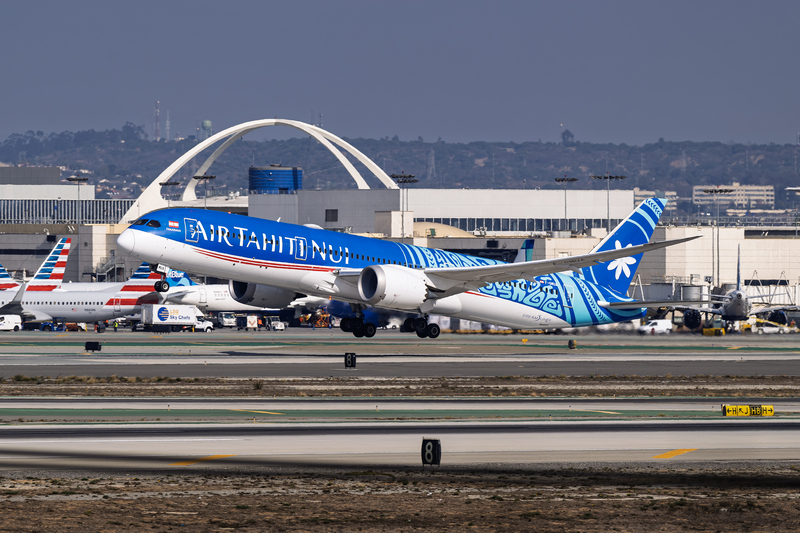
Air Tahiti Nui (TN) is putting Australia back on its nonstop map with a new Papeete (PPT)–Sydney (SYD) service that creates a direct air bridge between French Polynesia and one of the South Pacific’s biggest aviation gateways. The inaugural flight is scheduled for December 14, 2026, and the route will operate twice weekly year-round—a meaningful capacity commitment for a niche long-haul market that, until now, has largely been a “one-stop only” journey.

For travelers, the value is obvious: the new link removes the need to connect via hubs like Auckland (AKL) or North America, cutting complexity, reducing misconnect risk, and delivering a cleaner end-to-end itinerary. For the industry, it’s a classic example of right-sizing long-haul flying—pairing a thin-but-high-value leisure market with a modern widebody that can carry premium demand, leisure volume, and meaningful belly cargo on a long sector without the trip-cost profile of older four-engine aircraft.
Read our stories in your inbox
Two aviation newsletters. Zero fluff.
The route in context: a long-haul nonstop that fits how people actually travel
The great-circle distance between PPT and SYD is about 3,303 nautical miles (6,118 km)—long enough to feel like real long-haul flying, short enough to sit comfortably inside a 787-9’s operational sweet spot. It’s also a market with a distinctive demand mix:
-
Leisure (honeymoons, resort travel, diving, and premium holiday traffic)
-
VFR and diaspora movements (especially during peak holiday periods)
-
Regional connectivity—Sydney’s network reach across Australia and the wider Asia-Pacific creates onward options that don’t exist when French Polynesia is accessible only via limited gateways
Air Tahiti Nui is explicitly positioning SYD as a strategic hub to broaden access into French Polynesia, while also strengthening the airline’s own regional relevance in the South Pacific.
Schedule and frequency: two weekly rotations, designed around connection banks
The route will operate Mondays and Thursdays from Papeete (PPT) with returns Tuesdays and Fridays from Sydney (SYD). Times are subject to airport authority approval and shift slightly across the season.
Winter schedule (December 14, 2026 – March 25, 2027)
-
Mon/Thu: PPT 12:10 → SYD 17:45 (+1)
-
Tue/Fri: SYD 20:10 → PPT 06:25
During this December–March window, the published block times work out to roughly 8 hours 35 minutes westbound (PPT→SYD, crossing the date line) and about 7 hours 15 minutes eastbound (SYD→PPT).

Southern winter schedule timing adjustment (March 29, 2027 – October 28, 2027)
-
Mon/Thu: PPT 12:10 → SYD 17:00 (+1)
-
Tue/Fri: SYD 19:10 → PPT 06:05 (timing reflected from early April after seasonal clock changes)
For airline professionals, the structure is familiar: midday departure from PPT, next-day arrival into SYD, then a late-evening SYD departure that lands into PPT early morning—useful for onward connectivity within French Polynesia and for aircraft utilization without excessive ground time.
Aircraft: Boeing 787-9 “Tahitian Dreamliner” and why it’s the right tool
Air Tahiti Nui operates an all-Boeing 787-9 Dreamliner (B789) fleet, and this new route will use the type that has become the carrier’s long-haul backbone since it retired the A340 era.
The airline’s 787-9 configuration is 294 seats across three cabins:
-
30 Business
-
32 Premium Economy
-
232 Economy
Powerplant matters for performance and maintenance planning, and Air Tahiti Nui’s 787-9s are equipped with GE GEnx-1B engines—an important detail for parts support and reliability tracking, especially when operating long sectors far from the carrier’s primary maintenance footprint.
From a passenger-experience standpoint, the 787’s core attributes fit this market well: a quieter cabin, high humidity relative to older widebodies, and a lower cabin altitude profile—subtle factors that matter on flights pushing toward nine hours.
Why SYD matters: Qantas connectivity and a broader South Pacific strategy
Air Tahiti Nui’s new PPT–SYD flying is supported by its codeshare partnership with Qantas (QF), which is where the route becomes more than a point-to-point leisure flight. SYD is a gateway that can:
-
distribute passengers into Australia’s domestic network,
-
and provide onward options across the wider Asia-Pacific region.
For Air Tahiti Nui, the Sydney launch also complements existing regional flying—particularly its twice-weekly PPT–Auckland (AKL) service—by giving Polynesia-bound travelers another major hub option and improving overall schedule utility when peak season demand builds.
Tourism and market economics: Australia is still small, but growing
French Polynesia’s visitor totals continue to climb, with provisional 2025 figures showing nearly 279,000 visitors, a new tourism record. Australia is still a relatively small slice of that demand—about 8,165 visitors in 2025—but that’s precisely why airlines like this route: it’s a growth market that can be expanded through direct access, improved schedule convenience, and better packaging through a major gateway like SYD.
In other words, this isn’t just “serving existing demand.” It’s a demand-building route, and the schedule is designed to help it grow.
Cargo: a quiet but meaningful benefit of the nonstop
While the headlines focus on tourism, the 787-9 brings another advantage: belly freight capacity. A direct PPT–SYD link can support faster movement of time-sensitive shipments—particularly perishables and high-value goods—while also improving inbound supply flows into the islands.
For island economies, reducing one connection point can make the difference between “possible” and “reliable” when it comes to freight timing, cold-chain risk, and handling complexity.
Bottom Line
Air Tahiti Nui’s new Papeete (PPT)–Sydney (SYD) nonstop, launching December 14, 2026, is a strategically clean addition: twice weekly year-round, operated by the airline’s Boeing 787-9 with a 294-seat three-cabin layout and GE GEnx-1B engines. The schedule is built for connectivity at SYD, aligns with a Qantas codeshare for onward reach, and gives French Polynesia a second major South Pacific gateway alongside Auckland (AKL).
For travelers, it’s the long-awaited simplification of getting to Tahiti. For the industry, it’s another proof point that long, thin leisure markets can support sustainable nonstop flying when the aircraft economics—and the network partnerships—are engineered correctly.
Keep reading FlyMag
Get the Daily Brief in the morning or the Route Watch weekly recap on Fridays. Or both.