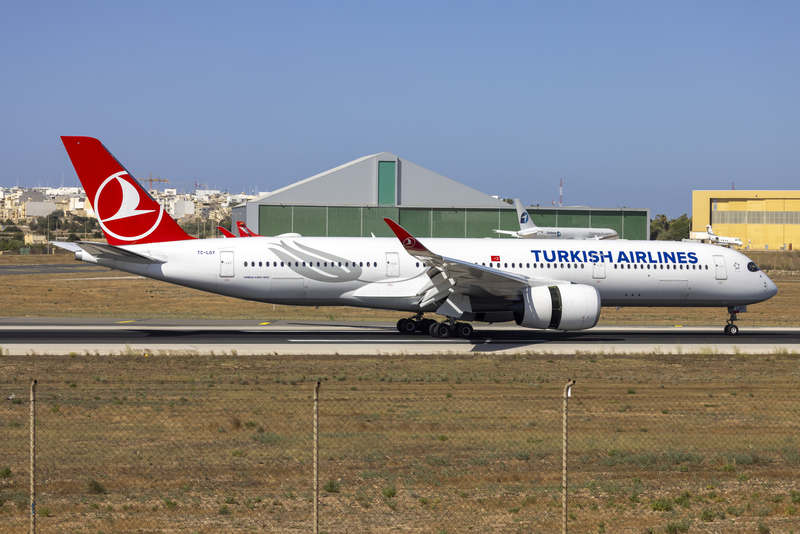
Turkish Airlines is preparing for what could become the most ambitious passenger route in its history: nonstop service between Istanbul Airport (IST) and Sydney Kingsford Smith Airport (SYD).
The airline already serves Sydney (SYD), but not nonstop. Its current operation runs between Istanbul (IST) and Sydney (SYD) via Kuala Lumpur (KUL), giving Turkish Airlines a presence in Australia while it waits for aircraft capable of operating the route without an intermediate stop.
That next step is now coming into focus.
Read our stories in your inbox
Two aviation newsletters. Zero fluff.
Turkish Airlines Chairman Murat Şeker said the carrier expects to begin direct Istanbul–Sydney flights by the end of 2027 using specially configured Airbus A350-1000 aircraft. The route would cover roughly 9,300 miles and could approach 18 to 19 hours depending on routing, winds, payload, and final aircraft performance.
If launched as planned, Istanbul (IST)–Sydney (SYD) would become one of the longest nonstop flights in the world and a major statement from an airline that already claims one of the largest international networks in global aviation.
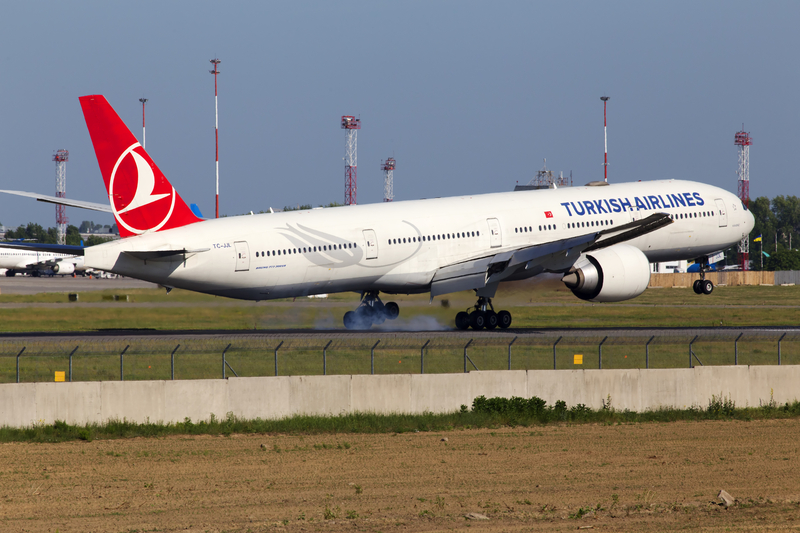
Istanbul–Sydney Is The Route Turkish Has Been Building Toward
Turkish Airlines’ Australia strategy has been gradual.
The carrier first built its Australian presence through one-stop service, using Southeast Asian intermediate points to make the economics and performance work with existing aircraft. Sydney (SYD) is currently served via Kuala Lumpur (KUL), while Melbourne (MEL) has also been part of the airline’s Australia build-up.
That approach allowed Turkish Airlines to enter Australia without waiting for the next generation of ultra-long-range aircraft. It also gave the airline time to build brand awareness, test market demand, establish airport operations, and develop sales channels in Australia.
The long-term goal, however, has always been clear: nonstop service from Istanbul (IST).
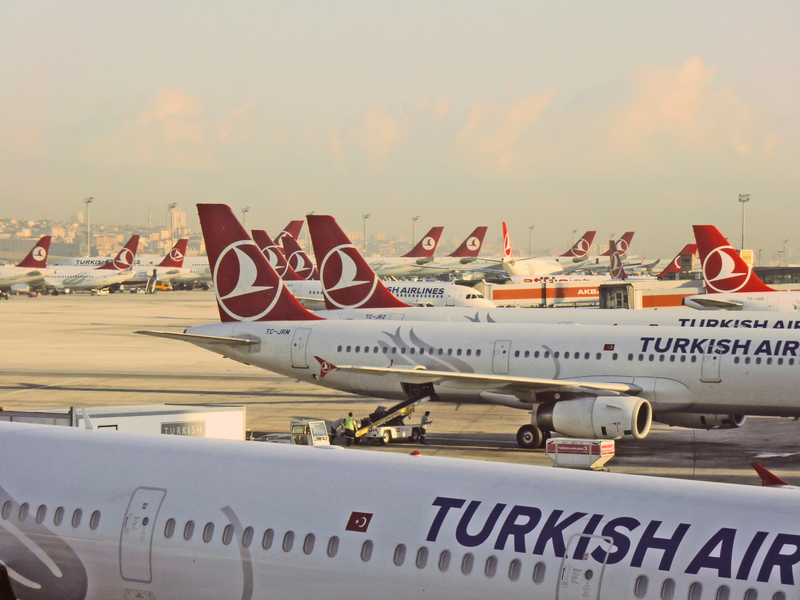
A nonstop IST–SYD flight would remove the Kuala Lumpur stop and turn Turkish Airlines into a much more direct competitor for Australia–Europe traffic. It would also strengthen Istanbul’s role as a global connecting hub, linking Australia with Europe, the Middle East, Africa, Central Asia, and the Balkans through a single stop at IST.
For passengers, the value is obvious. A nonstop flight from Sydney to Istanbul would shorten the journey, simplify the itinerary, reduce missed-connection risk, and open a very large onward network from one of the world’s most geographically useful hubs.
The Airbus A350-1000 Is The Key
The aircraft is the entire story.
Turkish Airlines ordered 15 Airbus A350-1000s as part of its major 2023 Airbus widebody and narrowbody order. The A350-1000 is the largest member of the A350 family and is powered by Rolls-Royce Trent XWB-97 engines. In standard form, it is already a long-range widebody capable of handling many of the world’s longest routes.
Istanbul (IST)–Sydney (SYD), however, is not a normal long-haul route.
At roughly 9,300 miles, the route pushes toward the edge of what even today’s most capable long-range aircraft can do in normal commercial service, especially when an airline wants to carry not only passengers but also bags, cargo, catering, crew, reserves, and fuel for demanding westbound and eastbound conditions.
That is why Turkish is discussing specially configured A350-1000 aircraft for the mission. Şeker said the airline and Airbus have agreed on the general design direction, but that discussions continue around the economics of the aircraft, including weight, fuel, passenger load, cargo, and whether the mission can be operated nonstop as intended.
That is a critical caveat. Turkish wants a nonstop flight. But aircraft performance, certification, payload, and route economics will determine what is actually possible.
Not Just Range — Payload Is The Hard Part
Ultra-long-haul flying is not simply a question of whether an aircraft can cover the distance.
The harder question is what the aircraft can carry while doing it.
A flight from Istanbul (IST) to Sydney (SYD) would require an enormous fuel load. Fuel itself is weight, and carrying extra fuel means the aircraft burns more fuel to carry that fuel. At some point, the airline must make tradeoffs between passengers, cargo, premium cabin density, baggage, and operational margin.
That is why Şeker’s comments about passenger and cargo economics are so important.
A route can be technically flyable but commercially unattractive if payload restrictions are too severe. For Turkish Airlines, the goal is not to operate a prestige route at any cost. It needs an aircraft that can carry enough premium passengers, Economy passengers, and cargo to make the route sustainable.
Cargo is especially relevant for Turkish Airlines. The carrier has one of the world’s most important cargo operations, and Istanbul (IST) is a major global freight hub. A nonstop Sydney route would likely have meaningful cargo demand, but ultra-long-haul performance may force compromises.
That is the business challenge Şeker was highlighting.
A More Premium A350-1000 Layout
Turkish Airlines is expected to configure some of its A350-1000s differently from the rest of the fleet.
According to Şeker, the ultra-long-haul aircraft would have more Business Class seats than the standard A350-1000 layout. He said the specially configured aircraft would include 66 Business Class suites, compared with 48 on the non-ultra-long-range version.
That premium-heavy layout makes sense.
On a route approaching 19 hours, premium revenue is essential. The economics of ultra-long-haul flying are difficult if the cabin is too heavily weighted toward low-yield Economy traffic. Business Class demand, corporate travel, premium leisure, and high-value connecting passengers all become central to the route’s viability.
Sydney (SYD) to Istanbul (IST) also has a strong premium proposition because it is not only serving Türkiye. It can connect Sydney travelers to dozens of major European, Middle Eastern, African, and Central Asian destinations over Istanbul with a single stop. That network breadth gives Turkish Airlines a chance to capture passengers who might otherwise connect over Dubai (DXB), Doha (DOH), Abu Dhabi (AUH), Singapore (SIN), Bangkok (BKK), Hong Kong (HKG), or European hubs.
The cabin needs to match that ambition.
Crystal Business Class Could Define The Route
The new A350-1000s are also expected to play a major role in Turkish Airlines’ next premium cabin chapter.
Turkish has unveiled its new Crystal Business Class suite, developed by its subsidiary TCI Aircraft Interiors. The product includes direct aisle access, privacy doors, a 23-inch seat width, a larger footwell, wireless charging, a 22-inch screen, and a design language built around warm colors, rose-gold details, and Turkish-sourced materials.
For Istanbul (IST)–Sydney (SYD), that matters enormously.
A 19-hour flight is not a normal Business Class experience. Privacy, sleep quality, seat width, storage, lighting, cabin service rhythm, and onboard dining all become more important. If Turkish Airlines wants to compete effectively against Qantas, Emirates, Qatar Airways, Singapore Airlines, Etihad Airways, and other premium long-haul operators, the seat must be world-class.
Turkish already has a strong reputation for onboard catering. A private-suite Business Class product would add the hard-product credibility needed for ultra-long-haul competition.
The airline also appears to be rethinking premium cabins more broadly, including the role of Premium Economy on longer flights. That would be a major shift for Turkish, which has not historically leaned on Premium Economy in the same way as some global competitors.
Qantas Delay Creates An Interesting Opening
The timing is notable because Qantas’ Project Sunrise has slipped again.
Qantas plans to use custom Airbus A350-1000ULR aircraft for nonstop flights from Sydney (SYD) and Melbourne (MEL) to London (LHR) and New York (JFK). Those aircraft are being modified with additional fuel capacity, including a rear center tank, and are designed around an extremely premium and low-density cabin.
The first Project Sunrise aircraft has now flown, but deliveries have been pushed to April 2027. Qantas still expects to launch Project Sunrise before the end of 2027, but the schedule has been under pressure from supply-chain and certification issues.
Turkish Airlines is watching the same aircraft family closely.
The difference is that Turkish is not trying to fly Sydney–London or Sydney–New York. It is targeting Istanbul–Sydney, a slightly different mission with different geography, network logic, and competitive implications. Istanbul sits farther west than the Gulf hubs and much farther east than London, giving Turkish a unique geographic position for Australia–Europe and Australia–Middle East/Africa traffic.
If Turkish can get the aircraft performance and economics right, it could create a new one-stop pattern for Australian travelers: Sydney to Istanbul nonstop, then onward to almost anywhere in Europe or beyond.
A Nonstop Flight Would Transform Turkish’s Australia Strategy
The current one-stop Sydney service is useful, but it has limitations.
A stop in Kuala Lumpur (KUL) adds time, operational complexity, and passenger friction. Some travelers do not mind a technical or commercial stop, especially if the fare is attractive. But for premium travelers and time-sensitive passengers, nonstop service is much more powerful.
A nonstop IST–SYD flight would reposition Turkish Airlines in the Australian market.
Instead of being a carrier offering a long one-stop or direct-with-stop routing, Turkish would become one of the few airlines connecting Australia to Europe and the wider region with a nonstop long-haul sector followed by a single hub connection.
That is a very different proposition.
It would also strengthen Istanbul (IST) against Gulf competitors. Emirates, Qatar Airways, and Etihad have built enormous Australia networks through Dubai, Doha, and Abu Dhabi. Turkish cannot match all of their Australian capacity overnight. But a nonstop Sydney–Istanbul route would give it a distinctive geographic and marketing advantage.
Istanbul Is The Real Asset
The aircraft makes the route possible, but Istanbul makes it valuable.
Istanbul Airport (IST) is one of the most powerful connecting hubs in the world. Turkish Airlines’ network reaches deep into Europe, the Middle East, Africa, Central Asia, South Asia, and the Americas. That breadth is what makes a route like Sydney work.
A Sydney passenger arriving at Istanbul could connect onward to London (LHR/LGW), Paris (CDG), Rome (FCO), Milan (MXP), Madrid (MAD), Barcelona (BCN), Amsterdam (AMS), Vienna (VIE), Munich (MUC), Berlin (BER), Athens (ATH), Cairo (CAI), Tel Aviv (TLV), Dubai (DXB), Tbilisi (TBS), Baku (GYD), Casablanca (CMN), Lagos (LOS), Nairobi (NBO), and dozens of other destinations.
No single Australian route can survive on local Istanbul traffic alone at this distance. The connecting network is what gives it scale.
That is Turkish Airlines’ strongest argument. It can sell Sydney not only to Türkiye but to a vast network of one-stop destinations that require two stops on many competing itineraries.
U.S. Growth Is Also On The Table
The A350-1000 discussion is not only about Australia.
Şeker also said Turkish Airlines is looking at additional U.S. growth. The airline’s priority is to deepen existing markets such as Miami (MIA), Los Angeles (LAX), and Chicago O’Hare (ORD), but it is also evaluating new cities, including Orlando (MCO), Minneapolis/St. Paul (MSP), and Philadelphia (PHL).
That fits Turkish Airlines’ broader network strategy.
The airline already has a large U.S. footprint, but additional aircraft would allow it to increase frequency in proven markets and selectively open new ones. More frequencies can be just as important as new destinations because they improve schedule utility, connection options, and corporate relevance.
Orlando (MCO) would be a leisure-heavy but globally recognizable market. Minneapolis/St. Paul (MSP) would give Turkish access to the Upper Midwest and a strong corporate region. Philadelphia (PHL) would add another large East Coast market and a major catchment with strong Europe, Middle East, and South Asia demand.
The constraint is aircraft availability. Turkish has network ambition, but new long-haul aircraft are needed to turn that ambition into schedules.
Aircraft Availability Is The Bottleneck
Turkish Airlines is one of the most aggressive global network carriers, but it is not immune to the industry’s aircraft shortage.
Widebody delivery delays, supply-chain bottlenecks, engine constraints, and cabin-certification timelines all affect how quickly the airline can grow. Even if a route has demand, an airline cannot launch it without the right aircraft at the right time.
That is especially true for ultra-long-haul flying.
A standard widebody may be able to add frequencies to New York (JFK), Chicago (ORD), or Miami (MIA), but Istanbul (IST)–Sydney (SYD) requires a very specific aircraft configuration and performance package. Turkish cannot simply assign any available A350-900 or Boeing 787-9 and expect the route to work nonstop without payload compromises.
That is why the A350-1000 program matters so much. It is not only a fleet addition. It is an aircraft that could unlock routes Turkish cannot operate properly today.
The Business Case Is Still The Question
Turkish Airlines has the ambition. It is still working through the economics.
Şeker’s comments are unusually candid on that point. He said the operational side is not the challenge, but the business side still needs work. That is the right way to frame the route.
Ultra-long-haul routes generate headlines, but they can be financially unforgiving. They require enormous fuel loads, expensive crews, premium cabin demand, strong aircraft utilization, and careful scheduling. They also expose airlines to fuel price volatility, seasonal demand swings, and directional cargo limitations.
The Istanbul–Sydney market has strategic logic, but the aircraft must be able to carry the right mix of revenue.
If Turkish has to block too many seats, restrict cargo too heavily, or sacrifice too much payload on difficult days, the nonstop route may not deliver the economics the airline needs. If Airbus can provide the required performance and Turkish can build a premium-heavy cabin with strong demand, the route becomes much more credible.
That is the real decision point.
Why This Would Matter Globally
If Turkish launches nonstop Istanbul–Sydney, the route would be significant beyond the airline itself.
It would mark another step in the global shift toward ultra-long-haul nonstop flying. Qantas is pursuing Sydney–London and Sydney–New York. Singapore Airlines has long operated Singapore–New York. Air India, United, Emirates, Qatar Airways, and others continue to explore long-haul and ultra-long-haul opportunities as aircraft improve.
Turkish’s entry would be different because it is built around Istanbul’s geographic bridge between Europe, Asia, Africa, and the Middle East.
The route would also signal that the A350-1000 family is becoming more than a large long-haul aircraft. In specially configured form, it is becoming a platform for the next generation of ultra-long-range flying.
For Airbus, Turkish’s interest would add another high-profile customer to the ultra-long-haul A350-1000 story after Qantas. For Turkish, it would provide a flagship route that demonstrates the reach of Istanbul and the airline’s global ambitions.
Bottom Line
Turkish Airlines is targeting nonstop Istanbul (IST)–Sydney (SYD) service by the end of 2027 using specially configured Airbus A350-1000 aircraft.
The route would cover roughly 9,300 miles and could approach 18 to 19 hours, making it the longest nonstop flight in Turkish Airlines’ history and one of the longest in the world. It would replace the current Istanbul–Sydney operation via Kuala Lumpur (KUL) with a true nonstop link between Türkiye and Australia.
The plan is ambitious, but not final in every detail. Turkish has ordered 15 A350-1000s, and Chairman Murat Şeker says some aircraft are being discussed with Airbus for ultra-long-haul missions. The airline wants the route to be nonstop, but performance, fuel, weight, cargo, certification, and cabin economics still need to align.
The strategy makes sense. Istanbul (IST) gives Turkish a powerful connecting hub for Europe, Africa, the Middle East, Central Asia, and beyond. Sydney (SYD) gives the airline a high-profile Australian gateway. The A350-1000 gives Turkish a possible aircraft solution.
If it works, this route would be far more than a prestige flight. It would reshape Turkish Airlines’ Australia strategy, strengthen Istanbul’s role as a global hub, and place Turkish directly into the next generation of ultra-long-haul competition.
Keep reading FlyMag
Get the Daily Brief in the morning or the Route Watch weekly recap on Fridays. Or both.