China Express Airlines is reshaping its post-fundraising fleet plan in a way that says a great deal about both its own priorities and the direction of China’s regional market. The Chongqing-based carrier has decided to redirect CNY925 million from the proceeds of its 2022 private share placement toward the acquisition of five COMAC C909 regional jets, while cutting back an earlier Airbus A320-family plan.

On the surface, that may look like a routine financing adjustment. In practice, it is a meaningful fleet-strategy decision. China Express is reducing its planned A320 acquisition from four aircraft to two, shifting that portion of the plan to its wholly owned subsidiary Yunfei Aircraft Leasing (Shanghai) Co., Ltd., and dropping a separate fundraising project for 14 spare aircraft engines. Taken together, those changes point to a carrier that is tightening capital allocation, prioritizing right-sized capacity, and keeping more liquidity flexibility in reserve.
For aviation professionals, the real significance is not just that China Express is buying more C909s. It is that the airline is using previously raised capital to lean harder into the regional-jet segment while slowing a more traditional narrowbody expansion path.
Read our stories in your inbox
Two aviation newsletters. Zero fluff.
The Airline Is Prioritizing Regional Capacity Over Larger Airbus Growth
The clearest takeaway from the revised plan is that China Express sees more immediate value in regional aircraft than in larger narrowbodies.
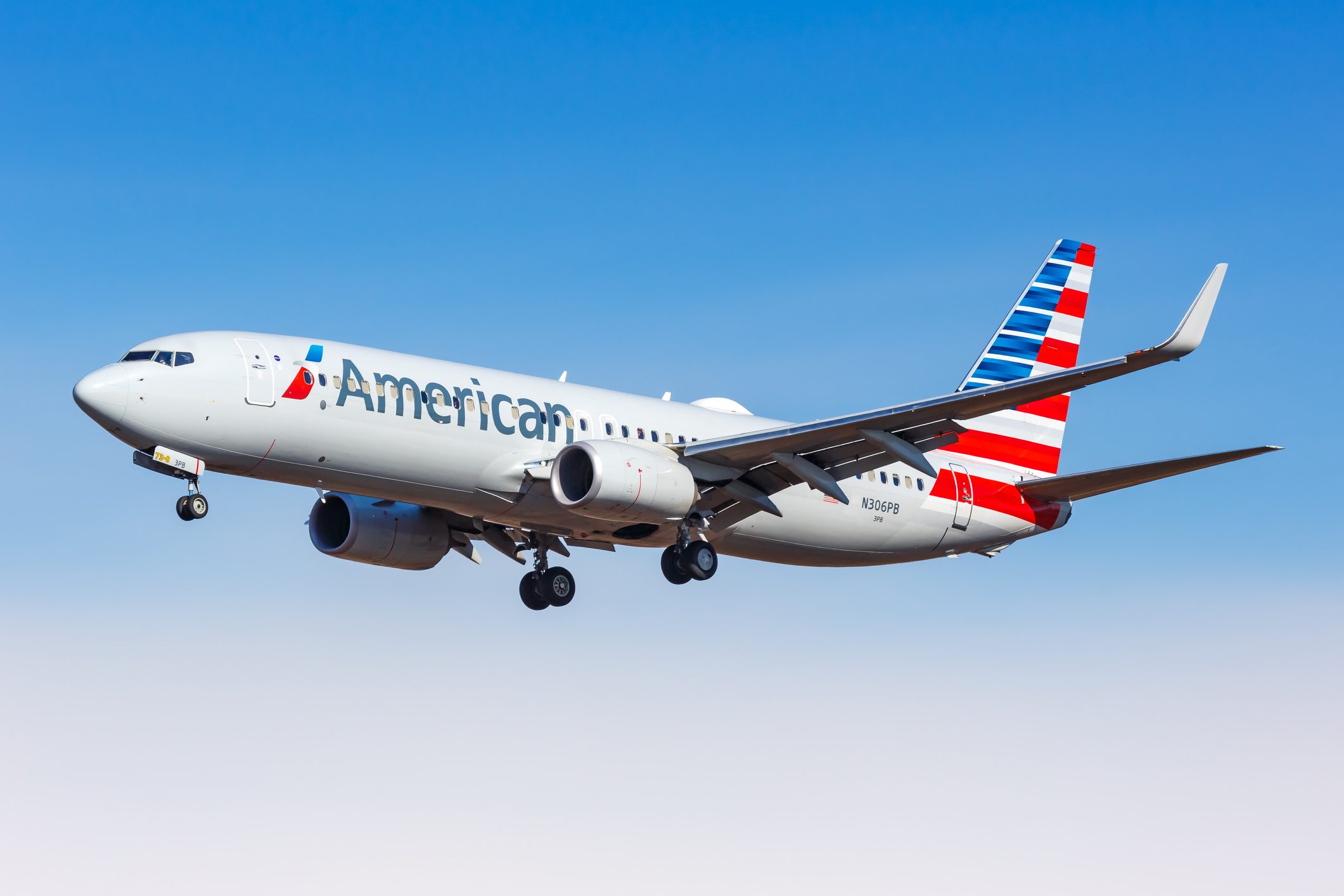
An Airbus A320-family aircraft is a proven tool for higher-density domestic flying, offering strong seat economics and far greater capacity than a regional jet. But that larger gauge only works if demand is there consistently enough to support it. For an airline such as China Express, which has built much of its identity around thinner domestic routes and secondary-city connectivity, that is not always the optimal answer.

By redirecting funds toward five C909s, China Express appears to be reinforcing the type of network it knows best. Rather than simply adding more seats through bigger aircraft, it is favoring an airplane that allows it to maintain frequency, open thinner routes, and match capacity more closely to demand.
That is not a glamorous shift, but it is often the smarter one.
Why The COMAC C909 Fits China Express So Well
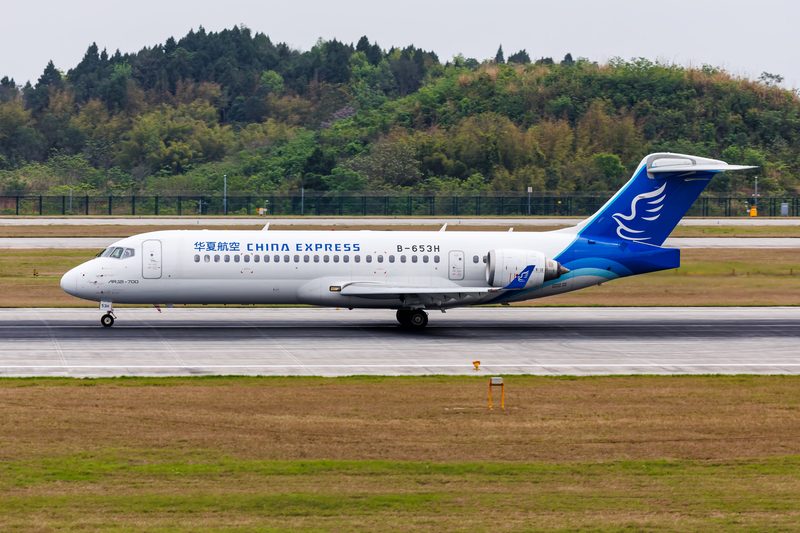
The COMAC C909, formerly known as the ARJ21, sits in the regional-jet segment and is typically configured for around 78 to 97 passengers depending on layout. That puts it in a very different category from the Airbus A320 family.
For a carrier based at Chongqing Jiangbei International Airport (CKG), that matters. China Express has long focused on linking smaller and mid-sized Chinese cities, markets where a regional jet can be much more efficient than a larger narrowbody. The C909 gives the airline a way to develop domestic connectivity without carrying the seat-risk that comes with an A320 on marginal routes.

It also suits the airline’s broader role in the Chinese market. China Express is not trying to become a giant trunk-route operator overnight. Its strength lies in feeding regional demand and serving city pairs that larger carriers may overlook or serve less efficiently.
In that context, the C909 is more than a domestic-manufacturing story. It is a network-fit story.
The Airbus A320 Plan Has Been Reduced, Not Abandoned
It is important not to overread the Airbus cutback.

China Express is not walking away from the A320 family altogether. It is reducing the planned acquisition from four aircraft to two and moving that implementation to Yunfei Aircraft Leasing. That signals a change in pace and structure, not a total reversal.
There are several possible reasons for that. Housing the Airbus plan in a leasing subsidiary can create more financing flexibility, keep fleet-investment activity somewhat separated from the operating carrier, and preserve optionality if market conditions shift again. It also suggests that China Express still sees a role for larger narrowbodies, just not at the same scale or urgency it once envisioned when the fundraising plan was first designed.
That distinction matters. The airline is still keeping one foot in the larger-aircraft segment. It is simply making the regional side of the business the clearer priority for now.
The Spare Engine Fundraising Cancellation Says A Lot About Capital Discipline
Another revealing element is the termination of the fundraising project for 14 spare aircraft engines.
Spare engines are essential operational assets. They support maintenance planning, reduce disruption risk, and help keep fleets available. But from a capital-allocation perspective, they are still support assets rather than direct revenue generators.
By deciding that any engine purchases would instead be financed with self-raised funds if needed, China Express is effectively reserving its original fundraising proceeds for uses it views as more strategically urgent. That suggests management is taking a more selective approach to where every yuan of raised capital goes.
For investors and aviation finance watchers, that usually indicates tighter capital discipline rather than simple cost-cutting. The company appears to want fleet assets that directly support deployment and network strategy to take precedence over secondary funding uses.
The Working Capital Flexibility Is Also A Key Signal
China Express also said it may use up to CNY390 million of idle proceeds as working capital for up to 12 months.
That is a notable detail because it shows the company wants liquidity flexibility while it adjusts the pace and structure of its fleet investments. Airlines often need that kind of treasury freedom, especially when fleet plans are changing and the timing of capital deployment becomes less predictable.
It does not automatically indicate financial strain. But it does show that this is not simply a fleet story. It is also a cash-management story. China Express is preserving room to support day-to-day operations while still moving forward with its revised aircraft strategy.
That kind of flexibility can be especially valuable in a market where operating conditions, financing costs, and fleet-delivery timelines remain fluid.
This Move Also Reflects China’s Broader Aviation Direction
There is also a wider industry angle here.
The C909 is one of COMAC’s key domestic programs, and more Chinese airline adoption helps deepen the country’s commercial aviation ecosystem beyond Airbus and Boeing. That has strategic national significance, but in China Express’s case the move also stands up on operational grounds.
A regional airline with strong exposure to inland and secondary markets is one of the clearest natural users for the C909. The aircraft gives it the ability to right-size capacity while supporting Chinese-built fleet growth at the same time.
That combination makes the decision more credible than if it were purely symbolic. China Express is not just buying into an industrial policy objective. It is buying an aircraft type that actually fits its route structure.
Bottom Line
China Express Airlines’ decision to redirect CNY925 million toward five COMAC C909 regional jets, while cutting its Airbus A320 plan from four aircraft to two, is more than a bookkeeping change. It is a clear statement of fleet intent.
The airline is leaning further into the regional-jet space, where the C909 better matches its network and market profile, while taking a more measured approach to larger narrowbody expansion. The cancellation of a separate spare-engine fundraising plan and the option to use idle proceeds for working capital reinforce the same message: China Express is trying to stay flexible, disciplined, and selective with capital.
For a regional carrier operating out of Chongqing Jiangbei International Airport (CKG), that looks like a pragmatic adjustment rather than a retreat. It is a move toward tighter fleet alignment and more careful financial execution.
Keep reading FlyMag
Get the Daily Brief in the morning or the Route Watch weekly recap on Fridays. Or both.