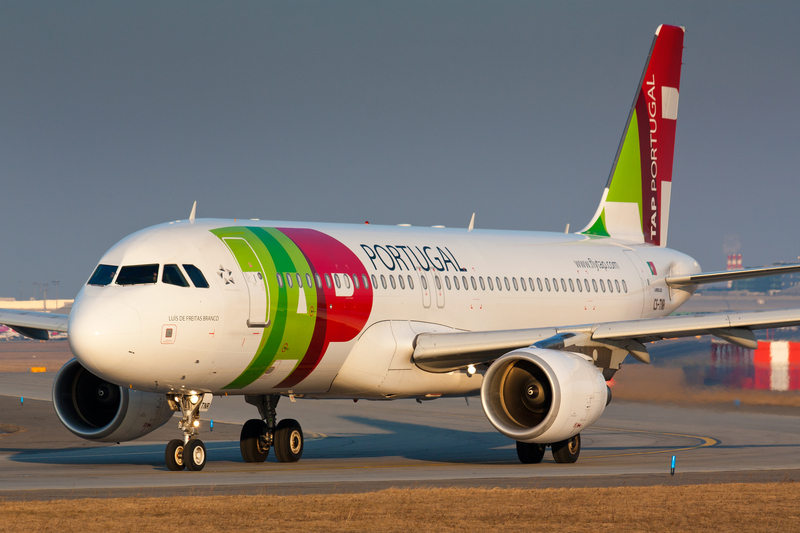
TAP Air Portugal’s long-running privatization has entered a more serious stage, with Air France-KLM and Lufthansa both submitting non-binding offers for a minority stake in the Portuguese flag carrier.

That is an important threshold. Expressions of interest are one thing; formal non-binding offers are another. At this point, the conversation is no longer about whether Europe’s largest airline groups like TAP. It is about how they see the carrier fitting into their long-term network strategy, and how Portugal wants to shape the future of one of its most strategically valuable assets.
Just as important, the field now looks narrower than many expected. International Airlines Group, which had also shown interest earlier in the process, did not submit a non-binding bid. For now, that leaves Air France-KLM and Lufthansa as the two live strategic airline contenders.
Read our stories in your inbox
Two aviation newsletters. Zero fluff.
Lisbon Is the Prize, but It Is Not the Only One
The real asset in this process is not just TAP itself. It is Lisbon Humberto Delgado Airport (LIS) and the traffic flows TAP has built around it.
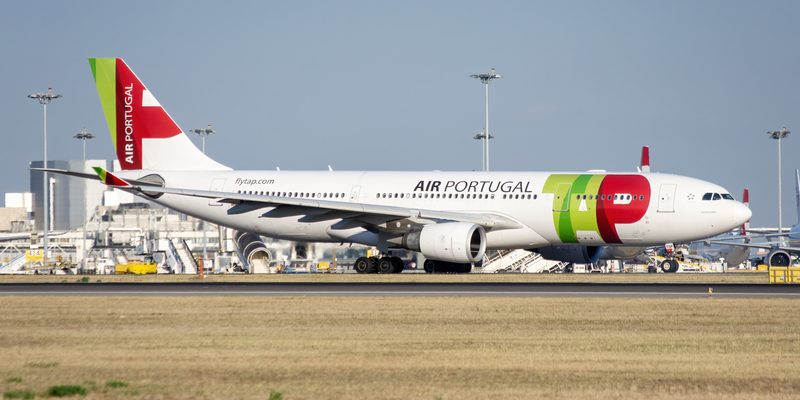
TAP occupies a highly unusual position in Europe. It is neither a giant pan-European group carrier nor a small peripheral airline. Instead, it sits on one of the continent’s most commercially attractive geographic platforms: a Western European hub with unusually deep links to Brazil, Lusophone Africa, North America, and the broader South Atlantic market.
That is why the bids matter so much. Lisbon is not just another southern European capital. For airline groups looking to strengthen transatlantic relevance, it is one of the few hubs in Europe that can still reshape a network if used properly.
Portugal’s government knows that, which is why it has been careful to frame the sale around strategic development rather than simply price.
Why TAP Matters More Than Its Size Suggests
On paper, TAP is not the largest airline in Europe. In strategic terms, however, it punches above its weight.
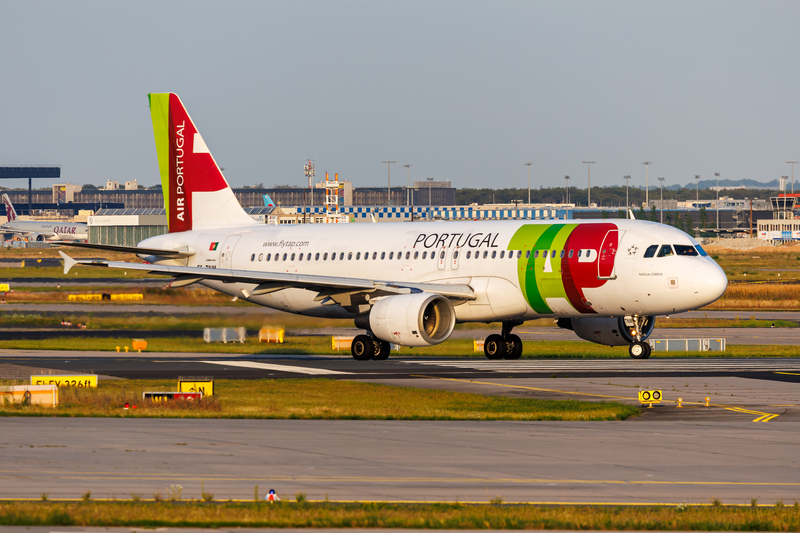
The carrier’s long-haul profile is built around aircraft such as the Airbus A330-900neo and Airbus A321LR, two types that are especially useful for the kind of network TAP runs from LIS. The A330-900neo gives the airline efficient widebody lift on trunk long-haul routes, while the A321LR allows thinner transatlantic sectors to be served with lower trip costs and more precision.
That fleet matters because it supports exactly the kind of hub structure that larger groups value. TAP is not just carrying local Portugal traffic. It is connecting Europe to Brazil, Portuguese-speaking Africa, and North America through a relatively efficient all-Airbus platform. That gives a buyer something more useful than simple scale: it gives them a specialized transatlantic and South Atlantic tool that can slot into a bigger system.
For Air France-KLM, that means access to a southern European gateway that complements Paris Charles de Gaulle Airport (CDG) and Amsterdam Schiphol Airport (AMS) without directly replicating either one. For Lufthansa, it offers a western Atlantic bridge that would sit alongside Frankfurt Airport (FRA), Munich Airport (MUC), Zurich Airport (ZRH), Vienna Airport (VIE), Brussels Airport (BRU), and now Rome Fiumicino Airport (FCO) through ITA Airways.
Air France-KLM and Lufthansa Are Chasing Different Versions of the Same Prize
Both bidders want TAP, but they are not necessarily buying the same thing in strategic terms.

Air France-KLM has been the more explicit of the two. Benjamin Smith has described TAP as a natural fit and has made clear that the group sees Lisbon as a potential southern European hub within its multi-hub structure. That is a revealing phrase. Air France-KLM is not buying airports. It is buying network geometry. Lisbon would give the group stronger reach into Brazil and Africa while deepening its position in southern Europe without depending entirely on CDG or AMS.
Lufthansa’s logic is slightly different, but no less compelling. It has already spent the past several years building a portfolio structure across Europe, bringing together Lufthansa, SWISS, Austrian Airlines, Brussels Airlines, Eurowings, and now ITA Airways. In that context, TAP would further widen the group’s geographic spread and strengthen its long-haul relevance on Atlantic flows where Lisbon is unusually strong.
In simple terms, Air France-KLM sees TAP as a hub complement. Lufthansa sees it as another strategic node in a growing multi-brand European system. Both views make sense.
Portugal Is Selling Influence, Not Control
One of the most important details in the process is the structure of the sale.
Portugal is seeking to sell 44.9% of TAP to a strategic airline partner, with a further 5% reserved for employees. That means the state is not, at least at this stage, surrendering full control. It is looking for a partner that can strengthen the airline commercially and operationally while preserving national influence over the business.
That structure matters because it affects what a bidder can realistically promise. This is not a clean takeover in which the new owner can immediately redesign the airline from top to bottom. Any partner will have to work within political, geographic, and employment constraints, and will almost certainly be expected to preserve Lisbon’s role while also supporting other Portuguese airports such as Porto Airport (OPO), Faro Airport (FAO), and the island markets in Madeira and the Azores.
For that reason, the eventual winner will need to offer more than money. It will need to offer a convincing industrial plan.
The Next Phase Will Matter More Than the Headlines
The current offers are non-binding, which is an important distinction. They signal intent, but they do not settle the outcome.
Parpública now has the task of evaluating the proposals and deciding which bidders will be invited into the binding stage. That is where the real contest begins. Pricing will matter, but so will political acceptability, labor credibility, network commitments, and the extent to which each bidder can persuade Portugal that TAP will be strengthened rather than absorbed.
That is also why Lisbon’s future role will sit at the center of the next round. Any serious bidder will need to show how LIS grows, how TAP’s Brazil and Africa franchise is protected, and how the airline’s fleet and network continue to matter inside a much larger group.
In a European airline market that is steadily consolidating, this is one of the few remaining transactions that can genuinely alter the balance of power.
Bottom Line
Air France-KLM and Lufthansa have now turned interest in TAP Air Portugal into formal action, and that makes the Portuguese carrier one of the most consequential aviation assets in play in Europe.
This is not simply a contest for an airline. It is a contest for Lisbon Humberto Delgado Airport (LIS), for TAP’s South Atlantic strength, and for a network built around Airbus A330-900neo and A321LR aircraft that give the carrier unusual strategic flexibility.
The biggest correction to the original framing is this: IAG is no longer just “showing interest.” At this stage, it has stepped back, leaving Air France-KLM and Lufthansa as the two confirmed airline bidders in the non-binding phase.
For airline professionals, that is the key takeaway. The TAP process has moved from broad curiosity to a real two-horse strategic contest, and the next round will say a great deal about how Europe’s major airline groups see the future of consolidation.
Keep reading FlyMag
Get the Daily Brief in the morning or the Route Watch weekly recap on Fridays. Or both.