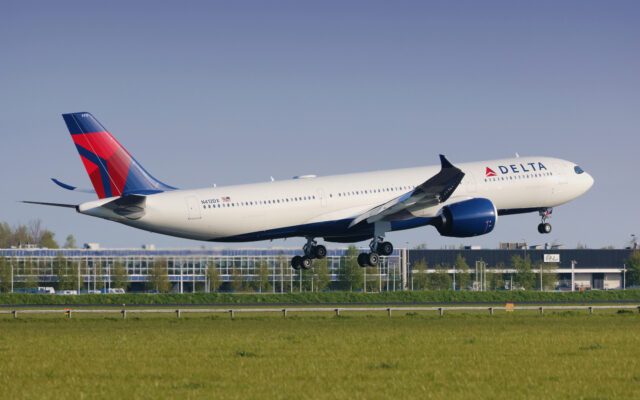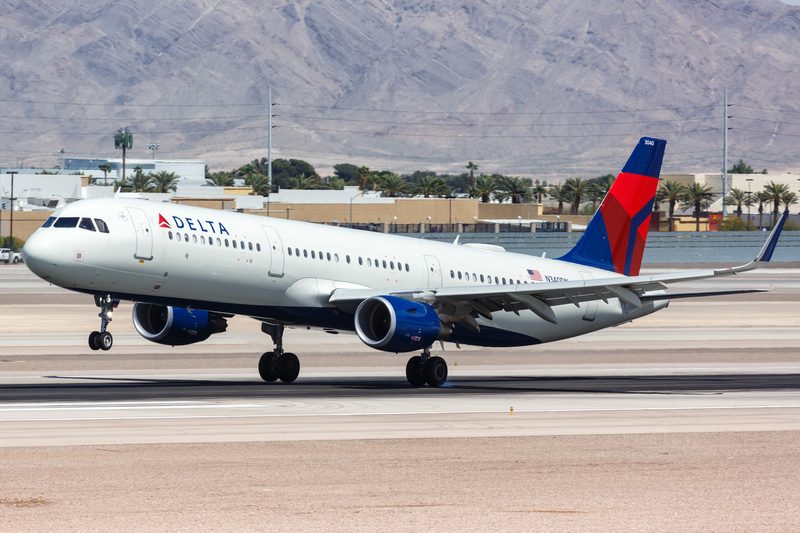
A Delta Air Lines ground employee was killed Thursday night at Orlando International Airport (MCO) after an aircraft tug crashed into a passenger boarding bridge beside a parked Airbus A321.

The incident happened at about 10:55 p.m. local time while Delta flight DL2593 to Minneapolis–Saint Paul International Airport (MSP) was at the gate. The aircraft was Airbus A321-211 N324DX. Passengers were later taken off the aircraft through the rear door using stairs, and one departing flight was canceled as airport and airline personnel responded to the accident.
For aviation readers, the key point is that this was not an aircraft movement incident in the usual sense. The airplane itself was parked. The fatal event involved ground equipment striking the jet bridge, turning a routine gate operation into a deadly ramp accident.
Read our stories in your inbox
Two aviation newsletters. Zero fluff.
The Aircraft Was Parked And Boarding Was Disrupted
The FAA has said the tug struck the jet bridge where Delta flight 2593 was parked.
That matters because it narrows the focus of the investigation. This was not a taxiway collision, pushback mishap, or runway event. It was a gate-area accident involving ground support equipment and airport infrastructure at a moment when passengers were still onboard the aircraft.
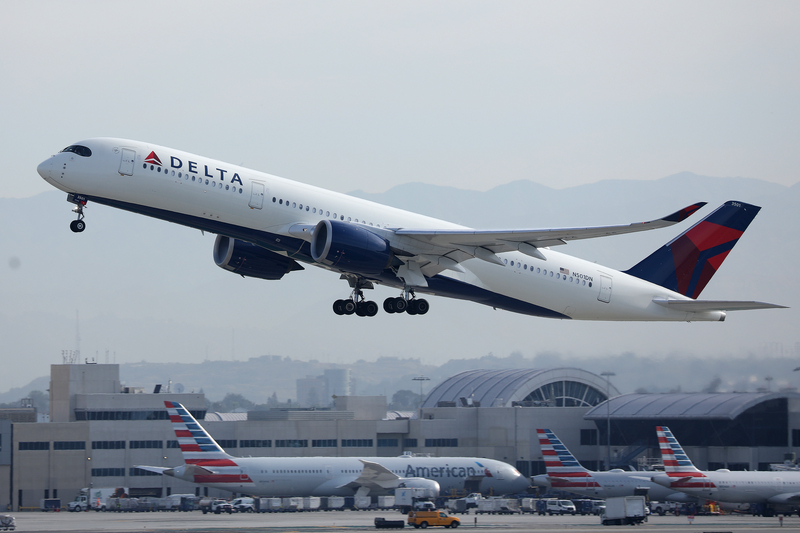
Because of that, the passengers had to be removed through the rear door using airstairs rather than through the normal jet bridge path. That is a standard workaround in this kind of gate-side disruption, but it also underscores how serious the impact was operationally.
Delta Has Framed It As A Workplace Fatality
Delta confirmed that the employee was working at the time of the accident and said the airline is focused on supporting the victim’s family and its Orlando-based team.
That is the right framing. Whatever the mechanical sequence turns out to be, this is first and foremost a fatal workplace incident. In aviation, ramp and gate operations can look routine from the terminal side, but they remain one of the most risk-sensitive parts of the business. Tug movements, jet bridge positioning, aircraft servicing, and the constant interaction between equipment and infrastructure leave very little room for error.
Airport Operations Were Temporarily Affected
Following the crash, airport operations in Delta’s area were temporarily halted while authorities and responders secured the scene and began the investigation.
At least one departing flight was canceled, and affected passengers were rebooked. That is a relatively limited operational impact compared with what could happen after a major airside event, but it still shows how quickly a single ramp accident can spill into the passenger operation.
At a busy airport like Orlando, even a localized stop can create knock-on delays, gate conflicts, and staffing disruption if the affected stand or terminal area cannot be used normally.
The Investigation Will Focus On Tug Movement And Bridge Impact
The Orlando Police Department is leading the investigation, with federal authorities also involved through the FAA’s confirmation of the event.
The central questions are likely to be straightforward but important: how the tug came into contact with the jet bridge, whether speed, visibility, positioning, or procedural issues played a role, and whether the worker was struck directly by the vehicle, by the bridge movement, or by the consequences of the collision between the two.
Those distinctions matter, because they will determine whether the event is treated primarily as a driver-control issue, an equipment issue, a ramp-procedure issue, or some combination of all three.
Ramp Safety Rarely Gets Public Attention Until Something Like This Happens
One of the harder truths in aviation is that some of the most dangerous work happens while the aircraft is still on the ground.
Passengers tend to think of flight safety in terms of takeoff, landing, or weather. But airlines and airports know that ground handling is full of risk: moving vehicles, confined spaces, aircraft servicing deadlines, and constant pressure to keep the operation on time.
That is why incidents like this resonate inside the industry. They are reminders that the safety chain does not start at the runway. It starts at the gate.
Bottom Line
A Delta employee was killed after an aircraft tug struck a jet bridge beside Delta flight DL2593 at Orlando International Airport (MCO) late Thursday night. The aircraft, Airbus A321 N324DX, was parked at the gate, passengers were deplaned via the rear stairs, and the flight was canceled while authorities began investigating.
For Delta and the wider industry, this is a tragic reminder that some of aviation’s most serious risks are not always airborne. They can happen in the ordinary-looking, highly compressed world of gate and ramp operations.
Keep reading FlyMag
Get the Daily Brief in the morning or the Route Watch weekly recap on Fridays. Or both.