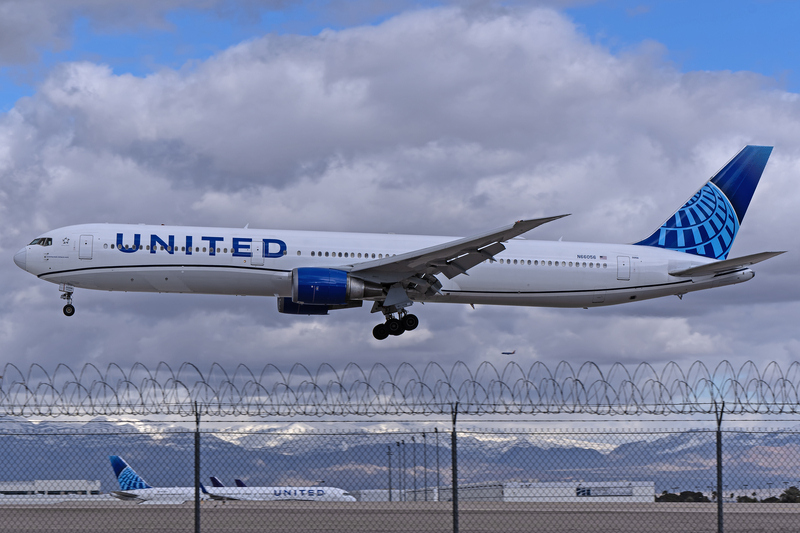
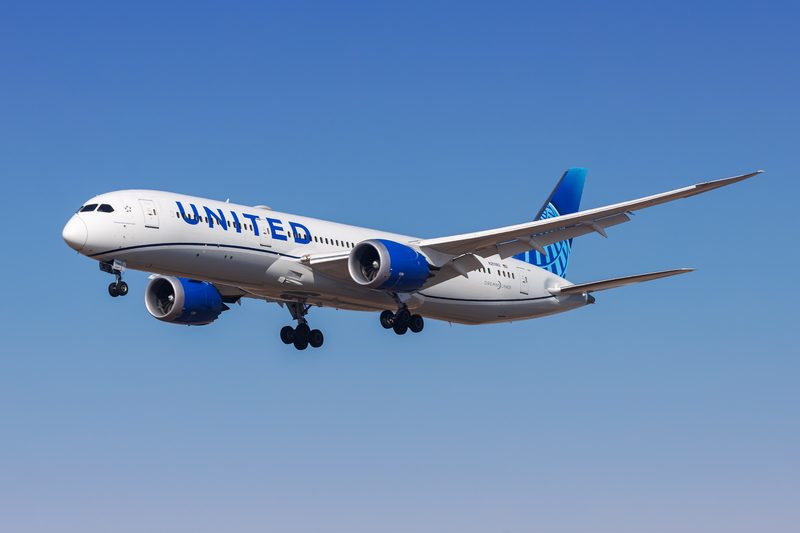
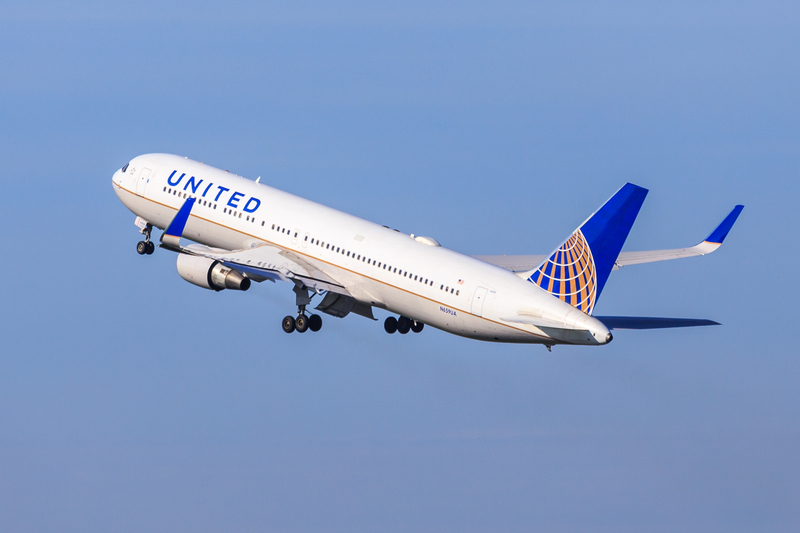
A United Airlines Boeing 767-400ER arriving at Newark Liberty International Airport (EWR) from Venice Marco Polo Airport (VCE) struck a light pole on final approach, in a rare and deeply serious approach-path incident that also damaged a truck on the New Jersey Turnpike below.

The aircraft, operating as United flight UA169, landed safely and taxied to the gate normally. There were no injuries among the 221 passengers and 10 crew members onboard. The truck driver sustained minor injuries and was later treated and released.
For aviation readers, the main point is not the dramatic optics of the event. It is that this was not a taxi mishap or a runway incident after landing. It was an obstacle strike during final approach, which immediately raises questions about glide path management, obstacle clearance, and how the aircraft reached such a low position before touchdown.
Read our stories in your inbox
Two aviation newsletters. Zero fluff.
This Was An Approach Event, Not A Ground Collision
That distinction matters because the nature of the event changes the investigative focus.
If an aircraft hits infrastructure after landing, the emphasis usually falls on taxi clearance, ramp control, or airport ground movement. In this case, the aircraft was still airborne on final approach when it made contact with a light pole outside the airport boundary area.
That places the spotlight squarely on the approach itself.
The fact that the Boeing 767-400ER was able to continue to a safe landing does not make the event minor. It simply means the crew retained enough control after the strike to complete the arrival safely.
The Light Pole Was The First Confirmed Object Hit
The clearest confirmed detail so far is that the aircraft struck a light pole while descending toward Newark Liberty International Airport (EWR).
That is the most important piece of the incident because it confirms the aircraft had dropped low enough on approach to hit fixed infrastructure. That is not the kind of event that happens in normal stabilized operations. Even before investigators examine data from the flight, the basic fact of the pole strike tells us this was a significant deviation from the expected safe approach profile.
The Truck Below Was Also Damaged
The event became even more unusual because a truck traveling on the New Jersey Turnpike beneath the flight path was also struck or damaged during the sequence.
Whether that happened from direct contact with the aircraft, debris, or the consequences of the pole strike will be clarified by investigators, but the broad operational picture is already clear: the aircraft’s path was low enough to create a hazard not only for the airplane itself, but also for traffic beneath the arrival corridor.
That is what makes the incident so striking. It crossed the boundary between an aviation occurrence and a public-safety incident on the ground.
United Has Pulled The Crew From Duty
United has already said the flight crew has been removed from service pending the company’s internal safety review.
That is a standard step in a case like this, but it is still important. It shows the airline is treating the incident as a serious operational matter requiring immediate review of crew performance, aircraft condition, and approach execution.
Removing a crew from service in this context is not, by itself, a judgment of fault. It is part of preserving the integrity of the investigation and ensuring a proper review can take place before those pilots return to line flying.
The Aircraft Is Now Being Closely Examined
The Boeing 767-400ER itself will now become a key piece of the investigation.
Maintenance teams will be looking for damage to the landing gear, lower fuselage, structure, and any systems that may have been affected by the strike. Even when an aircraft appears to land and taxi normally, contact with fixed infrastructure can still create hidden structural or systems damage that only becomes apparent during detailed inspection.
That is why incidents like this rarely end when the passengers step off the plane. In many ways, the technical work only begins once the aircraft reaches the gate.
Federal Investigators Will Focus On The Final Segment
The FAA and NTSB are both involved, and the real investigative focus will now turn to the final moments of the approach.
They will want to know how the aircraft was being flown, whether the approach was stabilized, whether the glide path or visual reference was being maintained correctly, and whether there were any operational, environmental, or human-factor elements that contributed to the low approach profile.
The data recorders will be central to that work. In an event like this, investigators are not just interested in what was hit. They are interested in why the aircraft was there in the first place.
This Should Not Be Forced Into A Broader Narrative Too Quickly
Because Newark and the wider New York region have seen a number of aviation incidents and operational strains in recent years, there is an understandable temptation to place this immediately inside a broader “hazardous airspace” narrative.
That would be premature.
At this stage, what is established is a very specific event involving one aircraft on one arrival. There is no confirmed evidence yet that a wider ATC breakdown, equipment failure, or systemic New York airspace issue caused this particular incident. Those possibilities can be examined if warranted, but they are not established facts now.
The strongest reporting discipline here is to stay with what is confirmed and let the investigation define the broader meaning, if any.
The Aircraft Type Is Not The Story
The airplane involved was a Boeing 767-400ER, a long-serving widebody type that remains a key aircraft in United’s fleet.
But at this point, nothing suggests the aircraft model itself is the central issue. This appears to be an approach-path event rather than a fleetwide technical concern. That distinction matters, because it keeps attention where it belongs: on the execution of the arrival, not on generalized suspicion around the aircraft type.
Bottom Line
United flight UA169 from Venice Marco Polo Airport (VCE) to Newark Liberty International Airport (EWR) struck a light pole on final approach and also damaged a truck below, yet still landed safely with no injuries onboard. The truck driver suffered minor injuries, and United has removed the flight crew from service while the aircraft is inspected.
This was not a minor ground mishap. It was a real obstacle strike during final approach. The central question now is the one investigators will have to answer: how a Boeing 767-400ER arriving at one of the country’s busiest airports descended low enough to hit it.
Keep reading FlyMag
Get the Daily Brief in the morning or the Route Watch weekly recap on Fridays. Or both.