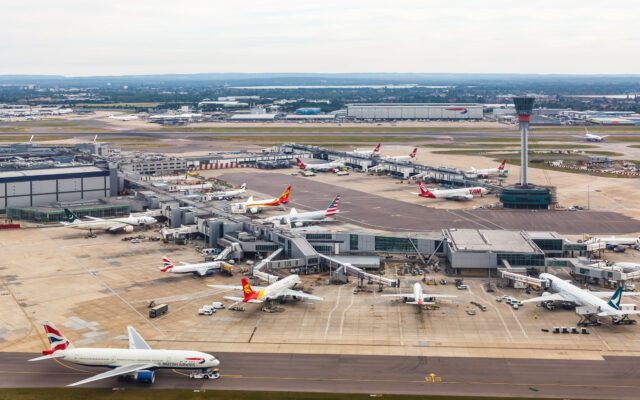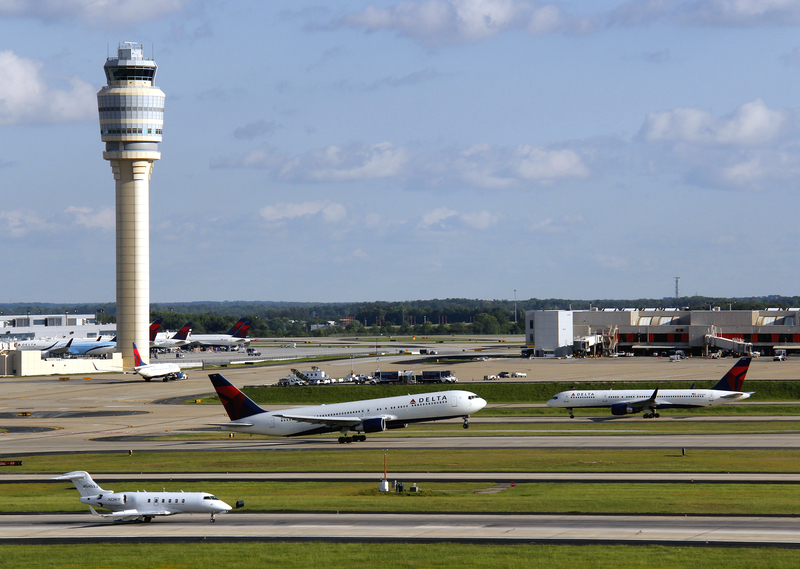
Hartsfield-Jackson Atlanta International Airport (ATL) remains North America’s busiest airport by total passengers, and the margin is still meaningful.
In 2025, ATL handled 106.3 million passengers, keeping it ahead not only of every other airport in the United States, but every airport in North America by the most widely used measurement of airport scale: total passenger throughput. That total works out to roughly 291,000 passengers a day, which shows just how enormous the operation remains.
That matters because the “busiest airport” debate often gets muddied. Some airports lead in aircraft movements. Others lead in seats or in international traffic. But by the most commonly cited headline measure — total passengers — Atlanta is still comfortably on top.
Read our stories in your inbox
Two aviation newsletters. Zero fluff.
Atlanta’s Lead Is Not Just About Size — It Is About Structure
ATL’s position is not a short-term fluke.
The airport’s geography remains one of its biggest advantages. Atlanta sits in a location that makes it an efficient connecting point for a huge share of the U.S. population, especially for east-west, north-south, and Caribbean-bound flows. That geographic strength is then amplified by the airport’s physical design and by the sheer concentration of airline activity there.

WestJet Cuts 10 U.S. Routes From Winter 2026/27 Schedule as Vancouver Network Shrinks
In practical terms, Atlanta works because it is built to move people fast and in very large numbers. The parallel runways, the linear concourse layout, and the underground train system all support very high throughput. This is one of the reasons ATL continues to lead even when some rivals grow faster in percentage terms.
Delta’s Dominance Is Still The Main Engine
The biggest single reason ATL remains so far ahead is Delta Air Lines.
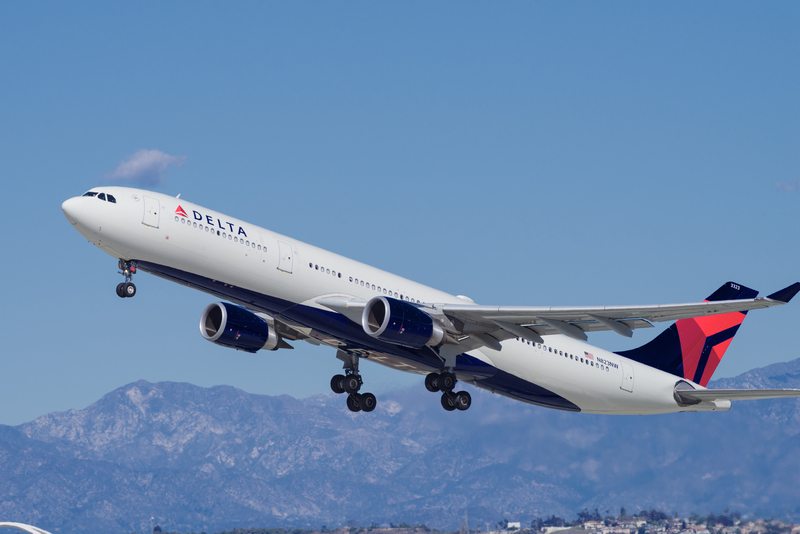
Atlanta is Delta’s largest hub by a wide margin, and the carrier’s scale there is extraordinary. Delta accounts for well over 70% of ATL’s flights, which means the airport functions not just as a major city gateway, but as one of the world’s most concentrated hub-and-spoke systems.
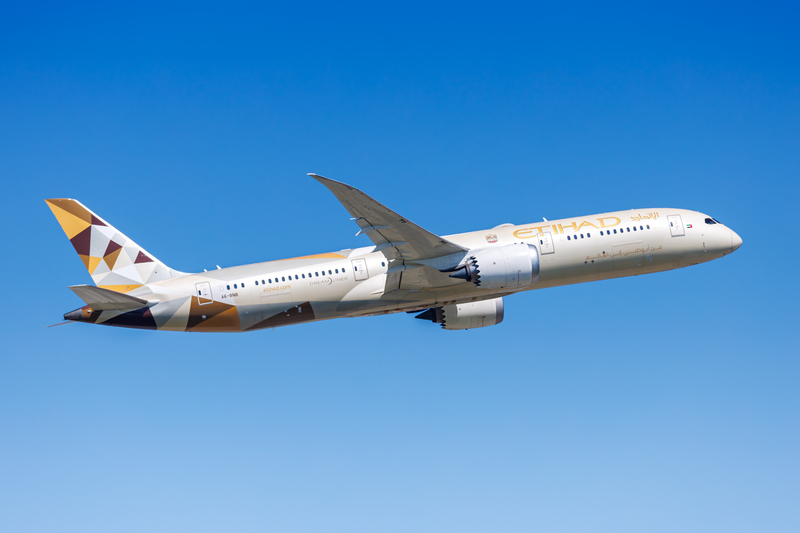
That kind of airline dominance matters because it drives huge numbers of connecting passengers through the airport every day. Many travelers using Atlanta are not starting or ending their journeys there. They are changing planes, often on tightly banked schedules that maximize onward options across the domestic U.S. and internationally.
That is how an airport reaches 100 million-plus passengers with fewer aircraft movements than some rivals.
Atlanta Wins On Passengers — Chicago Still Has A Different Claim
The biggest challenge to Atlanta’s “busiest” label still comes from Chicago O’Hare International Airport (ORD), but the distinction depends on how “busiest” is defined.
By passenger volume, ATL remains ahead. In 2025, O’Hare handled 84.85 million passengers, which is an enormous total, but still well behind Atlanta’s 106.3 million.
By aircraft movements, though, the conversation changes. O’Hare recorded 857,392 operations in 2025, compared with Atlanta’s 805,268. That means ORD handled more takeoffs and landings, even while ATL carried far more people.
That split is not unusual. O’Hare has a heavier mix of smaller regional aircraft and a different hub structure, while Atlanta benefits from larger average aircraft and a tighter Delta-driven connecting model. So both airports can make a “busiest” claim — just not on the same metric.
Atlanta’s Passenger Mix Still Skews Heavily Domestic
Another useful detail in Atlanta’s 2025 numbers is the balance between domestic and international traffic.
Roughly 91.4 million passengers were domestic, while about 14.9 million were international. That means around 86% of the airport’s traffic was domestic. This fits Atlanta’s core role perfectly: a massive U.S. connecting hub first, with international strength layered on top.
That is also why Atlanta remains so resilient. It is not dependent on one kind of traffic alone. Its size is rooted in the deepest part of the market — domestic U.S. air travel — and then reinforced by international connectivity.
The Airport Is Still Huge — But Not Yet Back To Its Old Peak
One subtle point in the 2025 figures is that Atlanta remains below its pre-pandemic high.
Passenger totals were down about 1.6% from 2024 and still roughly 4 million below the airport’s 2019 volume of 110.53 million. That does not change the headline — ATL is still number one — but it is a reminder that even the largest hubs are still evolving rather than simply returning to old highs automatically.
That matters because the future race is not static. Airports such as O’Hare (ORD), Dallas/Fort Worth (DFW), and Denver (DEN) are continuing to invest heavily, and all have long-term growth potential. Atlanta’s lead is secure for now, but it is not something the airport can take for granted forever.
Bottom Line
Hartsfield-Jackson Atlanta International Airport (ATL) remains North America’s busiest airport by total passengers, handling 106.3 million travelers in 2025.
That lead is built on three things: geography, operational efficiency, and Delta’s enormous hub concentration. Chicago O’Hare (ORD) still has a valid competing claim as the busiest by aircraft movements, but by total passengers — the metric most people mean when they say “busiest airport” — Atlanta is still firmly on top.
For aviation readers, that is the key point: ATL is not just big. It is still the continent’s most powerful passenger hub.
Keep reading FlyMag
Get the Daily Brief in the morning or the Route Watch weekly recap on Fridays. Or both.