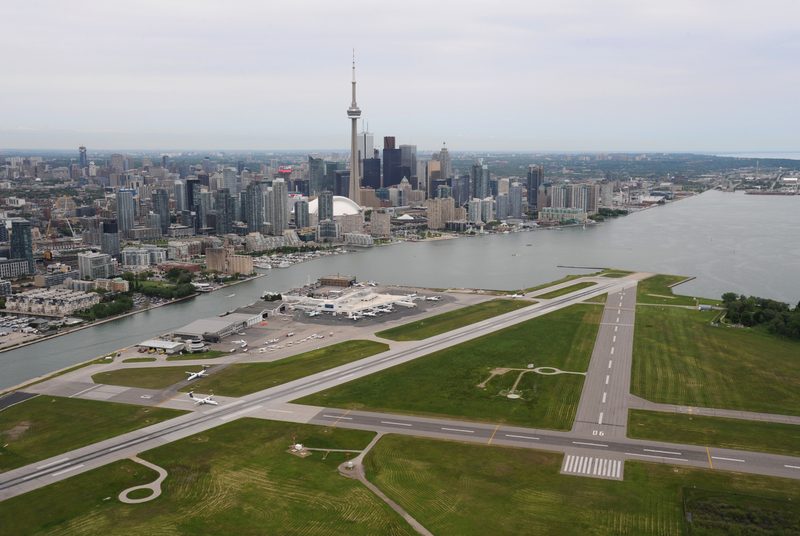
Toronto Billy Bishop City Centre Airport (YTZ) just gained the single biggest tool it has ever needed to expand U.S. flying: U.S. Customs and Border Protection (CBP) preclearance, officially opened on March 10, 2026.
For passengers, preclearance is simple: clear U.S. immigration and customs before you board in Toronto, then arrive in the United States as a domestic passenger. For airlines and airport planners, it’s much bigger than convenience. It changes what airports YTZ can serve, where flights can park on arrival, and how reliably connections can be sold—because it removes one of the most unpredictable variables in transborder travel: the U.S. arrivals hall.
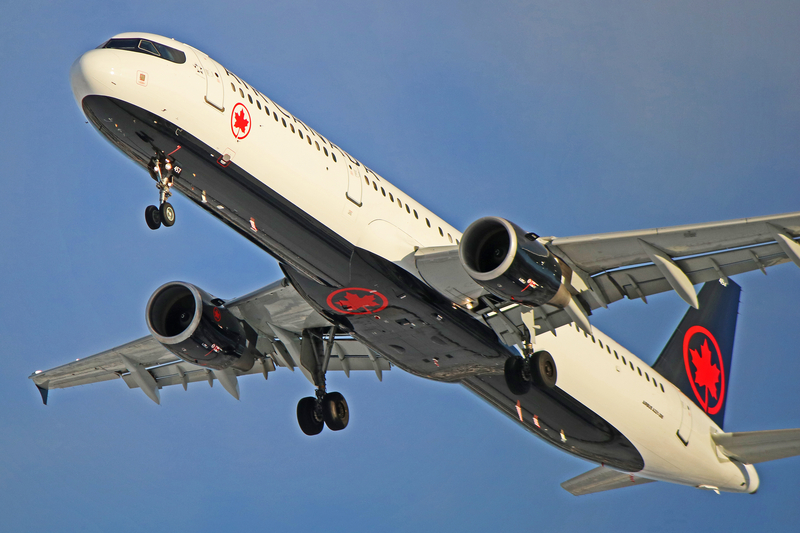
This is particularly consequential for Porter Airlines (PD)—the dominant airline at YTZ—and it also opens new strategic options for Air Canada (AC), both of which have recently flagged growth in transborder service.
Read our stories in your inbox
Two aviation newsletters. Zero fluff.
What preclearance actually changes at YTZ
Preclearance is not just “faster security.” It’s a jurisdictional shift.
Once passengers are processed by CBP at Billy Bishop (YTZ), they can land in the U.S. as domestic arrivals. That unlocks three operational advantages:
1) Access to airports and terminals without CBP facilities
Many U.S. airports—and even many terminals at major airports—don’t have dedicated CBP arrivals processing. Without preclearance, international flights can’t land there. With preclearance, they can.
This expands YTZ’s addressable U.S. network beyond the limited set of airports that can handle arriving international passengers.
2) More predictable block-to-curb experience
For frequent travelers, the biggest pain point in cross-border flying is variability: one day immigration takes 10 minutes, another day it takes 75. Preclearance shifts that variability to the departure airport, where the airline and airport can manage staffing and passenger flow more consistently.
3) Better connection integrity on the U.S. side
Arriving as a domestic passenger reduces missed connections and increases the “sellability” of onward itineraries, especially when flights are built around tight connection windows.
Why this is huge for Porter Airlines (PD)
Porter’s brand has always been built around one thing: downtown convenience. Billy Bishop (YTZ) is minutes from Toronto’s core, and its turboprop-based operating model has long targeted business travelers and short-break leisure customers who value time more than a flashy airport experience.
Preclearance multiplies that advantage.
It makes YTZ a far stronger competitor against Toronto Pearson (YYZ) for U.S.-bound travel because it shrinks the total journey time and reduces the arrival-side friction that often pushes travelers toward larger hubs.
This matters even more now that Porter is running a dual-hub strategy:
-
YTZ for high-frequency short-haul and transborder flying, primarily on the Dash 8-400 (Q400)
-
YYZ for longer-range North American growth on the Embraer E195-E2
With preclearance at YTZ, Porter can expand transborder routes and improve the reliability of routes it already operates—especially into busy U.S. airports where CBP arrival congestion can be unpredictable.
The aircraft angle: why preclearance pairs so well with Q400 flying
Billy Bishop’s core workhorse is the De Havilland Dash 8-400, which Porter operates in a 78-seat, 2–2 cabin. The Q400 is optimized for fast cycles and short-to-mid stage lengths—exactly the kind of flying where passengers are most sensitive to “airport time” relative to “air time.”
When a 90-minute flight turns into a 3-hour experience because of border queues, the product suffers. Preclearance fixes that.
It allows Porter to sell the full value proposition of YTZ:
-
minimal ground access time
-
fast boarding and turnaround
-
and now, a “domestic-style” U.S. arrival experience
What this could mean for Air Canada (AC)
Air Canada’s primary transborder gateway in Toronto remains YYZ, but YTZ preclearance creates new optionality—particularly for:
-
niche business routes
-
high-frequency short-haul flying
-
and markets where downtown access is a decisive differentiator
Whether AC materially grows at YTZ will depend on slot availability, terminal capacity, and fleet strategy, but the enabling infrastructure is now in place.
What passengers should expect in practice
If you’re flying from YTZ to the U.S. after March 10, 2026:
-
Arrive earlier than you used to—preclearance shifts the border process to the departure side.
-
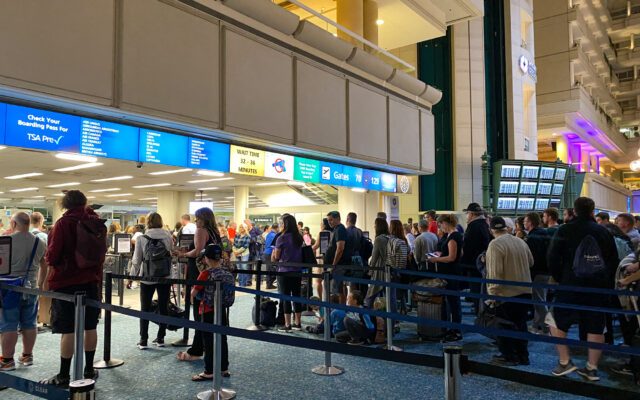
Expect a more structured “departure sequence” (check-in → security → CBP processing → gate).
-
Once you land in the U.S., you’ll exit like a domestic passenger—no CBP hall, no immigration queue.
The exact time savings will vary by airport and time of day, but the biggest improvement is predictability, not just speed.
Bottom Line
The opening of U.S. CBP preclearance at Toronto Billy Bishop (YTZ) on March 10, 2026 is a structural upgrade that changes what the airport can do. It enables YTZ flights to land at U.S. domestic terminals and at airports without CBP facilities, improves connection reliability, and strengthens the downtown Toronto transborder proposition.
For Porter Airlines, it’s a major growth unlock and a competitive differentiator. For Air Canada, it’s new flexibility. For passengers, it’s a simpler promise: clear the border before you fly, and arrive in the U.S. like you never left domestic travel.
Keep reading FlyMag
Get the Daily Brief in the morning or the Route Watch weekly recap on Fridays. Or both.