Air Transat has quietly removed its planned nonstop service between Toronto Pearson International Airport (YYZ) and Accra Kotoka International Airport (ACC) before the first flight ever operated, scrapping what would have been one of the airline’s most ambitious long-haul additions of 2026.

The route had been set to give Canada its first direct passenger service to Ghana and would have marked Air Transat’s first African destination from Toronto. Instead, it has disappeared from the schedule entirely before launch, a sharp reminder that not every strategically attractive route is commercially workable.
For aviation readers, that is the real story. Toronto–Accra looked important on paper. In practice, it appears to have failed the pre-launch economics test.
Read our stories in your inbox
Two aviation newsletters. Zero fluff.
It Was Meant To Be A Major Route For Air Transat
This was not a minor seasonal experiment.
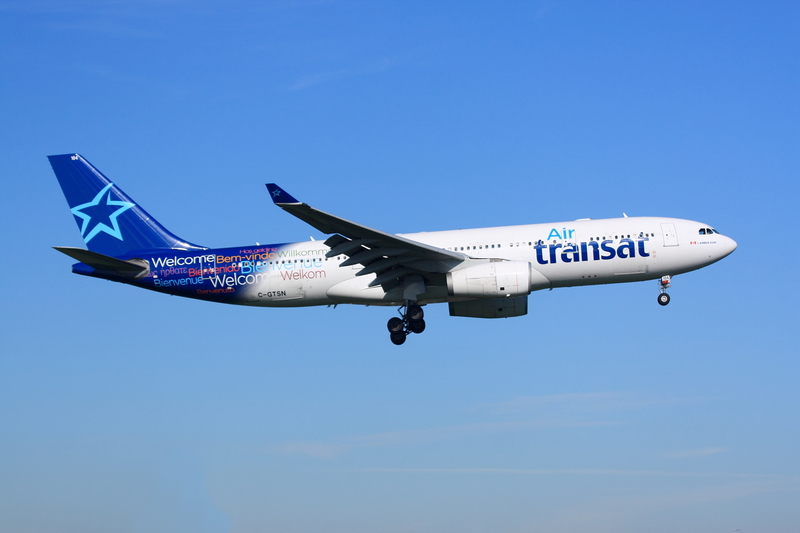
Air Transat had planned to operate Toronto (YYZ)–Accra (ACC) twice weekly using the Airbus A330-200, with the service scheduled to begin in June 2026. The route would have become the airline’s longest scheduled service, overtaking even some of its more established transatlantic and South American flying.
That alone made it notable. For Air Transat, which is fundamentally a leisure-focused airline, launching a long-haul West Africa route from Toronto was a major strategic step. It was also made possible by a bilateral air services agreement between Canada and Ghana signed in 2025, which opened the door for direct market access.
So this was not just a route addition. It was a regulatory and network milestone that has now been reversed before takeoff.
The Route Looked Logical — But Tough
The Toronto (YYZ)–Accra (ACC) market had a real case behind it.
Indirect traffic between Canada and Accra is substantial, and Toronto accounts for by far the largest share of that demand. Ghana’s capital has long been one of the most notable unserved African markets from Canada, especially from Ontario, where diaspora traffic is strongest.
That is why the route made sense strategically.
But there is a difference between a route being strategically understandable and commercially easy. Toronto–Accra was always going to be difficult for a carrier like Air Transat because the route depended heavily on directional demand, limited feed, and cost discipline on a very long sector. Air Transat does not have a huge domestic network to support a route like this, and it does not have the kind of premium-heavy business model that can protect yields on thinner long-haul markets.
That is where the route likely ran into trouble.
Why It Was Vulnerable Before It Even Began
There are several likely reasons the service disappeared before launch.
The first is bookings. Long-haul routes can look compelling in traffic studies, but if actual sales do not materialize at the right pace and fare level, airlines will pull them quickly — especially before the first flight, when the reputational cost is lower than launching and retreating later.
The second is fuel and operating cost pressure. A route this long on an Airbus A330-200 is expensive to run, particularly for a leisure airline that cannot rely on strong premium-cabin yields to offset the economics. In a volatile fuel environment, marginal long-haul routes become much harder to justify.
The third is structural. Air Transat does not have U.S. feed on this route, and its Canadian feed is not especially deep either. That means the route would have lived or died largely on local Toronto–Accra demand and whatever limited connecting traffic the airline could generate on its own network. That is a narrow base on which to build a very long flight.
This Is A Warning For The Rest Of Air Transat’s Africa Strategy
The cancellation also raises a bigger question about Air Transat’s broader African ambitions.
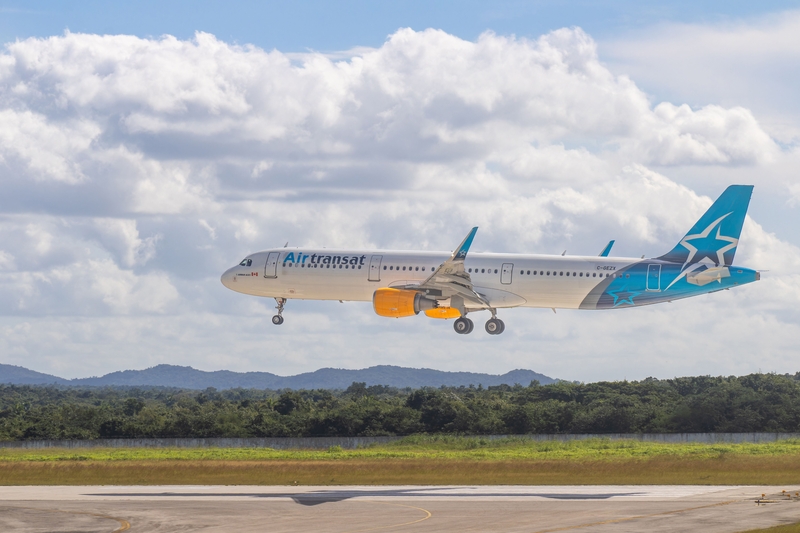
The airline is still scheduled to launch Montréal-Trudeau International Airport (YUL)–Dakar Blaise Diagne International Airport (DSS) in June 2026 using the Airbus A321LR. That route remains on the books, but the removal of Toronto–Accra inevitably puts more focus on whether Montreal–Dakar can meet the same commercial test.
The two routes are different, of course. Dakar is shorter, the A321LR has a lower trip cost than the A330-200, and Montreal has its own strengths as a transatlantic departure point. But the broader concern remains: leisure-focused carriers generally need strong load factors and decent premium performance on long narrowbody or long thin routes, and that is not always easy to achieve on West Africa flying.
That makes Dakar the route many analysts will now watch much more closely.
The Cancellation Also Reveals Something About Air Transat Itself
There is another important takeaway here.
Air Transat is willing to walk away from a route before launch if the numbers do not work. That may sound obvious, but it is actually a sign of discipline. Airlines sometimes push ahead with weak launches because they have already marketed the route, sold tickets, or made too much noise to reverse course easily. Pulling Toronto (YYZ)–Accra (ACC) early suggests management decided the financial downside of operating it outweighed the embarrassment of canceling it before day one.
In a difficult long-haul environment, that kind of discipline is often healthier than stubbornness.
Bottom Line
Air Transat’s decision to scrap its planned Toronto Pearson (YYZ)–Accra (ACC) service before the first flight is a significant setback for the carrier’s African expansion and a reminder of how difficult long, thin routes can be for leisure-focused airlines.
The route had real strategic logic. It would have been Canada’s first direct passenger link to Ghana and Air Transat’s first African service from Toronto. But logic on paper is not enough. Without strong enough bookings, feed, and margin protection, even a promising market can fail before launch.
For aviation readers, the key point is clear: Toronto–Accra was a bold idea, but Air Transat appears to have concluded that bold did not mean viable.