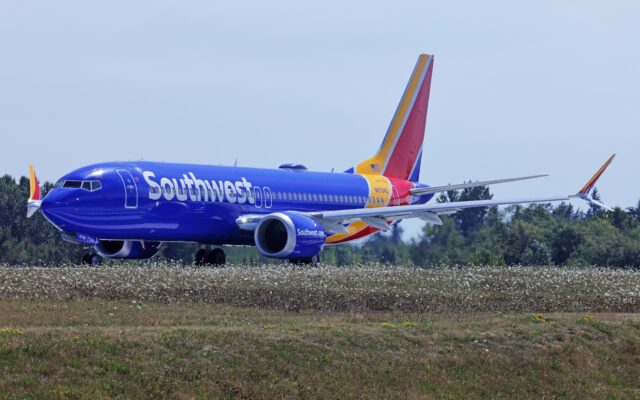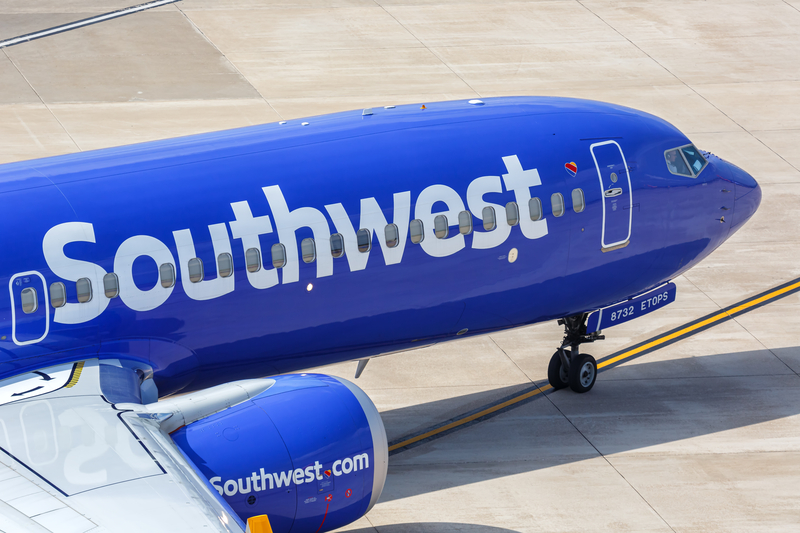
Southwest Airlines is no longer changing around the edges. The carrier has already dismantled two of the features that defined it for decades — open seating and universally free checked bags — and CEO Bob Jordan is making clear that the redesign is not finished. What once would have sounded unthinkable at an airline built around Dallas Love Field (DAL) is now being discussed openly: airport lounges, a more premium front-cabin proposition, and eventually a broader long-haul reach.

The important point is not that Southwest has formally committed to all of those things. It has not. The important point is that management is no longer treating them as incompatible with the brand. For airline professionals, that shift matters more than the headline. It means Southwest is now trying to decide how much premium revenue it can layer onto a historically simple Boeing 737 model without undermining the speed, density, and low-cost discipline that made the airline successful in the first place.
Southwest is already operating a very different product
This is where a lot of coverage misses the nuance. Southwest has not jumped from a classic one-class low-fare model to a legacy-carrier layout overnight. But it has already crossed the philosophical line.
Read our stories in your inbox
Two aviation newsletters. Zero fluff.
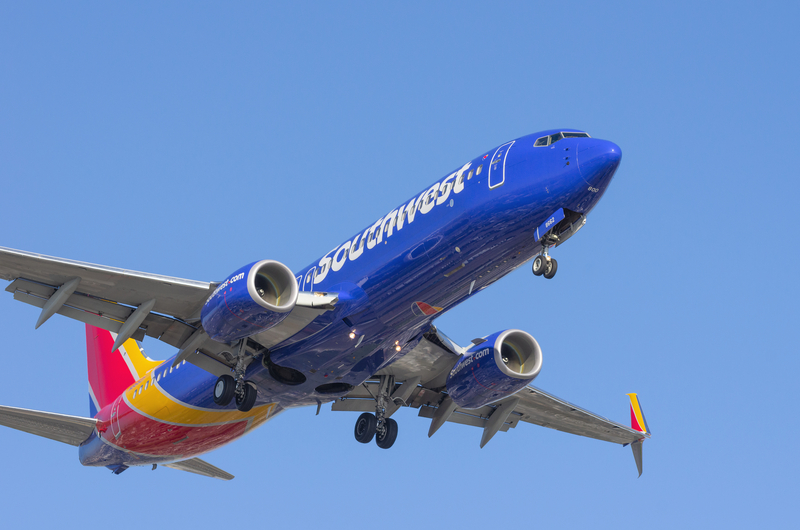
On the aircraft themselves, the airline’s Boeing 737-700s, 737-800s, and 737-8s are no longer being sold as one undifferentiated cabin. Southwest’s own framing is revealing: one cabin, more options. In practical terms, that means a monetized seating hierarchy with Standard, Preferred, and Extra Legroom seats, plus a four-tier fare structure built around Basic, Choice, Choice Preferred, and Choice Extra. The Extra Legroom product is not a cosmetic tweak. On some aircraft, Southwest is offering up to five additional inches of pitch, along with enhanced snacks and complimentary premium beverages. That is not a true First Class cabin, but it is already a meaningful premium upsell.
Operationally, the change is deeper than seat maps. The airline has moved to eight boarding groups, tied boarding more closely to fare and seat type, and reshaped the loyalty proposition so elite members and cardholders gain better seat selection and earlier access. In other words, Southwest is no longer selling a single economy experience with minor perks around the edges. It is segmenting the cabin, the boarding process, and the airport experience in ways that would have been considered distinctly un-Southwest not long ago.
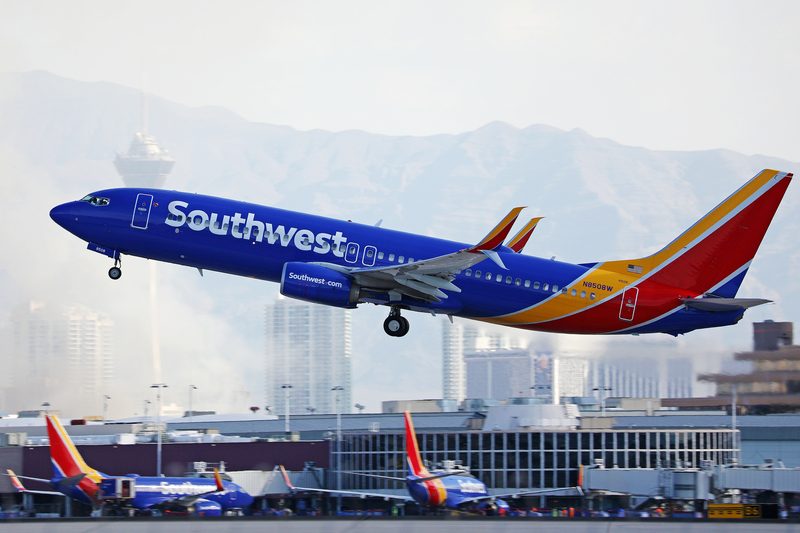
From First to Last Among Major U.S. Airlines: Southwest’s On-Time Rate Falls to 64.9%
Lounges are the cleaner next step
If Jordan does move further upmarket, lounges are the easier next move to understand.
A lounge strategy would let Southwest improve its appeal to higher-yield travelers without immediately redesigning every aircraft around a true premium cabin. It would also strengthen the economics of its co-branded credit-card business, which is exactly why lounges matter so much to legacy carriers. The value of a lounge is not just the square footage at the airport. It is the way that lounge access helps keep frequent customers inside a broader commercial ecosystem.
That is why airport lounges may be more plausible near-term than many people think. For an airline whose identity was forged at Dallas Love Field (DAL), even discussing lounges marks a major philosophical shift. But from a business perspective, they are easier to justify than a full First Class rollout. A lounge can help retain high-value customers, support corporate travel relevance, and deepen loyalty revenue without forcing an immediate rewrite of inflight service standards across the fleet.
Just as importantly, lounges fit Southwest’s new commercial language. Jordan’s argument is not that Southwest needs to imitate Delta, United, or American for the sake of imitation. It is that the airline wants to give travelers fewer reasons to defect. Lounges fit that logic almost perfectly.
A true First Class cabin is the harder leap
The bigger question is whether Southwest really wants to build an actual First Class product or simply continue stretching its current front-cabin economics.
That distinction matters. Today’s Southwest model is still built around a single-cabin narrowbody fleet. Even with Extra Legroom seats at the front, the airline has not crossed into a separate premium cabin with distinct service routines, dedicated hard product, and the kind of yield structure that traditional domestic First Class demands. That is a much bigger leap than adding more pitch and a better drink.
The aircraft matter here. Southwest remains an all-Boeing 737 operator, and the current transformation is being engineered inside that constraint. The airline has already acknowledged the tradeoff by removing seats from some Boeing 737-700s to create extra-legroom inventory. A true First Class cabin would push that logic much further. It would mean fewer seats to sell, greater pressure on unit cost, and a more complicated onboard proposition on an airline whose network still leans heavily on short and medium-haul flying.
That does not make a first-class-style product impossible. In fact, Southwest is already testing the commercial question that sits underneath it: will customers pay a clear premium for more space, better boarding, and a more differentiated experience on a Southwest aircraft? But there is still a wide gap between that experiment and a formal, legacy-style front cabin.
For that reason, the more credible near-term path may be a deeper version of what Southwest has already started: more monetized front-cabin seating, stronger elite benefits, and a more polished premium experience without necessarily installing a curtain and calling it First Class on day one.
The long-haul idea explains why this conversation is happening
Part of the reason lounges and premium cabins are now being discussed so openly is that Southwest is clearly thinking beyond its historical comfort zone.
Jordan has already said the airline is looking at longer-haul international flying and that such a move could eventually require a different fleet approach. That is a major statement from a carrier that has long relied on the simplicity of a single aircraft family. Once an airline starts thinking seriously about broader international reach, the rest of the premium stack starts to matter more. Lounges matter. Better onboard segmentation matters. A stronger front-cabin product matters.
This is where the aircraft story becomes especially important for aviation readers. Southwest ended 2025 with more than 800 aircraft and remains overwhelmingly tied to the Boeing 737 family. That gives the airline enormous operational simplicity, but it also limits how far it can move into true long-haul flying without changing its fleet plan. So while lounges and premium-cabin talk may sound radical, they are still easier moves than a genuine long-haul transformation. In that sense, the premium discussion is partly a sign of ambition and partly a sign of constraint. Southwest can push its 737 product further before it has to make much bigger decisions.
Elliott may be fading, but the strategy is not
Another important nuance is that this is no longer just Elliott Investment Management’s airline.
Yes, Elliott helped force urgency into Southwest’s boardroom. But even as the activist investor has reduced its common-stock stake and seen board representation shrink, the commercial agenda has not reversed. That tells you something significant. These changes are no longer just activist demands being tolerated by management. They are becoming management strategy.
The airline’s recent financial messaging explains why. Southwest posted record quarterly and full-year operating revenue in 2025 and told investors that its business transformation was beginning to gain traction. Management is now selling a simple proposition: Southwest can preserve a cost advantage over the large network carriers while adding more revenue levers than it historically allowed itself to use. That is a very different pitch from the old Southwest story, but it is internally coherent.
And that is why the premium conversation is unlikely to stop here. Once an airline commits to segmentation, it becomes difficult to argue that lounges are too premium, or that a more differentiated front cabin is too off-brand, if both can help protect share and improve returns.
Bottom Line
Southwest is not becoming a legacy carrier overnight, but it is no longer defending the old boundaries that once defined the brand.
Assigned seating, bag fees, extra-legroom inventory, fare bundles, loyalty-based perks, and a more structured boarding model have already changed the product in meaningful ways. The next phase looks less like a question of whether Southwest will change again and more like a question of where the airline decides to stop.
For now, lounges look more plausible than a true First Class cabin. They are easier to integrate, easier to monetize through loyalty, and easier to explain inside a still all-Boeing 737 business. A fully separate First Class product is the bigger structural leap, and one Southwest has not yet formally committed to making.
But the broader direction is unmistakable. For an airline that once built its identity on simplicity from Dallas Love Field (DAL), even entertaining lounges and a first-class-style offering tells you that Southwest now sees premium revenue not as a betrayal of the model, but as the next logical extension of it.
Keep reading FlyMag
Get the Daily Brief in the morning or the Route Watch weekly recap on Fridays. Or both.