Southwest Airlines may be entering the most consequential period of product change in its history.

For decades, the Dallas-based carrier built its identity around simplicity: open seating, a single-class Boeing 737 cabin, no traditional airport lounges, no interline-style global network, and a famously different approach to checked bags. That model made Southwest one of the most important airlines in the United States and one of the world’s most recognizable low-cost carriers.
But Southwest is no longer standing still.
Read our stories in your inbox
Two aviation newsletters. Zero fluff.
Speaking at the Bernstein Strategic Decisions Conference in New York, Southwest President and Chief Executive Officer Bob Jordan gave one of the clearest public signals yet that the airline’s product evolution may eventually go far beyond assigned seating and extra-legroom rows. Over the next three to five years, Jordan suggested Southwest could continue widening its product offering in ways that may include a “true first class” cabin, airport lounges, and even long-haul international flying.
The important caveat is that none of those products has been formally announced. Jordan was careful to describe them as ideas rather than commitments. Still, the direction of travel is unmistakable. Southwest is now openly discussing products that would have been almost unthinkable under the airline’s historical operating model.
Southwest Is Already A Different Airline
The first phase of Southwest’s transformation is no longer theoretical. It is already in the market.
The airline has ended its long-running open-seating model and moved to assigned seating for travel beginning January 27, 2026. It has introduced new fare bundles, including Basic, Choice, Choice Preferred, and Choice Extra. It now offers Extra Legroom seating, has moved further into seat monetization, and has added checked bag fees for many customers while preserving free-bag benefits for higher-value fare products, elite members, and certain co-branded credit cardholders.
That is a dramatic shift for a carrier that spent much of its modern history differentiating itself from American Airlines, Delta Air Lines, and United Airlines by avoiding many of the pricing and product structures used by the network carriers.
Jordan’s argument is that Southwest is not simply adding fees. He framed the changes as a response to customer demand for more choice. In his view, assigned seating, extra legroom, upgraded fare bundles, and better onboard technology are products many travelers wanted Southwest to offer, particularly business travelers and higher-frequency customers who may have loved the airline’s network but wanted more control over the travel experience.
The early financial results appear to have encouraged management. Jordan said Southwest has seen strong take-up of the new products, including better business revenue trends and higher satisfaction scores among key customer groups. That matters because Southwest is trying to prove that it can unlock more revenue from the same Boeing 737 fleet without losing the operational simplicity that has long underpinned its cost advantage.
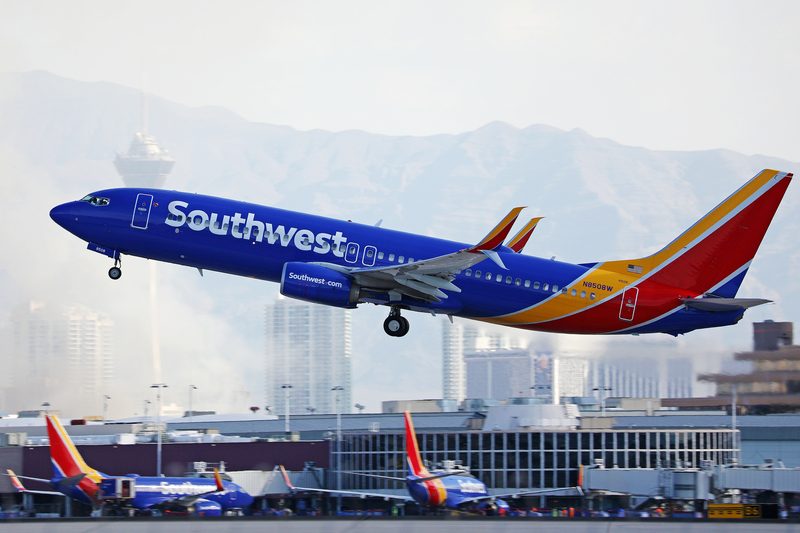
Why First Class Would Be Such A Big Break From Southwest History
A true first class cabin would represent a much larger leap than assigned seating.
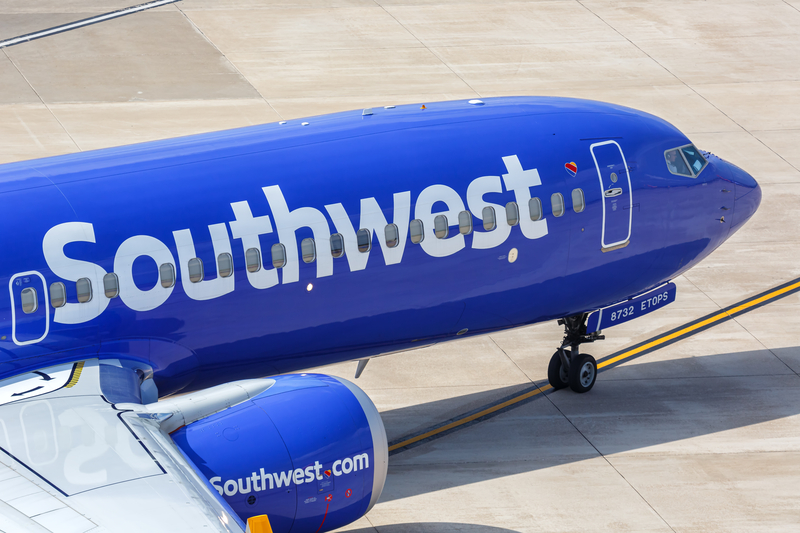
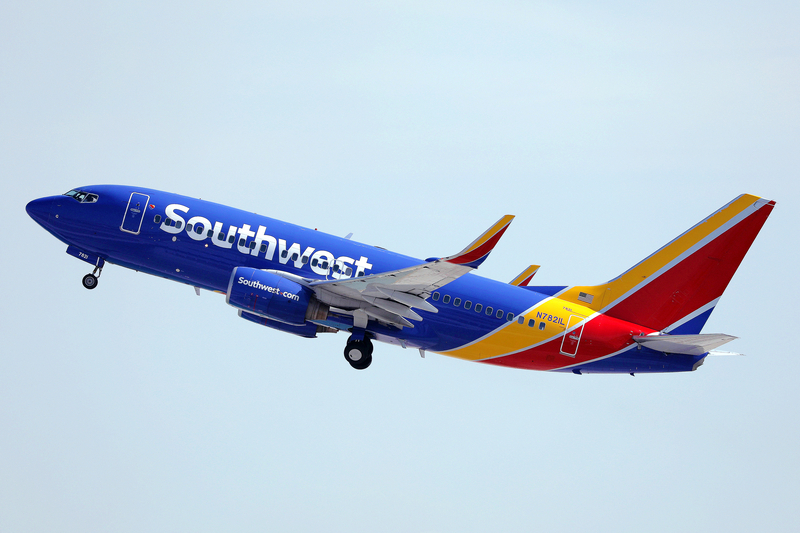
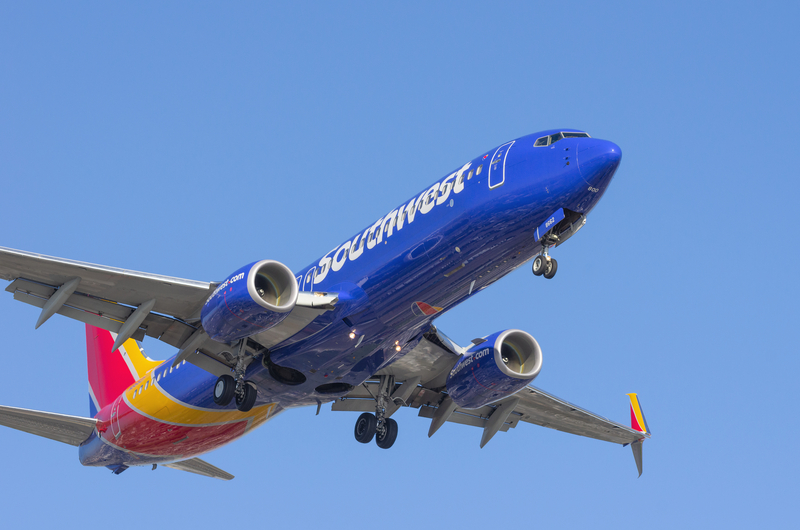
Today, Southwest remains an all-Boeing 737 operator with a single-aisle, narrowbody fleet built around dense, fast-turning domestic and short-haul international flying. As of the end of 2025, the airline had more than 800 Boeing 737 aircraft, including Boeing 737-700s, Boeing 737-800s, and Boeing 737-8s, commonly referred to as the 737 MAX 8.
That fleet commonality has always been one of Southwest’s great strengths. A single aircraft family simplifies pilot training, maintenance, scheduling, spare parts, gate planning, and operational recovery. It is a major reason Southwest has historically generated high aircraft utilization and maintained a structural cost advantage against full-service network airlines.
A true first class product would complicate that model.
Unlike Extra Legroom seating, which can be created within a standard economy-style cabin by adjusting seat pitch and cabin layout, first class would require a more substantial reconfiguration. The airline would need to decide how many premium seats to install, what seat type to use, how to handle galley and service requirements, whether to add ovens or upgraded catering capability, and how to balance premium revenue against the loss of total seat count.
On a Boeing 737-800 or 737-8, that tradeoff is especially important. Southwest’s larger 737 variants currently seat around 175 passengers in the new configuration, while the 737-700 seats fewer customers and has already had seats removed to accommodate extra-legroom sections. A first class cabin would likely reduce seat count further unless Southwest pursued a very limited premium section.
That does not make first class impossible. It does mean the airline would need to be highly disciplined. A domestic-style first class product could make sense on longer routes, business-heavy markets, Hawaii flights, transcontinental services, and potentially future long-haul narrowbody routes. It would be a different proposition from a lie-flat premium cabin, but it could still give Southwest something it lacks today: a true front-cabin product for travelers who currently defect to American, Delta, United, Alaska, or JetBlue when they want a premium seat.
Starlink Comes Before Lounges And First Class
While first class attracts the headline, Southwest’s most immediate premium upgrade is connectivity.
Jordan identified fast, reliable Wi-Fi as one of the top products customers now want from Southwest. The airline has already announced plans to bring Starlink’s low-Earth-orbit satellite internet to its fleet, with the first equipped aircraft expected to enter service in summer 2026 and more than 300 aircraft expected to have Starlink by the end of the year.
That is a meaningful operational and customer-experience change.
Southwest’s network includes a heavy mix of domestic business routes, Hawaii flying, transcontinental sectors, and longer leisure routes where reliable internet matters. On a Boeing 737 flying from Baltimore/Washington International Thurgood Marshall Airport (BWI) to the West Coast, from Denver International Airport (DEN) to Hawaii, or from Las Vegas (LAS) to the East Coast, connectivity is no longer a minor amenity. For many travelers, especially business customers, it is part of the core product.
Starlink also fits Southwest’s broader strategy because it improves the experience without immediately requiring a change in aircraft type. The airline can modernize the cabin, improve digital utility, and strengthen Rapid Rewards engagement while still flying the same Boeing 737 family aircraft.
In that sense, Starlink is the bridge between old Southwest and new Southwest. It supports the airline’s traditional simplicity while making the onboard product feel more competitive with premium-heavy rivals.
Airport Lounges Are Moving From Theory To Planning
Airport lounges are another major piece of Southwest’s emerging premium strategy.
Southwest has never operated a traditional lounge network. That absence was not accidental. For decades, the airline’s business model was built around fast turns, high aircraft utilization, and a point-to-point network that did not require the same hub-and-spoke premium infrastructure as American, Delta, or United.
But the market has changed. Airport lounges have become central to airline loyalty economics, especially for carriers with large co-branded credit card portfolios. A lounge is no longer just a place to sit before a flight. It is part of the premium travel bundle, part of the loyalty proposition, and often part of the reason customers choose one airline ecosystem over another.
Jordan acknowledged that Southwest is working on lounge space, though the carrier is not ready to formally announce a full lounge network. Reported locations under discussion or development include airports where Southwest already has meaningful scale, including Honolulu (HNL), Denver (DEN), Nashville (BNA), Dallas Love Field (DAL), and Austin (AUS).
Those locations would make sense. Denver (DEN), Nashville (BNA), Dallas Love Field (DAL), and Austin (AUS) are major Southwest stations with strong domestic flows, while Honolulu (HNL) is strategically important because Hawaii flying already pushes Southwest into longer-haul leisure territory. If Southwest wants to support more premium products and a stronger credit card proposition, lounges at large focus cities are a logical next step.
The challenge will be brand positioning. A Southwest lounge cannot simply copy an American Admirals Club, Delta Sky Club, or United Club. The airline will need to decide whether its lounges are premium business spaces, leisure-friendly hospitality spaces, credit card-driven access products, or some combination of all three.
Baltimore Could Be The Long-Haul Test Bed
Perhaps the most intriguing part of Jordan’s comments was the discussion of long-haul international flying.
Southwest does not currently operate long-haul service. Its international network is concentrated in Mexico, the Caribbean, Central America, and nearby leisure markets that fit the Boeing 737 operating model. The airline has historically avoided the complexity of widebody aircraft, transatlantic flying, long-haul crews, premium cabins, and international hub banking.
That could eventually change.
Jordan said Southwest does not need to become Delta, United, or American with a vast global network. Instead, he suggested that a smaller set of long-haul destinations could satisfy much of what Southwest customers want. The idea would not be to build a 100-destination global network. It would be to add enough aspirational long-haul flying to keep customers inside the Southwest ecosystem.
Baltimore/Washington International Thurgood Marshall Airport (BWI) was described as a natural launching point if Southwest ever moves into long-haul international flying.
That makes sense. BWI is Southwest’s strongest East Coast platform and one of the most concentrated large-airport positions in the U.S. domestic market. The airline controls roughly three-quarters of domestic passenger traffic at BWI, giving it a deep base of local and connecting feed.
BWI also has geography on its side. It sits in the Mid-Atlantic, close enough to Europe for narrowbody long-haul possibilities and large enough to support meaningful connecting flows. British Airways already serves London Heathrow (LHR) from BWI with long-haul widebody service, while Icelandair links BWI with Reykjavik/Keflavik (KEF), offering onward connectivity into Europe.
For Southwest, the question is not whether BWI could support international ambitions. The question is what aircraft would make the economics work.
The Aircraft Question Is The Hardest Part
Southwest’s all-Boeing 737 fleet is both a strength and a constraint.
The Boeing 737-8 gives the airline improved range and fuel efficiency compared with older 737 Next Generation aircraft. Boeing lists the 737-8 with a range of around 3,500 nautical miles, while the smaller 737-7, for which Southwest is the launch customer, is expected to have even more range. On paper, those aircraft can reach parts of Europe from the U.S. East Coast.
But airline professionals know “on paper” is not the same as “commercially robust.”
A transatlantic narrowbody route from Baltimore (BWI) to Western Europe would need to account for headwinds, winter westbound performance, payload restrictions, reserve fuel requirements, diversion airports, ETOPS considerations, cargo limitations, and the need to carry a product that customers are willing to buy for a longer international sector.
Cities such as Dublin (DUB), Shannon (SNN), Reykjavik/Keflavik (KEF), Lisbon (LIS), and perhaps parts of the United Kingdom could be more realistic narrowbody candidates than deeper continental Europe. Markets such as London (LHR), Paris Charles de Gaulle (CDG), Madrid (MAD), or Rome Fiumicino (FCO) would carry more brand appeal, but airport access, slot availability, aircraft performance, and competitive pressure would all be major hurdles.
If Southwest ever chose to go beyond what the 737 MAX family can reliably support, it would face an even bigger strategic question: whether to introduce a second aircraft family or even widebody aircraft. That would be a major departure from one of the most important pillars of the Southwest operating model.
For now, long-haul remains an idea. But the fact that Jordan is publicly discussing it shows how much Southwest’s strategic conversation has changed.
Why Loyalty May Be Driving The Strategy
The deeper logic behind first class, lounges, and long-haul flying may be loyalty economics.
Modern airline loyalty programs are no longer just mileage programs. They are major financial engines tied to co-branded credit cards, customer data, premium benefits, partner networks, and aspirational redemptions. Delta SkyMiles, United MileagePlus, and American AAdvantage all benefit from global route maps, premium cabins, lounges, and credit card ecosystems that give customers reasons to keep spending even when they are not flying.
Southwest has an enormous Rapid Rewards base, but historically it has offered fewer premium aspirational products. That limits the emotional pull of the program for some high-spending customers.
Long-haul destinations, airport lounges, and a true first class cabin would change that. Even a modest long-haul network could make Southwest’s credit card and loyalty proposition feel more complete. A traveler might not fly Baltimore (BWI) to Europe every year, but the ability to redeem points for that kind of trip can make a loyalty program feel more valuable.
That is why this transformation is not just about seats. It is about keeping customers inside the Southwest ecosystem for more of their travel needs.
Southwest Still Has To Protect What Makes It Different
The risk is that Southwest becomes too much like everyone else without matching the full product depth of network carriers.
Customers who loved Southwest for simplicity, open seating, and included checked bags have already seen major changes. If the airline continues adding premium products, fees, and segmentation, it must be careful not to lose the brand clarity that made it successful in the first place.
At the same time, the old model had limits. Southwest’s post-pandemic margin pressure, changing customer preferences, and activist investor pressure all forced the airline to reconsider long-held assumptions. Business travelers wanted assigned seats. Longer-haul travelers wanted better onboard technology. Loyalty customers wanted more benefits. Higher-spending leisure travelers wanted more comfort.
The airline’s challenge now is execution. Southwest must add complexity only where it produces durable revenue, stronger loyalty, or better customer retention. It must avoid becoming operationally heavy in ways that weaken aircraft utilization, turn times, and cost discipline.
That balance will determine whether the new Southwest becomes a stronger version of itself or simply a less differentiated competitor.
Bottom Line
Southwest Airlines is no longer just tweaking the edges of its product. The airline is openly considering changes that could redefine what it means to fly Southwest over the next five years.
A true first class cabin, airport lounges, Starlink-equipped Boeing 737 aircraft, broader partnerships, and possible long-haul international service would have sounded highly unlikely not long ago. Today, they are part of the public strategic discussion.
None of this means Southwest has announced first class or long-haul flights. It has not. But Jordan’s remarks make clear that the airline sees more premium choice, better loyalty engagement, and broader network relevance as central to its future.
For passengers, that could mean a Southwest with more comfort, more technology, and eventually more destinations. For airline professionals, the bigger question is whether Southwest can add those products while preserving the operational discipline and Boeing 737 simplicity that made the carrier such a powerful force in the first place.