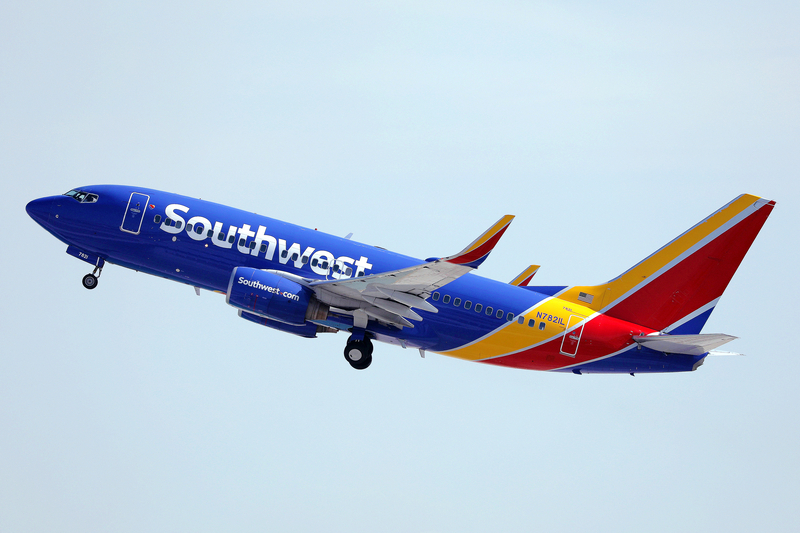
A routine Friday-evening Southwest Airlines (WN) flight from Nashville (BNA) to Fort Lauderdale (FLL) turned into a full-scale law-enforcement response after an onboard incident prompted the crew to treat a passenger’s behavior as a potential security matter—triggering a diversion to Atlanta (ATL) and an armed response at the gate.
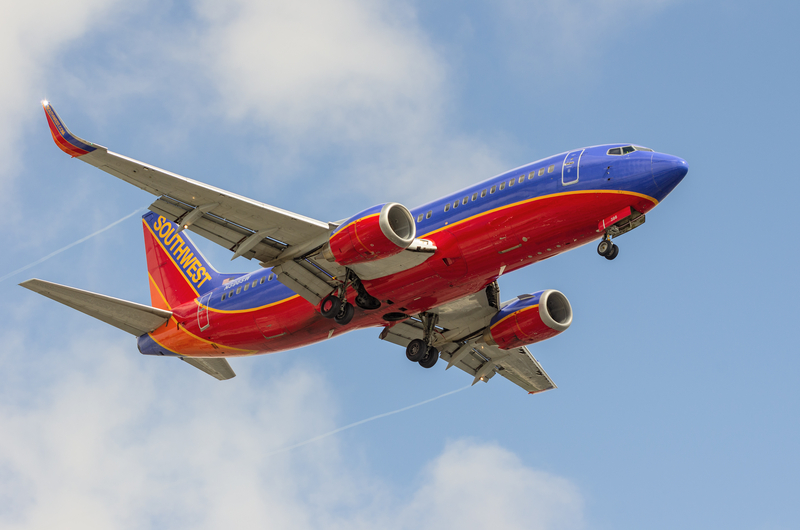
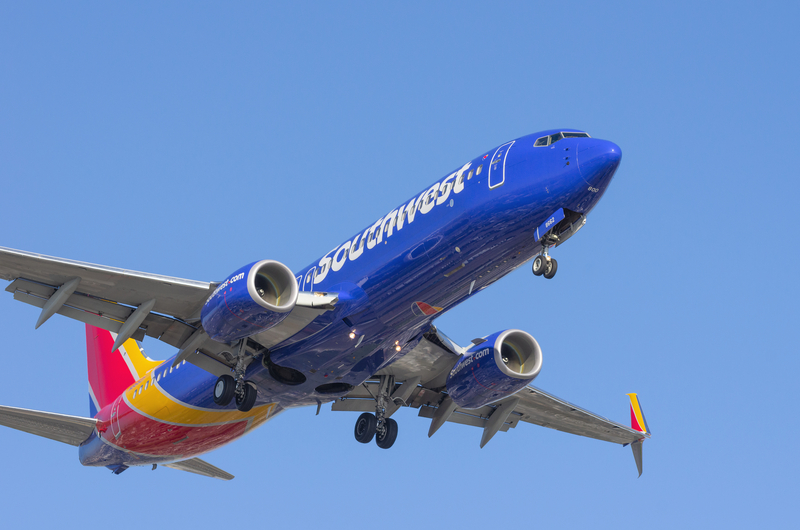
The flight, WN2094, was operated by a Boeing 737 MAX 8 (B38M, tail N8837Q) and was scheduled as a nonstop hop of roughly 690 nautical miles (about 1,280 km) between two leisure-heavy markets that fill quickly on weekend nights. Instead of heading southeast toward Florida, the aircraft was vectored to ATL and landed just after 9:00 p.m. local.
Authorities later said they found no credible threat after interviewing the passenger.
Read our stories in your inbox
Two aviation newsletters. Zero fluff.
How the diversion unfolded on the BNA–FLL sector
WN2094 was scheduled to depart BNA at 7:00 p.m. Central and arrive FLL around 10:15 p.m. Eastern. The flight pushed back a little late, then climbed normally and leveled in cruise at approximately FL340 (34,000 feet)—standard for a short domestic sector on the 737 MAX.
About 20–30 minutes into the flight, the crew notified the cockpit of a developing onboard issue. Flight tracking showed the aircraft deviating east and coordinating a return toward the nearest high-capability airport in the region—Hartsfield-Jackson Atlanta (ATL). The diversion choice was operationally logical: ATL offers immediate law-enforcement presence, multiple long runways, wide availability of gates, and the ability to isolate an aircraft quickly without disrupting the rest of the airport’s operation.
WN2094 touched down at ATL roughly 45–50 minutes after departure, ending the airborne portion of the incident quickly—an important factor whenever a crew is dealing with an onboard security concern. The sooner you’re on the ground, the sooner law enforcement can take over.
Why airlines divert even when a threat later proves non-credible
From the outside, these diversions can look dramatic—especially when “bomb threat” rumors start spreading among passengers. From an airline and crew perspective, the decision path is more clinical.
When any potential security threat is reported, the crew’s priorities are:
-
Get the aircraft on the ground at the nearest suitable airport
-
Minimize time airborne while the situation is unresolved
-
Position the aircraft where trained law enforcement and airport emergency services can respond immediately
-
Keep passengers contained and safe until authorities assume control
Even if an incident later turns out to be a misunderstanding, hoax, or non-credible claim, crews are trained to treat it seriously in real time. The cost of overreacting is delay; the cost of underreacting is unacceptable.
“Heads down, hands up”: what happened after landing at ATL
Once the aircraft parked at ATL, it was met by Atlanta police and tactical officers. Video posted by passengers showed a classic law-enforcement boarding procedure: travelers instructed to keep their hands visible, remain seated, and avoid sudden movements while officers identified and removed the individual in question.
That procedure is designed to protect everyone onboard—including uninvolved passengers—while allowing officers to control the cabin environment quickly. In a narrowbody like a 737 MAX 8, cabin spacing is tight and sightlines are limited; decisive, standardized commands are how law enforcement reduces uncertainty.
After the passenger was removed, authorities conducted follow-on checks, and passengers were eventually required to deplane.
What the FBI said afterward
Following the investigation and interviews, federal authorities stated that no credible threat was found. Multiple reports also indicated that no charges would be filed in connection with the incident as it was understood at the time.
That outcome is important because it underscores a reality of modern airline operations: not every “security scare” is a true security event. But the industry’s response framework is built to make the same decision quickly regardless—divert, isolate, investigate, then resume operations only when cleared.
Getting passengers to Fort Lauderdale: aircraft swap and late-night recovery
The diversion ended the aircraft’s planned BNA–FLL sector. Southwest ultimately reaccommodated passengers onto a replacement aircraft and completed the trip in the early hours of Saturday.
-
Initial aircraft (diverted): Boeing 737 MAX 8 (B38M), N8837Q
-
Recovery leg ATL–FLL: Boeing 737-800 (B738), N8572X
The recovery flight departed Atlanta around 2:00 a.m. and arrived Fort Lauderdale (FLL) around 3:20 a.m., turning what should have been a roughly two-hour hop into an all-night travel day for many passengers.
For operations teams, this kind of recovery is always messy. After a security-related diversion, the original aircraft may be held for additional screening, paperwork, or law-enforcement release. Swapping to a different aircraft and crew is often the fastest way to move passengers onward—especially at a megahub like ATL where spare lift and crew options are more readily available.
The aircraft angle: why the MAX 8 detail matters
The incident aircraft was a 737 MAX 8, Southwest’s core growth narrowbody and typically configured in single-class, high-density seating. That matters in a security event for two reasons:
-
Cabin management is harder at high load factors. When the plane is full, flight attendants have fewer options to separate individuals, and passenger anxiety can rise faster.
-
Turning the aircraft back into service takes time. Even if no credible threat is found, the airline still has to ensure the aircraft is cleared, documented, and safe to return to the schedule—particularly if law enforcement performed a full cabin or baggage inspection.
Bottom Line
Southwest flight WN2094 from Nashville (BNA) to Fort Lauderdale (FLL) diverted to Atlanta (ATL) on March 6 after an onboard incident was treated as a potential security matter. The Boeing 737 MAX 8 (N8837Q) landed safely, the aircraft was met by tactical officers, and a passenger was removed for investigation. Authorities later stated there was no credible threat. Passengers were rebooked and eventually continued to Fort Lauderdale on a 737-800 (N8572X) in the early morning hours.
For flyers, it was an unnerving night. For airline professionals, it was a textbook example of how security playbooks work in practice: divert early, isolate the aircraft at a high-capability airport, hand off to law enforcement, and only then rebuild the schedule.
Keep reading FlyMag
Get the Daily Brief in the morning or the Route Watch weekly recap on Fridays. Or both.