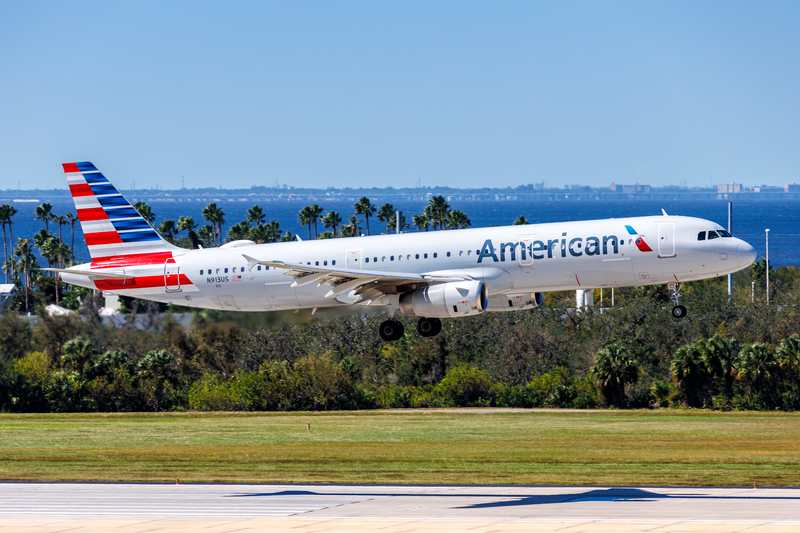
American Airlines (AA) is getting ready to use the Airbus A321XLR exactly the way Airbus designed it to be used: keeping Europe flying through the winter shoulder months with long-haul range, narrowbody trip costs, and a premium-heavy cabin that can still command yield when demand softens.

For the Northern Hemisphere winter 2026/27 season, American is planning four A321XLR deployments that collectively touch Amsterdam (AMS), Barcelona (BCN), Edinburgh (EDI), and Lisbon (LIS)—with the aircraft doing two different jobs at two different hubs:
-
At New York JFK (JFK), the XLR becomes a year-round enabler for Barcelona (BCN).
Read our stories in your inbox
Two aviation newsletters. Zero fluff.
-
At Philadelphia (PHL), the XLR becomes a winter “bridge aircraft,” rotating across Edinburgh (EDI), Lisbon (LIS), and Amsterdam (AMS) in sequence to match demand curves.
This is not a random list of destinations. It’s a deliberately engineered winter strategy that blends schedule utility, hub connectivity, and aircraft economics.

The routes: where AA plans to fly the A321XLR this winter
1) New York (JFK) – Barcelona (BCN): seasonal becomes year-round
American is planning to extend its JFK–BCN flying to year-round daily service, with the A321XLR covering the winter operation that previously didn’t justify widebody economics.
For network planning, this is the purest “XLR thesis” in the entire announcement: maintain a flagship leisure-and-premium city pair through winter with a smaller gauge aircraft rather than pulling down the route entirely.
Why JFK–BCN works for the XLR:
-
JFK provides strong O&D plus premium demand and broad feed from AA’s Northeast network.
-
BCN stays resilient through winter as a city-break destination, but often can’t sustain widebody capacity at the same frequency.
-
The XLR lets AA keep the flight daily rather than reverting to reduced frequency or seasonal suspension.

2) Philadelphia (PHL) – Edinburgh (EDI): extending the season into early January
American is using the A321XLR to extend the seasonal window of its PHL–EDI service, pushing it deeper into the winter schedule.
Planned XLR window:
-
October 25, 2026 through January 5, 2027
Edinburgh (EDI) is a market that benefits massively from frequency and nonstop convenience, but demand can be shoulder-season sensitive. A smaller-gauge wide-range aircraft allows AA to keep PHL–EDI flying later without needing to over-seat the market.
3) Philadelphia (PHL) – Lisbon (LIS): winter right-sizing instead of widebody lift
Lisbon (LIS) has become a year-round battleground for U.S.–Europe capacity, but winter demand still tends to thin compared with summer peaks. American plans to use the A321XLR to carry the route through a defined winter segment with right-sized capacity.
Planned XLR window:
-
January 5 through February 25, 2027
This is a classic “keep the route, shift the gauge” move—particularly valuable at PHL, where AA’s transatlantic network relies on consistently feeding Europe from a hub that isn’t as O&D-heavy as JFK.
4) Philadelphia (PHL) – Amsterdam (AMS): the late-winter “slow season” test
The final piece is a short winter window where American intends to deploy the A321XLR on PHL–AMS, a route that can be tough to justify with widebody economics in late winter.
Planned XLR window:
-
February 25 through March 27, 2027
Amsterdam (AMS) is a premium corporate destination with strong onward connectivity, but winter transatlantic demand can be volatile. The A321XLR is an efficient way to maintain presence and connectivity without carrying widebody seat count through the weakest part of the season.
The operational logic: how AA can do this with a small early XLR fleet
A key nuance: this winter plan is structured so American doesn’t need four A321XLRs dedicated to Europe at the same time.
-
One A321XLR can be based at JFK to cover JFK–BCN daily.
-
One A321XLR can rotate out of PHL, because PHL–EDI, PHL–LIS, and PHL–AMS are scheduled in staggered blocks rather than overlapping full-season commitments.
That’s an airline professional’s design: maximize network impact while minimizing fleet requirement in the early delivery years.
Why the A321XLR changes winter transatlantic flying
The A321XLR is essentially the “economics of a narrowbody” with the reach of long-haul flying:
-
Range: around 4,700 nautical miles (about 5,400 miles)—enough for most U.S. East Coast to Western/Central Europe missions.
-
Economics: significantly lower trip cost than a widebody, which matters more than ever in winter when you’re fighting load factor and yield simultaneously.
-
Frequency leverage: instead of flying a larger aircraft fewer days per week (or suspending the route), airlines can keep more consistent schedules, which improves sales utility and corporate acceptance.
This is exactly why the winter targets are PHL and JFK: hubs where schedule utility and connection quality matter, but where winter demand can be uneven.
What passengers can expect onboard: AA’s premium-heavy “small widebody” cabin
American’s A321XLR is configured for long flights, not for domestic shuttles. Total capacity is 155 seats across four cabin zones:
-
20 Flagship Suite Business (1–1 layout)
-
12 Premium Economy (2–2 layout)
-
12 Main Cabin Extra
-
111 Main Cabin
(Main Cabin + Main Cabin Extra = 123 economy seats total in a 3–3 layout)
A few details that matter to the frequent-flyer and corporate crowd:
-
Flagship Suite doors are installed but initially may not be operable pending certification—so the “suite” experience improves over time.
-
Business-class suites include lie-flat seating, a large personal IFE screen, and a private single-seat layout that avoids the “paired seat” compromises seen on some narrowbody long-haul products.
-
Main cabin seats feature seatback entertainment—unusual on U.S. narrowbodies—plus modern power options for long sectors.
For AA, this cabin is the whole point. The airline isn’t trying to win by stuffing seats into a long narrowbody. It’s trying to win by offering a premium long-haul product on routes where widebodies are too much airplane in winter.
Network implications: why these cities (and why now)
American’s winter A321XLR choices are strategic in three ways:
-
They protect competitive relevance in winter.
BCN, LIS, AMS, and EDI are markets where passengers will still travel in winter—but frequency and nonstop availability often shrink. The XLR helps AA keep a presence without burning widebody economics. -
They strengthen PHL as a transatlantic hub.
PHL works when it offers breadth and connectivity. If Europe flying collapses in winter, the hub loses its value proposition. The XLR provides a way to keep that network “alive” with fewer seats but similar reach. -
They align with what the market is rewarding: premium, not just volume.
The XLR’s cabin is designed to monetize premium demand—business travelers, premium leisure, and upgrades—while still keeping unit economics acceptable.
Bottom Line
American’s winter 2026/27 A321XLR plan is not just four new routes—it’s a retooling of how the airline defends Europe flying in the off-season. JFK–Barcelona (BCN) becomes a year-round daily play, while Philadelphia (PHL) gets a rotating XLR schedule that stretches Edinburgh (EDI) into early January, keeps Lisbon (LIS) viable through mid-winter, and protects Amsterdam (AMS) in late winter.
For passengers, that means more nonstop options in months when Europe typically shrinks. For airline professionals, it’s a clear signal: the A321XLR is no longer “a niche airplane.” It’s becoming the tool that rewrites winter transatlantic economics—one hub bank at a time.
Keep reading FlyMag
Get the Daily Brief in the morning or the Route Watch weekly recap on Fridays. Or both.