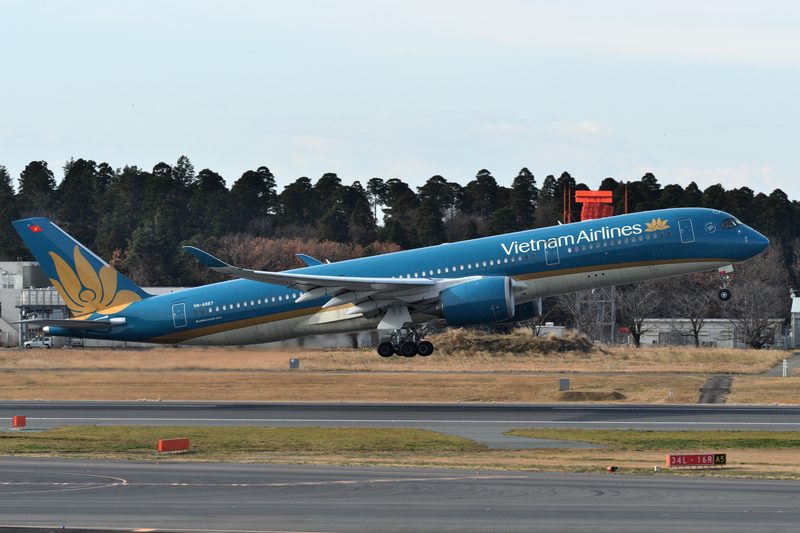
Vietnam Airlines is set to open a new long-haul chapter in summer 2026: the flag carrier plans to launch the first-ever nonstop link between Hanoi’s Noi Bai International Airport (HAN) and Amsterdam Airport Schiphol (AMS). Beyond the headline “new route” factor, this is a strategically tidy move—pairing Vietnam’s political capital with one of Europe’s most connected transfer hubs, and giving SkyTeam a cleaner bridge between Southeast Asia and Northern Europe.

If the service enters the market as filed, Vietnam Airlines will also become the only airline operating Vietnam–Netherlands nonstop, pulling premium demand away from one-stop routings via hubs in China, the Gulf, or elsewhere in Southeast Asia.
Route launch and cadence: a tight, high-yield schedule
Vietnam Airlines plans to begin operations on June 16, 2026, with three flights per week between HAN and AMS. A thrice-weekly start is typical for a carrier probing demand and slot economics on long-haul—especially into a capacity-constrained airport like AMS—while still offering enough frequency to attract higher-yield travelers who value schedule integrity and reduced elapsed time.
Read our stories in your inbox
Two aviation newsletters. Zero fluff.
For corporate contracts and alliance traffic, three weekly rotations also create predictable connection banks at both ends:
-
At AMS, passengers can feed into a broad European network, with particular value for SkyTeam connectivity and interline flows.
-
At HAN, Vietnam Airlines can distribute traffic into its domestic network and selected regional points without requiring a backtrack via Ho Chi Minh City (SGN).
Why Amsterdam works: SkyTeam logic and hub connectivity at AMS
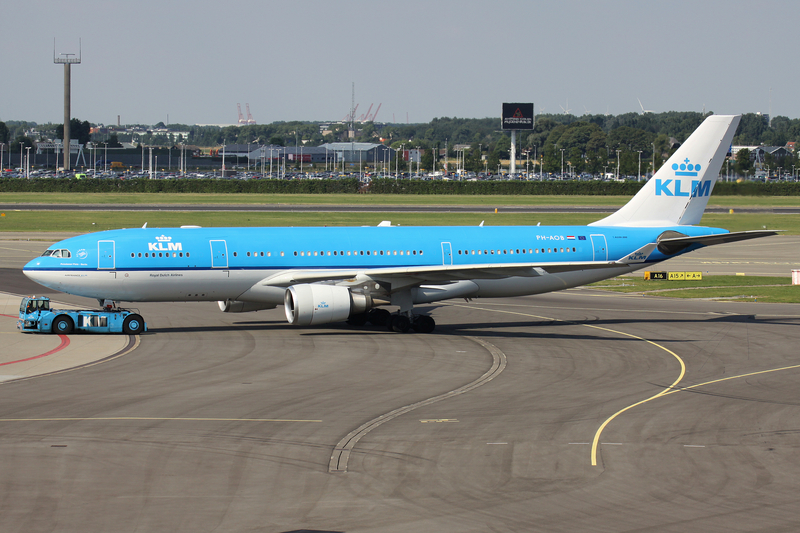
Amsterdam Schiphol (AMS) is a natural choice for an airline trying to maximize downstream connectivity without building its own European hub. Schiphol’s role as a transfer gateway—plus the presence of KLM at AMS—makes the route more than just point-to-point tourism.
For Vietnam Airlines, this is the kind of market where alliance “stickiness” matters: corporate travelers often buy networks, not flights. Even when fares are similar, a nonstop paired with alliance-friendly onward options can win share from one-stop competitors, especially when total journey time and misconnect risk are factored in.
The aircraft: Airbus A350-900, built for missions like HAN–AMS
Vietnam Airlines intends to operate the route with the Airbus A350-900, one of the industry’s workhorse long-haul widebodies. For airline professionals, the A350’s suitability here is straightforward:

-
Range and economics: The A350-900 is optimized for long stage lengths with strong fuel efficiency—exactly the kind of mission profile you want on a new long-haul route where yields matter and demand is still maturing.
-
Cabin environment: Lower cabin altitude, quieter interiors, and higher humidity are all familiar A350 selling points that translate well on an 11–13 hour sector.
-
Cargo upside: Even when passenger volumes fluctuate seasonally, widebody belly capacity can help stabilize route economics—particularly relevant between Europe and Vietnam where high-value and time-sensitive cargo flows are meaningful.
Vietnam Airlines’ A350 cabin: two layouts, consistent premium proposition
Vietnam Airlines operates 305-seat A350-900s in two seating variants, both anchored by the same Business Class footprint:

-
Business Class: 29 seats
-
Premium Economy + Economy: either 45 + 231 or 36 + 240 (total remains 305)
From a product standpoint, Vietnam Airlines’ A350 Business Class is designed around long-haul practicality: fully lie-flat seating with a modern entertainment setup, plus the ground-service advantages premium travelers expect (priority services, lounge access where available, and enhanced baggage allowances). Premium Economy—an important revenue tool on long-haul leisure-heavy routes—gives the carrier room to upsell comfort without over-discounting Business.
For route planning geeks, the interesting piece is not just “A350 assigned,” but why it matters commercially: putting the flagship long-haul type on a brand-new European city helps Vietnam Airlines position the service as a true network move, not an experimental seasonal add-on.
How this reshapes Vietnam–Europe flying from HAN and SGN
Vietnam’s nonstop connectivity to Europe has historically been selective—strong in a few trunk markets, thinner elsewhere—leaving many passengers reliant on one-stop options. Vietnam Airlines already operates nonstop European services from Hanoi (HAN) to major gateways such as Frankfurt (FRA), London Heathrow (LHR), and Paris Charles de Gaulle (CDG), with additional European presence tied to network strategy and demand cycles. From Ho Chi Minh City (SGN), nonstop Europe options have tended to be more competitive and more sensitive to seasonality and bilateral dynamics.
Adding AMS gives Vietnam Airlines a distinctive Northern Europe anchor that can siphon traffic not only bound for the Netherlands, but also for secondary cities in Germany, Scandinavia, and the UK where a Schiphol transfer can be cleaner than detouring via other hubs.
Competitive pressure: nonstop as a weapon against one-stop super-connectors
The nonstop advantage is simple: fewer segments, less operational risk, and usually a meaningfully shorter door-to-door travel time. The competitive set, however, is sophisticated. Europe–Vietnam traffic has long been contested by high-frequency hub carriers offering dense one-stop networks—often with aggressive pricing and multiple daily connection opportunities.
That’s why the nonstop premium is especially relevant for:
-
Corporate travelers who value time and reliability
-
High-spend leisure travelers who prioritize comfort and simplicity
-
Connecting passengers who can now route via AMS rather than adding time through alternate hubs
On the flip side, frequency matters. Three weekly flights can win on convenience for many itineraries, but daily service is where network gravity really shifts. If demand develops—and if AMS slot realities allow it—frequency growth is the obvious lever Vietnam Airlines can pull.
Bottom Line
Vietnam Airlines’ planned Hanoi (HAN)–Amsterdam (AMS) nonstop—launching June 16, 2026 with three weekly A350-900 flights—is more than a new city pair. It’s a network statement: a SkyTeam-aligned bridge into one of Europe’s most connected airports, operated with Vietnam Airlines’ flagship long-haul aircraft and positioned to pull premium traffic away from one-stop routings. If the economics hold and Schiphol access permits, the route also leaves Vietnam Airlines with a clear next step: build frequency, deepen connectivity, and turn a historic first into a durable Northern Europe cornerstone.
Keep reading FlyMag
Get the Daily Brief in the morning or the Route Watch weekly recap on Fridays. Or both.