Vietnam Airlines (VN) has finalized an order for 50 Boeing 737-8 MAX aircraft—its first-ever Boeing single-aisle purchase—in a deal that signals a long-term pivot in how the flag carrier plans to cover high-frequency flying across Vietnam and the broader region.

The order, confirmed in Washington, D.C., adds a new narrowbody family alongside Vietnam Airlines’ existing Boeing widebody fleet and is aimed squarely at expanding capacity and improving unit economics as Vietnam’s air travel market continues to scale.
Why the 737-8 MAX fits Vietnam Airlines’ next decade
The 737-8 is Boeing’s core “do-it-all” narrowbody for short- and medium-haul flying—exactly the part of the network where Vietnam Airlines needs scalable frequency and predictable costs.
Read our stories in your inbox
Two aviation newsletters. Zero fluff.
Key performance points that matter operationally:
-
Typical capacity: up to ~200 passengers depending on configuration
-
Range: up to about 3,500 nautical miles (6,480 km)
-
Mission fit: Vietnam’s domestic trunk routes plus regional flying into Northeast Asia and Southeast Asia from hubs like Hanoi (HAN) and Ho Chi Minh City (SGN)
In a network with heavy peak-season swings (summer leisure, Tet surges, and shoulder-season variability), a modern narrowbody fleet gives Vietnam Airlines more ways to match supply to demand without leaning on widebodies or oversized aircraft.
A new fleet layer: how this changes Vietnam Airlines’ short-haul strategy
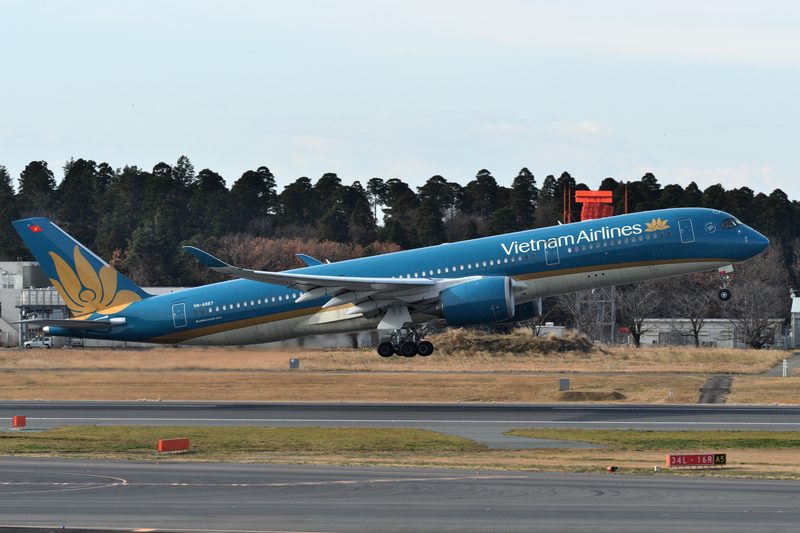
Vietnam Airlines has historically relied on Airbus narrowbodies for much of its short-haul flying while using Boeing 787 Dreamliners for longer-haul international missions. Adding the 737-8 MAX creates a second narrowbody stream, which can be valuable—but only if it’s managed carefully.
From a fleet-planning standpoint, the upside is straightforward:
-
More capacity where it matters most: high-frequency domestic and regional routes
-
Better dispatch economics: modern systems, improved fuel efficiency vs. older narrowbodies
-
Network flexibility: the 737-8’s range opens route options that are too long for older short-haul aircraft to operate efficiently
The tradeoff is also real: a new narrowbody type introduces training, spares, and maintenance complexity. That’s why airlines typically place orders of this size only when they intend to build real scale—50 aircraft is not a “trial,” it’s a structural fleet pillar.
The timeline: this is a 2030–2032 fleet move, not an immediate summer capacity add
One important nuance: while the order is newly finalized, it’s not designed to solve near-term capacity gaps. Deliveries are scheduled later in the decade (reported as 2030–2032), meaning this is about Vietnam Airlines’ next fleet cycle—replacing older aircraft, expanding peak capacity, and setting up growth into the 2030s as Vietnam’s passenger market rises.
Where the aircraft will do the most work: HAN and SGN as the network engines
On the route map, the 737-8 MAX is built for the lanes Vietnam Airlines cares about most:
-
Domestic trunks out of HAN and SGN, where frequency wins corporate traffic and loyalty
-
High-volume regional routes where schedule utility matters as much as seat count
-
Medium-haul international flying where the 737-8’s range can support new city pairs without the cost of a widebody
If Vietnam Airlines deploys the MAX intelligently—using it to protect frequency while controlling cost per seat—the aircraft can become the airline’s primary “growth lever” for routes that don’t justify widebody lift.
How it complements Vietnam Airlines’ existing Boeing long-haul fleet
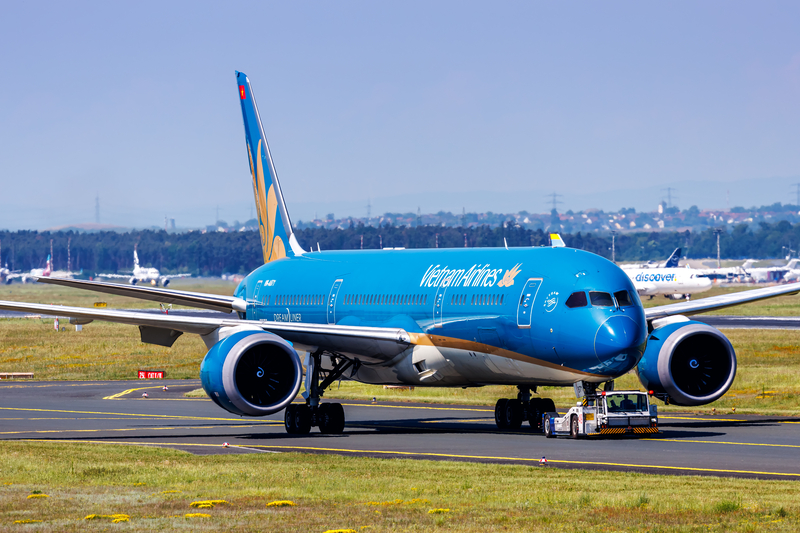
Vietnam Airlines currently operates 17 Boeing 787 Dreamliners, which it uses to connect Vietnam to longer-haul markets, including Europe. The 737-8 order builds a more complete Boeing “bookend” strategy:
-
787 for long-haul, high-value international flying
-
737-8 MAX for the high-utilization short- and medium-haul backbone
That kind of pairing is increasingly common across global network carriers because it creates a coherent fleet structure: efficient narrowbodies feed hubs; widebodies monetize the long-haul banks.
Bottom Line
Vietnam Airlines’ 50-aircraft 737-8 MAX order is a major strategic bet on domestic and regional growth—bringing Boeing into the carrier’s narrowbody fleet for the first time and setting up a long-term reset in short- and medium-haul capacity planning from hubs like Hanoi (HAN) and Ho Chi Minh City (SGN). With deliveries expected later in the decade, this isn’t about a quick capacity patch—it’s about locking in a modern narrowbody platform to support Vietnam’s next wave of air travel growth and to keep unit costs competitive as the market scales.