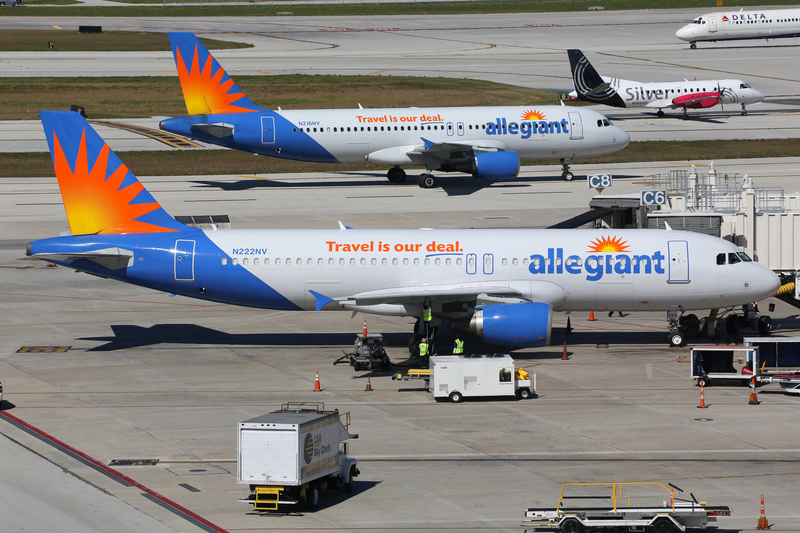
Allegiant Air is closing its crew base at Bellingham International Airport (BLI) and its aircraft base at Savannah/Hilton Head International Airport (SAV), with both changes taking effect on November 2, 2026.

That is an important distinction from a route exit. Allegiant is not walking away from either airport. Instead, it is reducing the amount of local infrastructure tied to each station while keeping flights in the market. For passengers, that means service is expected to continue. For the airline, it means a leaner operating model in two cities where maintaining a staffed base no longer appears to make as much economic sense.
In airline terms, this is not a network retreat. It is a cost and utilization decision.
Read our stories in your inbox
Two aviation newsletters. Zero fluff.
Bellingham Loses Its Crew Base, Not Its Flights
At BLI, Allegiant has told local officials that it will continue operating all current routes and maintaining the existing flight schedule after the base closes. The difference is that the airport will shift to a turn-based model, meaning crews and aircraft will operate in from other stations rather than overnighting in Bellingham.
That matters because a crew base is not just a place where aircraft sit. It is where pilots and flight attendants are permanently assigned and where their duty periods are built around local starts and finishes. Closing a base changes the labor and scheduling structure behind the operation, even if the route map itself remains intact.

For BLI, the announcement is especially notable because Allegiant has long been one of the airport’s defining carriers. The market has traditionally benefited from cross-border demand from nearby British Columbia, with Canadian travelers often using BLI as a lower-cost alternative to Vancouver International Airport (YVR). But base economics and route economics are not always the same thing. A station can still work commercially for flights while no longer justifying the cost of basing crews locally.
Savannah Is Losing an Aircraft Base After Seven Years
The move at SAV is similar in direction, but a little different in emphasis. Allegiant has confirmed that its aircraft base there will close on November 2, while the station itself will remain in the network.
That is a meaningful development because Savannah had once represented a visible growth point for the airline. Allegiant opened the base in 2019 with plans for local jobs, based aircraft, and a larger long-term footprint. Seven years later, the airline is effectively reversing that local build-up, though not abandoning the airport.
The explanation Allegiant has given is straightforward: changes in seasonal demand patterns and operating conditions. That language is revealing. It suggests the issue is less about Savannah as a destination and more about whether keeping local aircraft and crews there year-round still fits Allegiant’s current cost structure and schedule strategy.

This Is What Network Optimization Looks Like for an Ultra-Low-Cost Carrier
Allegiant’s business model has always been different from the large U.S. hub carriers. It does not rely on connecting banks or dense business-travel corridors. Instead, it focuses on low-frequency leisure flying, typically linking smaller or mid-sized cities to vacation markets with carefully timed nonstop service.
That model gives the airline flexibility, but it also means bases have to work hard for their keep. A smaller base can become expensive if flying patterns turn more seasonal, if utilization weakens, or if crew scheduling becomes easier to manage from larger stations elsewhere.
That is why these closures fit the broader Allegiant playbook. When conditions change, the airline is often willing to keep the route but remove the local infrastructure behind it. It protects the commercial market while stripping out some of the fixed cost.
The Fleet Context Matters Too
Historically, bases like BLI and SAV have supported Allegiant’s Airbus narrowbody operation, particularly the Airbus A319 and Airbus A320. Those aircraft have long formed the backbone of the carrier’s leisure network.
But Allegiant is no longer only an Airbus operator. The airline is in the middle of a fleet transition toward the Boeing 737 MAX 8-200, a 190-seat aircraft that is becoming central to its longer-term growth strategy. That shift matters because fleet transition and base rationalization often go hand in hand. When an airline is trying to improve utilization and simplify scheduling, it tends to rethink not just which aircraft it flies, but where those aircraft and their crews are best stationed.
In that context, the BLI and SAV closures look less like isolated local decisions and more like part of a wider operating reset.
The Local Impact Will Be Real Even if Flights Stay
That said, these are not consequence-free changes. Airports benefit from having based crews and aircraft. A base means local jobs, local spending, and a stronger day-to-day airline presence than a simple outstation provides.
At BLI, local reporting indicates more than 100 Allegiant employees are tied to the base. At SAV, the loss of based aircraft reduces some of the local operational footprint that had been part of Allegiant’s original growth pitch to the region. Even if passengers continue to see flights on the board, the economic and employment effect is not the same.
That is why airport officials have been careful to reassure travelers while also acknowledging the disappointment. The message is essentially this: the flights remain, but the footprint shrinks.
Bottom Line
Allegiant’s decision to close its Bellingham International Airport (BLI) crew base and Savannah/Hilton Head International Airport (SAV) aircraft base on November 2 is a classic ultra-low-cost carrier adjustment.
The airline is not pulling out of either market. It is keeping service while removing local basing costs and relying more on a turn-based operating model from elsewhere in the network. For passengers, the immediate impact should be limited. For employees and the airports themselves, the effect is more significant.
For aviation readers, the real takeaway is that this is how Allegiant tends to evolve: not by making grand network statements, but by quietly tightening the operating model underneath the route map.
Keep reading FlyMag
Get the Daily Brief in the morning or the Route Watch weekly recap on Fridays. Or both.