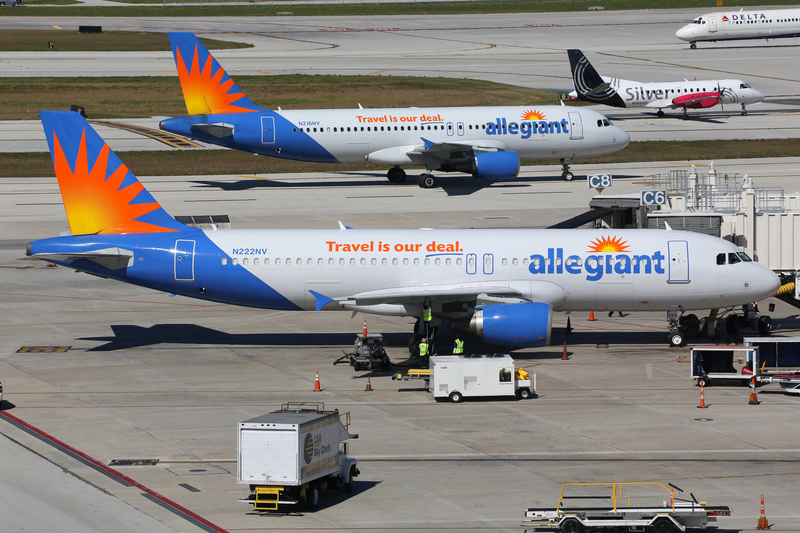
Allegiant is rolling out one of the most concentrated bursts of network growth in the U.S. market this year, launching 19 routes between May 20 and May 22.

That kind of three-day push is unusual by itself. What makes it more interesting is the shape of the expansion: this is classic Allegiant growth, built around underserved airports, leisure-heavy demand, and a heavy emphasis on markets that either have never existed before or have seen very limited prior service.
For aviation readers, the key point is not just the route count. It is that Allegiant is still doing what it has long done best — finding very specific pockets of demand other airlines have ignored or abandoned.
Read our stories in your inbox
Two aviation newsletters. Zero fluff.
The Big Pattern: Underserved Cities, Leisure Focus, Minimal Frequency
Across the 19 routes, the formula is familiar.
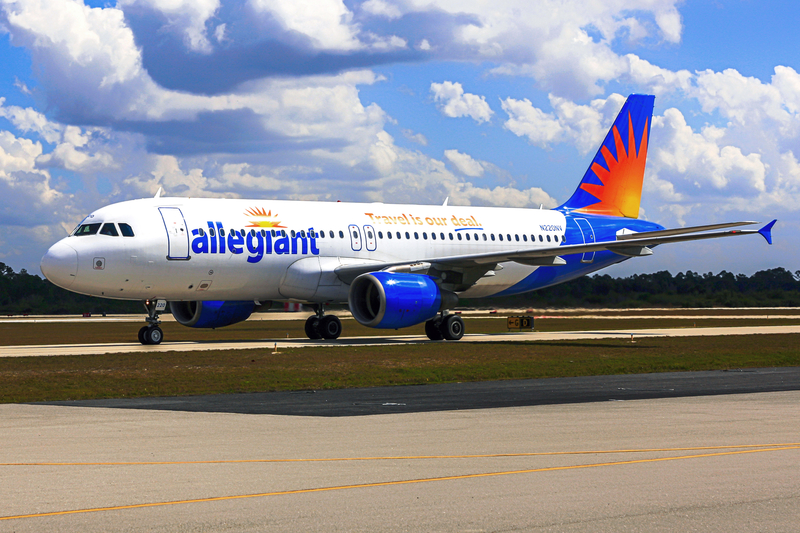
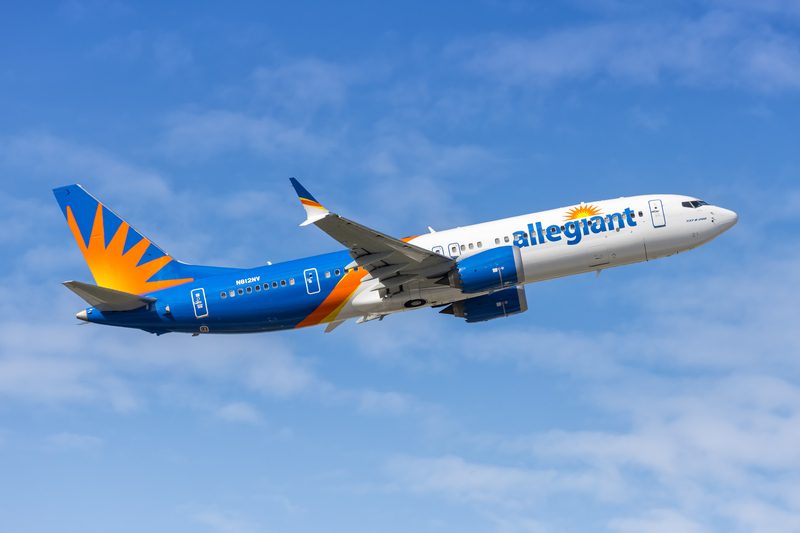
Most of the launches are twice weekly, with a few three-weekly operations mixed in. Aircraft are mainly Airbus A319s, A320s, and Boeing 737 MAX 8s, depending on the route. And nearly all of the destinations fit Allegiant’s preferred mold: Florida leisure points, Southern California access, or smaller U.S. cities where nonstop service is limited.
Just as important, only one of the 19 routes had previously been served by Allegiant, and that was years ago. The rest are either entirely new to the airline or, in many cases, entirely new to the market.
That is a strong reminder that Allegiant is still less interested in head-to-head frequency warfare than in monopoly-style niche flying.
May 20: Two New Orange County Routes
Allegiant starts with two routes on May 20, both to John Wayne Airport-Orange County (SNA):
- Appleton – Orange County, twice weekly on the A320
- Grand Rapids – Orange County, twice weekly on the A320
These are notable for two reasons. First, Orange County is not an easy airport to expand into, given its slot and operating constraints. Second, these routes effectively give those Midwestern cities a much more direct Southern California option without forcing travelers into Los Angeles International Airport.

Appleton–Orange County is especially interesting because it gives Appleton one of its most ambitious scheduled links yet and creates a new California connection from a market not usually associated with West Coast nonstop service.
May 21: Nine More Routes, Including Several Brand-New Markets
The biggest day is May 21, when Allegiant launches nine routes.
The four brand-new markets:
- Columbus Rickenbacker – Key West, twice weekly
- Orlando Sanford – La Crosse, two to three weekly
- Gulf Shores – Huntsville, twice weekly
- Gulf Shores – Omaha, twice weekly
These are the kinds of routes that define Allegiant’s model. They are not obvious trunk city pairs. They are niche, often low-frequency leisure or visiting-traffic links that larger carriers usually do not bother trying.
The other five routes launching that day:
- Atlantic City – Myrtle Beach, three weekly on the 737 MAX 8
- Cincinnati – Orange County, twice weekly
- Denver – Destin/Fort Walton Beach, twice weekly
- Philadelphia – Des Moines, twice weekly
- Philadelphia – Knoxville, three weekly
Philadelphia stands out here. Allegiant has historically preferred secondary airports over major fortress hubs, so expanding into PHL is significant. It suggests the airline sees enough local demand on carefully chosen leisure and mid-continent routes to justify taking a more direct shot at a major market.
Gulf Shores Keeps Growing
One of the more interesting subplots in this expansion is Gulf Shores.
The airport only opened to commercial service in 2025, and Allegiant remains the only airline there. Yet it is already becoming a meaningful spoke in the carrier’s network. With new flights to Huntsville, Omaha, Louisville, Oklahoma City, and Springfield, Missouri, Allegiant is clearly trying to establish Gulf Shores as more than a novelty beach airport.
That makes sense. Smaller leisure airports can work very well for Allegiant if they give travelers a more direct path to a vacation destination and avoid the congestion and cost structure of larger coastal airports.
May 22: Eight More Routes Finish The Burst
The final wave comes on May 22, with eight more routes.
Six brand-new routes:
- Des Moines – Burbank, twice weekly
- Indianapolis – Burbank, twice weekly
- Elmira – Myrtle Beach, twice weekly
- Gulf Shores – Louisville, twice weekly
- Gulf Shores – Oklahoma City, three weekly
- Gulf Shores – Springfield, Missouri, twice weekly
Two additional routes:
- Dayton – Myrtle Beach, twice weekly
- Philadelphia – Grand Rapids, twice weekly
The Burbank additions matter because they show Allegiant still likes Southern California access when it can do it through a more niche airport rather than through the complexity of LAX. That is a very Allegiant approach to the region: serve Los Angeles-area demand, but do it in a way that fits the carrier’s cost and route model.
Myrtle Beach Is Still One Of The Airline’s Favorite Answers
Another very visible theme here is Myrtle Beach.
New service from Atlantic City, Elmira, and Dayton reinforces how central the airport remains to Allegiant’s network logic. Myrtle Beach continues to be one of the strongest examples of the carrier’s point-to-point leisure strategy — a destination with broad appeal, relatively manageable operating conditions, and enough seasonal depth to support low-frequency nonstop flying from many mid-sized cities.
In other words, Myrtle Beach remains exactly the kind of place Allegiant can scale without needing daily frequency or premium demand.
Philadelphia Is The Surprise Story
If there is one genuinely surprising network theme here, it is Philadelphia.
Allegiant is launching routes from PHL to:
- Des Moines
- Knoxville
- Grand Rapids
That is a notable development because Allegiant has traditionally done its best work away from major legacy fortress airports. PHL is not that. It is a major, competitive airport. Yet Allegiant appears to believe there are specific local markets from Philadelphia that are underserved enough to make low-frequency service work anyway.
This will be worth watching. If these routes perform, they could signal a somewhat broader Allegiant willingness to selectively use larger primary airports when the market gap is narrow enough and the risk is controlled.
Bottom Line
Allegiant’s 19-route burst between May 20 and May 22 is not just a large expansion. It is a concentrated reminder of what kind of airline Allegiant still is.
Most of these routes are brand new, many connect smaller cities to leisure destinations, and several reinforce the airline’s willingness to keep building in places like Gulf Shores, Myrtle Beach, Burbank, and Orange County. The unexpected angle is Philadelphia, where Allegiant is showing a little more willingness to experiment inside a major airport.
This is not broad-based network growth. It is targeted, classic Allegiant expansion — and that is exactly why it is interesting.
Keep reading FlyMag
Get the Daily Brief in the morning or the Route Watch weekly recap on Fridays. Or both.