The U.S. Department of Justice has cleared Allegiant Travel’s proposed acquisition of Sun Country Airlines, removing one of the biggest hurdles in what would become one of the more consequential U.S. leisure-airline mergers in recent years.
That does not mean the deal is finished. It still requires Department of Transportation review, shareholder approval at both companies, and the usual remaining closing conditions. But antitrust clearance matters because it shifts the conversation. This is no longer just a proposed transaction on paper. It is now a merger with a realistic path to closing, currently expected in the second or third quarter of 2026.
For aviation readers, the bigger significance is not simply that DOJ signed off. It is what this combination would create: a much larger leisure-focused airline with a broader network, a more diversified business model, and an unusual fleet and revenue mix by U.S. low-cost standards.
Read our stories in your inbox
Two aviation newsletters. Zero fluff.
The Deal Structure Shows This Is A Real Combination, Not A Simple Takeover
The headline price remains about $1.5 billion, including debt.
Under the announced terms, Sun Country shareholders would receive $4.10 in cash plus 0.1557 shares of Allegiant Travel for each Sun Country share they own, implying a value of $18.89 per share when the deal was announced. After closing, existing Sun Country shareholders are expected to own about 33% of the combined company, while current Allegiant shareholders would hold roughly 67%.

That ownership split matters because it shows this is more than a straight cash purchase of a smaller rival. Sun Country investors are retaining a meaningful stake in the merged carrier, which suggests the companies want the market to view this as a combination with shared upside rather than simply an absorption.
That framing also fits the strategic logic. Allegiant is not buying Sun Country just to add airplanes. It is buying network breadth, charter capability, cargo exposure, and a different kind of leisure-market relevance.
DOJ Clearance Is Important — But DOT Still Matters
The antitrust review was one of the most obvious regulatory checkpoints, and Allegiant and Sun Country have now announced early termination of the Hart-Scott-Rodino waiting period. That is the formal signal that DOJ is no longer standing in the transaction’s way on antitrust grounds.
But this is still an airline merger, which means Department of Transportation approval remains important.
DOT review is not always as politically visible as DOJ antitrust scrutiny, but in airline transactions it can still shape timeline, conditions, and eventual integration. Shareholder approval also remains outstanding for both sides. So while the deal has advanced significantly, it is not yet done. The cleanest way to describe the current status is that one major regulatory barrier has fallen, while other essential approvals remain.
Why Allegiant Wants Sun Country
Strategically, the case for Allegiant is fairly easy to understand.
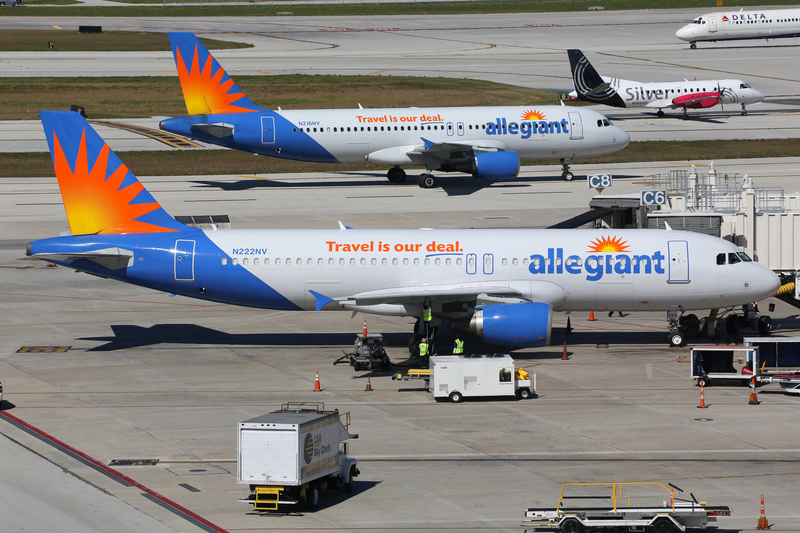
Allegiant has long been a highly distinctive airline: ultra-low-cost in many respects, strongly leisure-oriented, and concentrated on connecting smaller U.S. cities with vacation markets using a limited-frequency model. Sun Country overlaps with that leisure focus, but it also brings things Allegiant does not have to the same extent, especially in charter flying and cargo operations.
That last point is important. Sun Country is not just a passenger airline. Its cargo arm, built around Boeing 737-800BCF freighters, gives the company a revenue stream that looks very different from Allegiant’s mostly passenger-focused structure. That diversification could make the combined company more resilient than a pure leisure carrier exposed only to seasonal passenger demand.
In other words, this is not just a network merger. It is a business-model merger.
The Fleet Fit Is Strange — But Potentially Useful
The fleet picture is one of the most interesting parts of the deal.
Sun Country brings a Boeing 737-based fleet, including 44 Boeing 737-800 passenger aircraft, 21 Boeing 737-800BCF freighters, and three Boeing 737-900ERs, with two more on the way according to current fleet data. Allegiant, by contrast, operates a mixed narrowbody fleet of Airbus A319-100s, Airbus A320-200s, and Boeing 737-8-200 aircraft. That gives the merged airline a more complicated fleet profile than many recent consolidation stories would ideally prefer.
On the surface, that sounds messy. And it is, to a degree.
But the strategic payoff may outweigh the complexity. Allegiant is not acquiring Sun Country to create a perfectly harmonized single-fleet operator overnight. It is acquiring a carrier with proven leisure demand, charter value, and cargo scale. Fleet simplicity can be pursued later. Commercial value comes first.
For an aviation audience, this is one of the key reasons the merger is so interesting: the logic is less about short-term fleet commonality than about complementary revenue structure.
This Would Create A Different Kind Of U.S. Low-Cost Airline
If completed, the combined company would not look exactly like any existing U.S. airline peer.
It would be leisure-heavy, yes, but not in the same way Allegiant already is. Sun Country adds scheduled flying, charter depth, and cargo exposure that broaden the earnings story. Reuters reported when the deal was first announced that the combined airline would operate roughly 195 aircraft and target about $140 million in annual synergies by its third year.
That is what makes the merger more significant than a simple scale play.
The U.S. market has seen plenty of airline consolidation framed around fortress hubs, slot positions, or network overlap. This one is different. It is about building a larger leisure-platform airline that is still not a traditional network carrier, but is more diversified and potentially more durable than either company on its own.
The Timing Makes Sense
The timing also matters.
U.S. carriers are operating in a market where cost pressure remains real, fuel volatility has returned, and purely narrow business models are under more scrutiny. A combined Allegiant–Sun Country could argue that it is better positioned for that environment than either standalone company: more destinations, more revenue streams, more aircraft, and more flexibility in where capacity is deployed.
That does not mean integration will be easy. It probably will not. Fleet diversity, labor groups, network planning philosophy, and brand positioning all create work. But if the deal closes on the expected timeline, Allegiant would be emerging not simply as a larger airline, but as a more layered one.
Bottom Line
DOJ antitrust clearance is a major step forward for the Allegiant–Sun Country merger, but it is not the last one. DOT approval, shareholder votes, and other closing conditions still remain before the $1.5 billion transaction can close, which the companies now expect in the second or third quarter of 2026.
Still, the direction of travel is now much clearer.
If completed, this merger would create a stronger U.S. leisure-focused airline with a broader network, a more diversified business mix, and a combined ownership structure that leaves Sun Country shareholders with roughly one-third of the new company. It would also bring together an unusually mixed fleet and revenue base, including Sun Country’s freighters and Allegiant’s large leisure network.
For aviation readers, that is the key point. DOJ clearance does not finish the deal, but it turns this from a proposed combination into one that now looks genuinely likely to happen.
Keep reading FlyMag
Get the Daily Brief in the morning or the Route Watch weekly recap on Fridays. Or both.