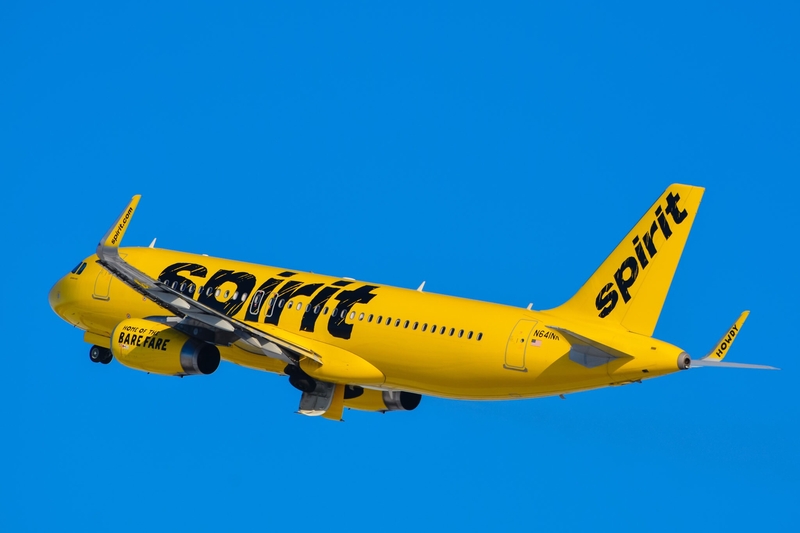
Spirit Airlines (NK) is recalling roughly 500 furloughed pilots after higher-than-expected attrition left the carrier short of qualified cockpit crews—even as it continues restructuring under Chapter 11 and operating a reduced schedule.
The recall notices were sent to pilots furloughed between September 2024 and November 2025, underscoring a hard reality of airline restructuring: you can cut capacity on paper, but if the workforce shrinks faster than planned—especially in a tight pilot market—operational stability becomes harder to guarantee.
Spirit said internally that pilot attrition “has been higher than forecast,” making it more difficult to precisely align staffing with the airline’s smaller flight schedule. That’s a blunt admission from a carrier in “survival mode”: even while flying less, it still needs enough crews to operate reliably, cover irregular operations, and avoid the kind of cascading cancellations that can overwhelm a lean network.
Read our stories in your inbox
Two aviation newsletters. Zero fluff.
Why this is happening now: the pilot market doesn’t pause for Chapter 11
Spirit’s restructuring has involved shrinking the airline: selling aircraft, pruning routes, and pulling down frequencies. In theory, fewer airplanes and fewer flights require fewer pilots.
In practice, pilots don’t wait around when opportunities exist elsewhere.
Over the past two years, major U.S. carriers and fast-growing operators have continued to hire, and Spirit’s furloughs—combined with the uncertainty of bankruptcy—created an incentive for many pilots to secure more stable long-term positions at competitors. Once pilots move, getting them back is difficult because:
-
seniority resets matter,
-
training pipelines are long,
-
and airline careers are built around stability and upgrade potential.
Spirit’s recall is therefore less a “growth” signal than a damage-control measure: bring back trained, type-rated crews rather than attempt to solve the shortage solely through new hiring and training at a time when the airline needs reliability.
What 500 pilot recalls actually do for the operation
For airline ops teams, pilot staffing isn’t just about filling the schedule. It’s about protecting the schedule.
Even a smaller Spirit still needs:
-
reserve coverage to absorb sick calls, weather disruptions, ATC constraints, and maintenance delays
-
crew pairing flexibility to avoid cancellations when an aircraft swap or diversion changes duty time
-
recovery capability during peak banks, particularly in Florida-heavy leisure markets where loads are high and reaccommodation options are limited
Without adequate pilot staffing, the airline risks a fragile operation where one late inbound aircraft triggers multiple cancellations because there aren’t legal crews to continue rotations.
That is especially dangerous for an ultra-low-cost carrier, where spare capacity is thin by design and the network often relies on high aircraft utilization.
The aircraft reality: A320-family flying still demands consistent crew supply
Spirit’s fleet is built around the Airbus A320 family (A320/A321, including neo variants). That commonality helps in training and scheduling, but it doesn’t eliminate the core constraint: every flight requires legal crews, and every disruption consumes reserve depth.
A pilot shortfall becomes visible quickly because narrowbody networks operate high cycle counts. If the airline loses a handful of crews across a day, it can’t “save” the operation by consolidating passengers into a larger aircraft like a widebody carrier might. The only option is cancellations—and those are expensive in both dollars and brand trust.
Why this recall fits Spirit’s post-bankruptcy positioning
Spirit has already indicated it expects to emerge from Chapter 11 as a smaller, more focused carrier, prioritizing routes and periods where demand is strongest rather than trying to maintain a sprawling network.
The pilot recall doesn’t contradict that. It supports it.
A smaller network only works if the flights you do operate are reliable. A reduced schedule with chronic crew-driven cancellations undermines exactly what Spirit needs most in a rebuild: customer confidence and predictable execution.
If Spirit can re-staff to match the new schedule, it can:
-
reduce last-minute cancellations,
-
improve on-time performance,
-
and keep aircraft utilization high without forcing the operation into brittle pairings.
Flight attendants, too: staffing reversals show the risk of cutting “too far”
This pilot recall follows a similar move on the cabin side: Spirit has also been recalling furloughed flight attendants in recent weeks.
Together, the reversals highlight a common restructuring pitfall: if you cut headcount aggressively and then lose additional staff to attrition, you can end up under-resourced even after shrinking the airline.
In other words, the airline can become “too lean to function.”
What happens next: the real question is how many pilots return
A recall notice is not a guarantee of staffing recovery. Many furloughed pilots may have already accepted positions elsewhere, and even those willing to return will need time to:
-
complete requalification steps (as required),
-
re-enter recurrent training cycles,
-
and be slotted back into line flying.
The speed of Spirit’s recovery will depend on how many recalled pilots actually come back and how quickly they can be re-integrated into the roster.
Bottom Line
Spirit’s decision to recall roughly 500 furloughed pilots is one of the clearest signals yet of the airline’s operational reality during restructuring: even a smaller Spirit needs enough crews to run a stable schedule, and higher-than-expected attrition has made that harder than planned.
This isn’t a growth story. It’s an execution story. If Spirit can rebuild cockpit staffing—along with its cabin workforce—it buys the operational flexibility it needs to exit Chapter 11 as a viable airline rather than a perpetually disrupted one.
Keep reading FlyMag
Get the Daily Brief in the morning or the Route Watch weekly recap on Fridays. Or both.