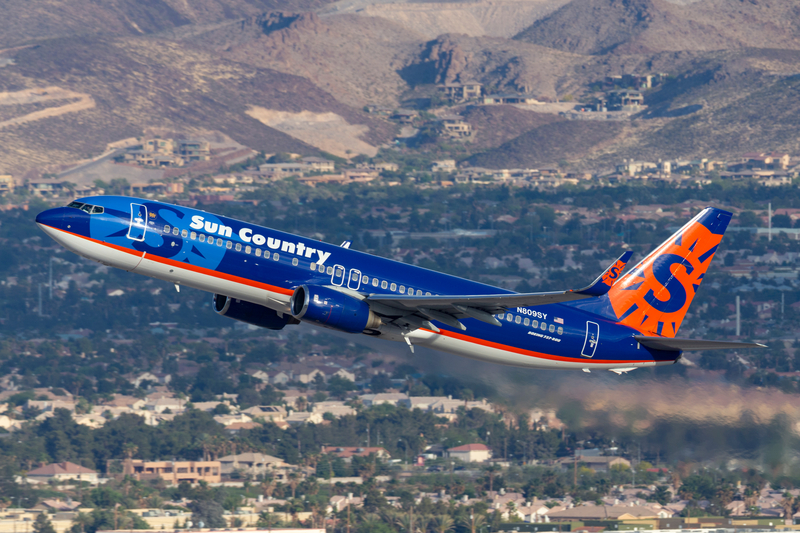
Allegiant has officially completed its acquisition of Sun Country, creating a much larger leisure-focused airline group and closing one of the most consequential U.S. airline deals of the year.
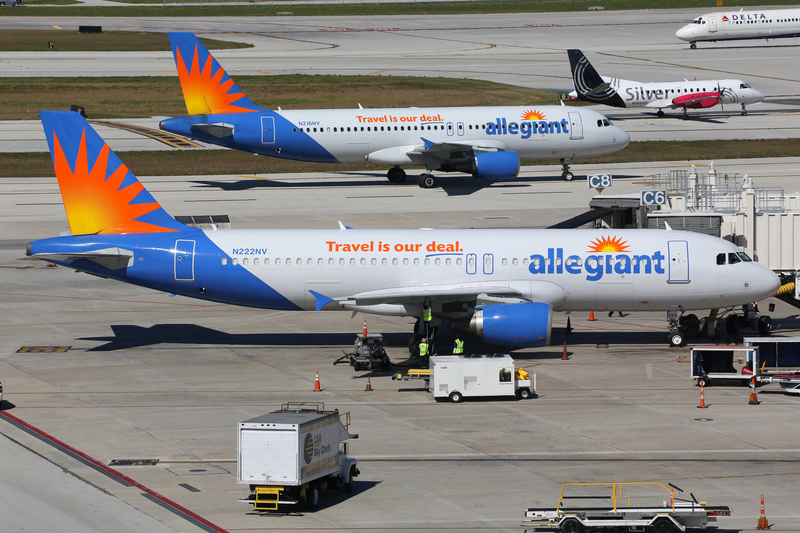
The transaction, valued at roughly $1.5 billion, brings together two carriers that have often lived in the same broad part of the market without truly duplicating each other. Allegiant has long been strongest in low-frequency leisure flying from smaller U.S. cities, while Sun Country brings a more diversified model that includes scheduled service, charter work, and a meaningful cargo relationship. Put together, the combined company will control around 195 aircraft and serve nearly 175 destinations.
For aviation readers, the most important point is this: the legal deal is done, but the operational airline is still very much in transition.
Read our stories in your inbox
Two aviation newsletters. Zero fluff.
The Two Airlines Will Keep Operating Separately For Now
One of the clearest messages from the companies is that travelers should not expect immediate visible change.
Allegiant and Sun Country will continue operating as separate entities in the near term, with no immediate changes to flight schedules, booking channels, reservation systems, or day-to-day travel plans. That is important because mergers in aviation often create anxiety long before anything tangible happens. In this case, the companies are trying to signal continuity first and integration later.
That approach also makes operational sense. Airlines do not instantly become one just because the deal closes. They still need regulatory, technical, and organizational integration before a fully merged airline can function safely and coherently.
The Single Operating Certificate Is The Real Next Milestone
The key regulatory hurdle now is the eventual move to a single FAA operating certificate.
Until that happens, Allegiant and Sun Country may be under one corporate roof, but they remain separate airlines in practical operating terms. That distinction matters because it affects everything from training and dispatch to branding, labor integration, fleet planning, and network optimization.
For aviation professionals, the certificate process is often the point where a merger stops being financial and starts becoming operationally real.
Allegiant Is Chasing Synergies — And They Are Big
Allegiant says the combined company expects to realize around $140 million in annual synergies within three years.
That is a meaningful target. For a leisure-focused airline group, savings and revenue gains at that level can materially affect the long-term economics of the merger. The synergies are likely to come from a combination of procurement, fleet and maintenance efficiencies, back-office consolidation, network coordination, and greater operational resilience.
That last part matters. This merger is not only about cost cutting. It is also about creating an airline that is less vulnerable to disruption because it has a broader fleet base and more ways to redeploy capacity.
Sun Country Brings More Than Just More Airplanes
What makes the deal especially interesting is that Sun Country is not just another low-cost passenger airline.
It also brings charter flying and cargo exposure, including its Amazon-related operation, which gives the combined company more diversification than Allegiant had on its own. That matters because it means the merger is not simply about putting two similar route maps together. It is about blending somewhat different revenue streams under one corporate structure.
For Allegiant, that could make the combined company more durable than a pure passenger-only leisure airline.
Minneapolis Still Matters
One of the key political and commercial sensitivities in the deal is what happens to Minneapolis–Saint Paul International Airport (MSP) and Sun Country’s Minnesota identity.
Allegiant has made clear that Minneapolis-St. Paul will remain an important operating center. That is an important reassurance because Sun Country is deeply tied to the Twin Cities, and any suggestion that the merger would hollow out the airline’s local relevance would have created immediate backlash.
That does not mean nothing will change in Minnesota. It means Allegiant understands the value of keeping MSP central to the new structure, at least in operational and commercial terms.
The Labor Piece Is Quiet For Now — But Not Unimportant
The companies have also emphasized that operations employees will remain in their current roles for now and that collective bargaining agreements will stay in place.
That is useful short-term stability, but it should not be mistaken for the end of labor questions. Airline mergers almost always create overlap at the corporate level and long-term pressure to rationalize functions. Allegiant has acknowledged that there may be some overlap, even if it has avoided explicit language about layoffs.
So while the current tone is reassuring, the deeper workforce implications are still ahead.
This Deal Comes At A Very Strategic Moment
The timing of the merger matters almost as much as the structure.
Spirit’s collapse has just created a major gap in the U.S. low-cost and leisure market. Fuel prices remain under pressure. Carriers are looking for scale, resilience, and stronger revenue mix. In that environment, combining Allegiant and Sun Country looks less like opportunism and more like positioning for a more difficult market.
In other words, the merger is not happening in a vacuum. It is happening at a moment when size and diversification may matter more than they did even a year ago.
Bottom Line
Allegiant’s acquisition of Sun Country is now complete, but the real integration work is only beginning. In the near term, both airlines will continue operating separately, which should mean little immediate disruption for travelers. Over time, though, the deal is meant to create a more resilient, more diversified, and more profitable leisure-focused airline with around 195 aircraft, nearly 175 destinations, and expected annual synergies of about $140 million.
The strategic case is strong. The harder part now is execution.
Keep reading FlyMag
Get the Daily Brief in the morning or the Route Watch weekly recap on Fridays. Or both.