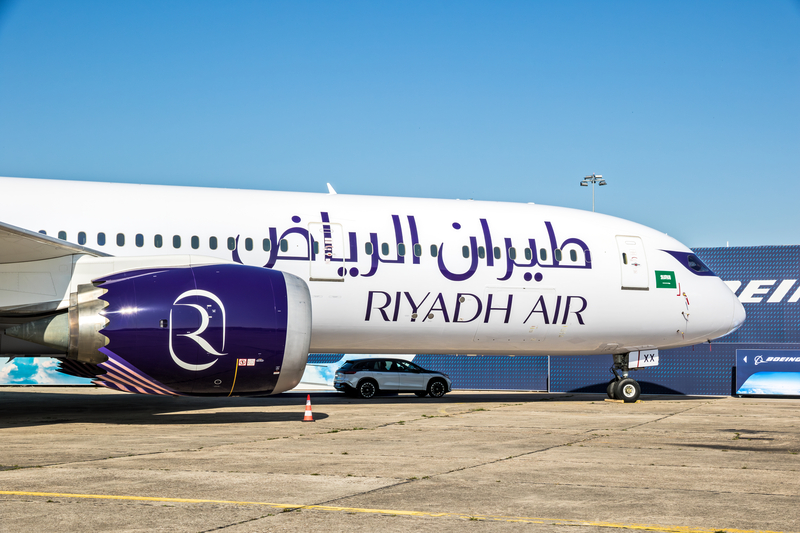
Riyadh Air has formally launched its cargo arm under the Riyadh Cargo brand, putting air freight on the same strategic footing as its passenger network and tying it directly to Saudi Arabia’s broader Vision 2030 push to become a global logistics heavyweight.
The approach is clear and very “new-airline”: start with belly capacity and scale the cargo operation in lockstep with passenger growth, rather than launching with freighters on Day 1. Riyadh Cargo will lean on the lower-deck holds of Riyadh Air’s incoming widebody fleet—more than 120 widebody aircraft on order—with the whole operation anchored at Riyadh/King Khalid International (RUH).
Belly-hold scale: why widebodies matter for freight economics
Belly cargo is often the quiet margin maker on long-haul flying, especially when you’re operating modern widebodies with strong payload-range capability. The two aircraft families most frequently associated with Riyadh Air’s widebody plans—Boeing 787 Dreamliner and Airbus A350 variants—are built for exactly this kind of dual-use mission: passengers up top, standardized lower-deck container positions below.
Read our stories in your inbox
Two aviation newsletters. Zero fluff.
That matters because belly freight does three things an airline likes:
-
Diversifies revenue beyond passenger yields, which can be highly seasonal.
-
Improves route economics on thinner long-haul markets by monetizing the hold.
-
Strengthens hub utility—freight forwarders will use the network if it’s consistent, trackable, and connects cleanly.

If RUH is going to compete as a true connecting hub—passenger and cargo—then an integrated belly product is one of the fastest ways to add “real throughput” without waiting for a dedicated freighter fleet.
Early proof point: momentum on the RUH–LHR lane
Riyadh Cargo has already been running live operations under Riyadh Air’s “Pathway to Perfect” program, and the early showcase lane is Riyadh (RUH) to London Heathrow (LHR).
That’s a smart proving ground. LHR is a premium freight market where the cargo mix is often demanding and time-sensitive. Riyadh Cargo says it has moved a broad commodity set on the RUH–LHR sector, including:
-
garments and textiles
-
fresh flowers
-
seafood
-
tea and coffee
That list is revealing. Perishables like flowers and seafood don’t just test capacity—they test process discipline: acceptance cutoffs, cool-chain integrity, ULD build quality, temperature exposure on the ramp, and exception handling when flights misconnect or loads roll. In other words, if you can run perishables reliably on RUH–LHR, you’re building muscle that transfers well as the network expands.
A digital spine: CargoSpot Neo, centralized AWB control, and tracked ULDs
Riyadh Cargo is also leaning hard into digital infrastructure from the outset, which is where many newer cargo brands are drawing a line between “capacity” and “capability.”
The carrier has embedded dedicated cargo management systems with centralized airwaybill control and enhanced data visibility, supported by CHAMP’s CargoSpot Neo end-to-end cargo platform. For cargo professionals, that’s not a buzzword upgrade—it’s a workflow upgrade. Centralized AWB stock control and round-the-clock access can reduce friction on paper processes, speed up exception handling, and help standardize how the airline runs outstations as it grows.
On the hardware side, Riyadh Cargo is pairing that system backbone with digitally tracked unit load devices (ULDs) through a partnership with Unilode. That’s a meaningful choice because ULD management is one of the hidden cost centers in cargo operations—misplaced equipment, poor visibility, and slow recovery during irregular ops all create real operational drag. Real-time tracking can help with:
-
faster ULD repositioning and reduced shortages
-
better utilization of lightweight container assets
-
improved recovery when schedules disrupt and cargo must be reprotected
In a hub-and-spoke build centered on RUH, ULD visibility becomes a competitive advantage quickly—especially as the airline tries to scale reliability rather than just add destinations.
Ground handling: SATS across RUH, DMM, and JED
Cargo works—or fails—on the ground. Riyadh Cargo says handling and hub management will be delivered with SATS Saudi Arabia Company at key gateways across the Kingdom, including:
-
Riyadh/King Khalid International (RUH)
-
Dammam/King Fahd International (DMM)
-
Jeddah/King Abdulaziz International (JED)
Those locations are described as having modern facilities, specialized handling zones, and centralized oversight intended to keep cargo flows smooth and connections predictable. For freight forwarders, this is where confidence is built: acceptance standards, build/break performance, temperature-management processes, and consistency across stations.
The scale target: 100+ destinations, a fleet north of 180 aircraft, and a GDP/jobs narrative
Riyadh Air has repeatedly framed its long-range ambition around a 100+ destination network by 2030, and the cargo unit is being positioned as a key growth driver alongside that expansion. In the same growth framing, Riyadh Air has linked its overall plan to an expected contribution of around USD 20 billion to Saudi Arabia’s non-oil GDP and support for 200,000+ jobs (direct and indirect), reinforcing the idea that RUH is being built not just as an airport hub, but as a national economic platform.
In that context, Riyadh Cargo is doing exactly what a flagship-backed startup carrier should do: monetize every flight twice—passengers and freight—while building the systems and ground capability to scale without sacrificing process control.
Bottom Line
Riyadh Air’s launch of Riyadh Cargo signals a cargo strategy built for scale: start with belly-hold operations on a future widebody fleet of 120+ aircraft, validate performance on a demanding lane like RUH–LHR, and underpin growth with a digital backbone (CargoSpot Neo, centralized AWB control) and tracked ULD infrastructure via Unilode. With handling anchored by SATS at RUH, DMM, and JED, Riyadh Cargo is being set up as more than spare capacity—it’s designed to be a durable logistics product that grows in parallel with the airline’s passenger network.
Keep reading FlyMag
Get the Daily Brief in the morning or the Route Watch weekly recap on Fridays. Or both.