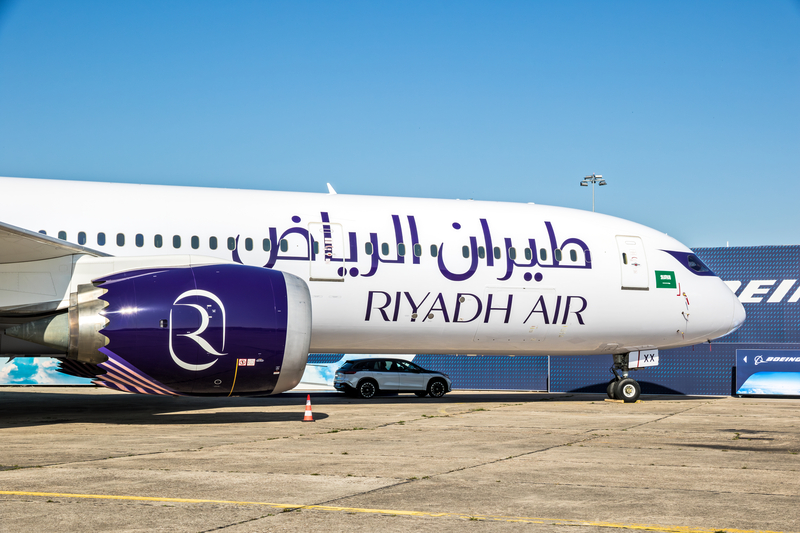
Riyadh Air has not officially put all 15 of these routes on sale, but its summer 2026 slot filing has now provided the clearest view yet of how the Saudi startup wants to build its first meaningful wave of international service from Riyadh King Khalid International Airport (RUH).
That distinction matters.
What has emerged is not a formal, fully published launch schedule with confirmed start dates, frequencies, and aircraft assignments for every market. It is a slot-backed network outline for the northern summer 2026 season, which runs from March 29 through October 24 under the IATA scheduling calendar. In aviation planning terms, that is a serious signal of intent. It is not, however, the same thing as a guaranteed launch.
Read our stories in your inbox
Two aviation newsletters. Zero fluff.
Still, for an airline positioning itself as a central pillar of Saudi Arabia’s Vision 2030 aviation ambitions, this 15-route map says a great deal about where management believes the traffic, connectivity, and long-term strategic value will be.
The preliminary Riyadh Air network from RUH includes:
Cairo International Airport (CAI)
Bangkok Suvarnabhumi Airport (BKK)
Islamabad International Airport (ISB)
Soekarno-Hatta International Airport (CGK) in Jakarta
Kuala Lumpur International Airport (KUL)
Allama Iqbal International Airport (LHE) in Lahore
Ninoy Aquino International Airport (MNL) in Manila
Chhatrapati Shivaji Maharaj International Airport (BOM) in Mumbai
London Heathrow Airport (LHR)
Adolfo Suárez Madrid-Barajas Airport (MAD)
Manchester Airport (MAN)
Paris Charles de Gaulle Airport (CDG)
Queen Alia International Airport (AMM) in Amman
Dubai International Airport (DXB)
King Abdulaziz International Airport (JED) in Jeddah
This Is A Slot Filing, Not A Full Network Launch
The most important point in this story is the one most readers will miss if they only skim the headline.
Riyadh Air has revealed a preliminary network through slot coordination data at RUH, not through a full commercial launch announcement covering all 15 destinations. That means these routes should be treated as planned markets rather than fully locked-in services. Airlines file aggressively at times. They protect options, shape schedules, and test operational windows. Some routes make it into the live timetable quickly, and some move later.
For aviation professionals, that difference is critical.
A slot filing tells us where the airline wants to be and how it is thinking about aircraft utilization, bank structure, and hub development. It does not automatically tell us when each route will begin, whether it will launch daily or less than daily, or which fleet type will be assigned first.
That said, this filing is still highly valuable because it fits what Riyadh Air has been signaling for some time. The carrier has repeatedly framed itself as a global connector built around Riyadh rather than a niche regional player, and this route mix follows that logic closely.
The Route List Is Broad, But Not Random
At first glance, the 15 destinations look spread across too many geographies to say much. In reality, the pattern is very deliberate.
The network combines four distinct traffic pillars.
The first is Gulf and near-region connectivity, represented by Dubai (DXB), Jeddah (JED), and Amman (AMM). These are high-volume, strategically essential markets for any airline trying to establish relevance from RUH. They provide local traffic, short-haul feed, and strong schedule visibility.
The second is North Africa, with Cairo (CAI) standing out as one of the most important markets in the entire filing. Cairo is not just a large route. It is one of the biggest and most established flows from Saudi Arabia, and it gives Riyadh Air immediate access to a market with heavy point-to-point demand and broad connecting potential.
The third is South Asia and Southeast Asia, including Islamabad (ISB), Lahore (LHE), Mumbai (BOM), Manila (MNL), Bangkok (BKK), Kuala Lumpur (KUL), and Jakarta (CGK). This is where the future scale of the airline becomes easiest to see. These are enormous traffic markets, but they are not premium-heavy in the classic network-carrier sense. Many are driven by labor traffic, diaspora traffic, and visiting-friends-and-relatives demand. The yields can be thin, but the volumes are real.
The fourth is Europe, with London Heathrow (LHR), Paris Charles de Gaulle (CDG), Madrid (MAD), and Manchester (MAN). These routes are crucial because they give Riyadh Air the westbound side of the hub equation. A Gulf-style connecting model does not work properly if the eastbound bank is deep and the westbound bank is shallow. Europe is not optional here. It is foundational.
Cairo And Dubai Look Like The Core Early Priorities
Two of these routes have already been explicitly discussed by Riyadh Air: Cairo (CAI) and Dubai (DXB).
That is not surprising. If Riyadh Air wants early relevance, those are exactly the kinds of markets it should prioritize. Both are large, high-frequency, strategically important city pairs from RUH, and both help the airline establish a visible operating presence close to home before the longer-haul network begins to mature.
Cairo in particular stands out. It combines local demand, regional business traffic, labor flows, and onward connectivity. For a new airline, that is valuable because it provides a better traffic mix than some thinner long-haul routes would. It is also a market where frequency and reliability matter, which makes it ideal for building commercial credibility.
Dubai is equally important, though for a different reason. Riyadh–Dubai is one of the most strategically visible corridors in the region. It is short haul, high volume, and intensely competitive. Entering DXB is not about novelty. It is about proving Riyadh Air intends to compete where the market is deepest and most commercially important.
South Asia And Southeast Asia Will Likely Do The Heavy Lifting
If this filing tells us anything with certainty, it is that Riyadh Air expects South Asia and Southeast Asia to become core building blocks of the hub.
That is exactly what the major Gulf carriers have long relied on. Routes such as RUH–ISB, RUH–LHE, RUH–BOM, RUH–MNL, RUH–KUL, RUH–CGK, and RUH–BKK offer substantial passenger volumes, even if they do not always deliver the strongest premium yields. For a startup airline trying to fill widebodies and build connecting banks, that volume matters enormously.
Islamabad (ISB), Lahore (LHE), and Manila (MNL) are especially noteworthy because these are among the kinds of markets where consistent demand can support meaningful scale if schedules are timed properly. The challenge is that they are also highly competitive and often price-sensitive.
That means Riyadh Air will need more than just seats to succeed. It will need schedule quality, attractive transit times at RUH, and a product proposition strong enough to justify choosing it over established incumbents. In that respect, fleet matters.
The Fleet Strategy Explains The Network Logic
Riyadh Air’s fleet plan is one of the biggest reasons this 15-route outline is credible.
The airline has Boeing 787-9s on order, plus Airbus A321neos and Airbus A350-1000s. That is a highly flexible mix for the kind of network being built. The 787-9 is the obvious early long-haul backbone. It has the range to cover London (LHR), Paris (CDG), Bangkok (BKK), Kuala Lumpur (KUL), Manila (MNL), Jakarta (CGK), and potentially Madrid (MAD) and Manchester (MAN) with the right configuration and payload assumptions. It also offers the sort of seat count that is large enough to matter but not so large that every new route must immediately perform at mature-hub levels.
The Airbus A321neo will likely be just as important, even if it is less glamorous. It is the ideal platform for markets such as Jeddah (JED), Amman (AMM), Cairo (CAI), and Dubai (DXB), where a narrowbody gives the airline the flexibility to add frequency without overcommitting capacity.
Then there is the Airbus A350-1000, which is the clearest sign that Riyadh Air is planning beyond its opening phase. That aircraft is built for scale. It is a long-haul, high-capacity platform more suitable for thicker trunk routes once the network matures. It may not define the first operational wave in the same way the 787-9 likely will, but it tells you the airline is thinking from day one about eventual long-haul density and premium product depth.
London Matters More Than Any Other European Route
Among the four European markets in the filing, London Heathrow (LHR) is the most important by some distance.
That is true for both commercial and symbolic reasons. Heathrow is Europe’s premier intercontinental gateway, and it remains one of the most relevant business and premium markets in any long-haul network. For Riyadh Air, LHR is not just another destination. It is a credibility route.
The airline has already been operating limited flights to Heathrow for operational readiness purposes, but those have not yet represented ordinary, fully open commercial service in the usual sense. Once regular public operations are fully established, Heathrow will become one of the clearest markers of whether Riyadh Air can transition from high-profile startup to serious long-haul competitor.
Paris Charles de Gaulle (CDG) is similarly logical, though with a different role. CDG gives Riyadh Air a major continental Europe gateway with significant O&D demand, alliance-neutral connecting relevance, and strong premium-market visibility.
Madrid (MAD) and Manchester (MAN) are the more intriguing choices. They are less obvious than London and Paris, but that may be precisely why they are in the filing. Both can benefit disproportionately from hub feed. If Riyadh Air is planning a true banked network, those are exactly the kinds of cities that become more viable once eastbound and westbound connections begin to line up efficiently.
Three Markets Stand Out As Particularly Interesting
Three destinations deserve special attention: Jakarta (CGK), Madrid (MAD), and Manchester (MAN).
These are the markets that stand apart most clearly from the rest of the list because they are the ones least tied to obvious, already dense incumbency from RUH. That makes them revealing.
Jakarta is strategically important because Southeast Asia is indispensable to any aspiring Gulf-style hub carrier. Indonesia is a huge market, but it is also one where nonstop service must be backed by strong beyond traffic to maximize performance.
Madrid is interesting because it points toward broader Western Europe connectivity rather than just the traditional London-first focus. It also gives Riyadh Air another major European capital without directly duplicating the exact same traffic profile as CDG or LHR.
Manchester may be the most revealing of all. It signals that Riyadh Air is not thinking only in terms of capital cities and mega-hubs. MAN can work in a hub model if the eastbound side is deep enough, and it often appeals to airlines looking for a strong U.K. point outside the Heathrow bottleneck.
Competition Will Be Immediate And Intense
This is not a protected launch map.
Most of the filed markets are already served from RUH by one or more carriers, and in many cases by several. That includes highly contested routes such as Cairo (CAI), Dubai (DXB), Islamabad (ISB), Jeddah (JED), Lahore (LHE), Manila (MNL), Mumbai (BOM), and London Heathrow (LHR).
That creates pressure, but it also validates the route list. New airlines rarely begin by entering weak flows. They enter markets that are already proven, even if doing so means confronting heavy competition. In that sense, Riyadh Air is behaving exactly as a serious network airline should.
The more interesting question is not whether these markets are competitive. It is whether Riyadh Air can differentiate itself quickly enough through product, schedule design, digital retailing, and network connectivity. That is especially relevant on routes where local traffic exists but margins can be compressed.
Bottom Line
Riyadh Air’s 15-route summer 2026 filing is the clearest network signal the airline has given yet, but it should be read carefully.
These are planned markets from Riyadh (RUH), not a final, fully detailed launch schedule. That makes the filing important, but not definitive. Even so, the destination list reveals a highly coherent strategy: anchor the network with core regional routes such as Cairo (CAI), Dubai (DXB), Jeddah (JED), and Amman (AMM); build volume through South Asia and Southeast Asia with markets such as Islamabad (ISB), Lahore (LHE), Mumbai (BOM), Manila (MNL), Bangkok (BKK), Kuala Lumpur (KUL), and Jakarta (CGK); and establish westbound depth with European gateways including London Heathrow (LHR), Paris Charles de Gaulle (CDG), Madrid (MAD), and Manchester (MAN).
For aviation professionals, that is the real takeaway. Riyadh Air is not just filing a list of cities. It is sketching the framework of a hub strategy that depends on scale, geographic balance, and fleet flexibility. The 787-9 will likely be central to that early buildout, the A321neo should give the airline short-haul precision, and the A350-1000 points to a far bigger long-haul ambition still to come.
Keep reading FlyMag
Get the Daily Brief in the morning or the Route Watch weekly recap on Fridays. Or both.